Why choose a Chinese custom silicone case manufacturer over a local supplier?
Why choose a Chinese custom silicone case manufacturer over a local supplier?
Are you worried that cross-border sourcing causes delivery delays and quality issues? Local suppliers charge extremely high prices for tooling. Choosing a Chinese manufacturer with a complete supply chain ecosystem solves efficiency and budget challenges easily.
Choosing a Chinese silicone manufacturer over a local supplier provides the core advantage of industrial cluster efficiency. China offers a complete supply chain within a 50-kilometer radius1, enabling same-day mold adjustments, rapid raw material mixing, and low prototype costs that reduce total procurement spending.
Many overseas buyers face a dilemma when selecting protective cover suppliers. Buyers often wonder why they should trust a distant factory with their money and designs. Read on as I explain the real structural advantages of China's manufacturing ecosystem.
Why Is Ecosystem Density More Important Than Labor Cost for Custom Silicone Sleeve?
Do you think China's advantage relies only on cheap labor? High overseas labor costs and fragmented local supply chains cause outsourced tooling delays and frequent price increases. Understanding cluster density helps you choose the right partner.
China's core competitive edge in silicone manufacturing is industrial cluster density rather than cheap labor2. Raw material compounding, mold steel engraving, molding processing, and surface finishing collaborate closely within short distances, compressing mold adjustments into same-day tasks.
Structural Efficiency Advantages of Industrial Clusters
Many people misunderstand Chinese manufacturing, assuming its competitiveness relies solely on low labor wages. That was true ten years ago, but Chinese factory wages are higher than those in Vietnam or India today, offering no pure labor cost edge. China's irreplaceable strength lies in the density and completeness of its industrial clusters. Manufacturing a custom sleeve requires raw material compounding, steel mold engraving, molding, screen printing, custom packaging, and export shipping. In China's Pearl River Delta or Yangtze River Delta, all supporting suppliers operate within a 50-kilometer radius. If a factory needs to modify a mold today, driving thirty minutes reaches the mold facility for same-day adjustments and next-day re-testing. If color matching needs tuning, material suppliers deliver new compounds that same afternoon. You can review our guide on Custom Silicone Case to learn how to prevent project risks. Single factories in other countries cannot replicate this collaborative speed.
| Supply Chain Aspect | Local Suppliers (US / Europe / Australia) | Chinese Ecosystem Factories |
|---|---|---|
| Mold Adjustments & Testing | Outsourced tooling takes 2-4 weeks | 50 km cluster completes fixes in 1-2 days3 |
| Raw Material Compounding | Relies on imported materials with long lead times | Local material vendors deliver same-afternoon |
| Packaging & Surface Printing | Dispersed vendors add management markups | Integrated local partners reduce communication costs |
How Does Sourcing From China Lower Total Costs and Mold Iteration Risks?
High local tooling costs and multi-week modification cycles strain your budget. A single design tweak can destroy your margins. Learning about China's rapid factory response restores control over your manufacturing project.
Chinese factories utilize cluster advantages to lower mold modification and testing expenses significantly. Local suppliers often outsource tooling and packaging, adding multiple price markups. An integrated Chinese supply chain minimizes communication costs and prototyping risks.
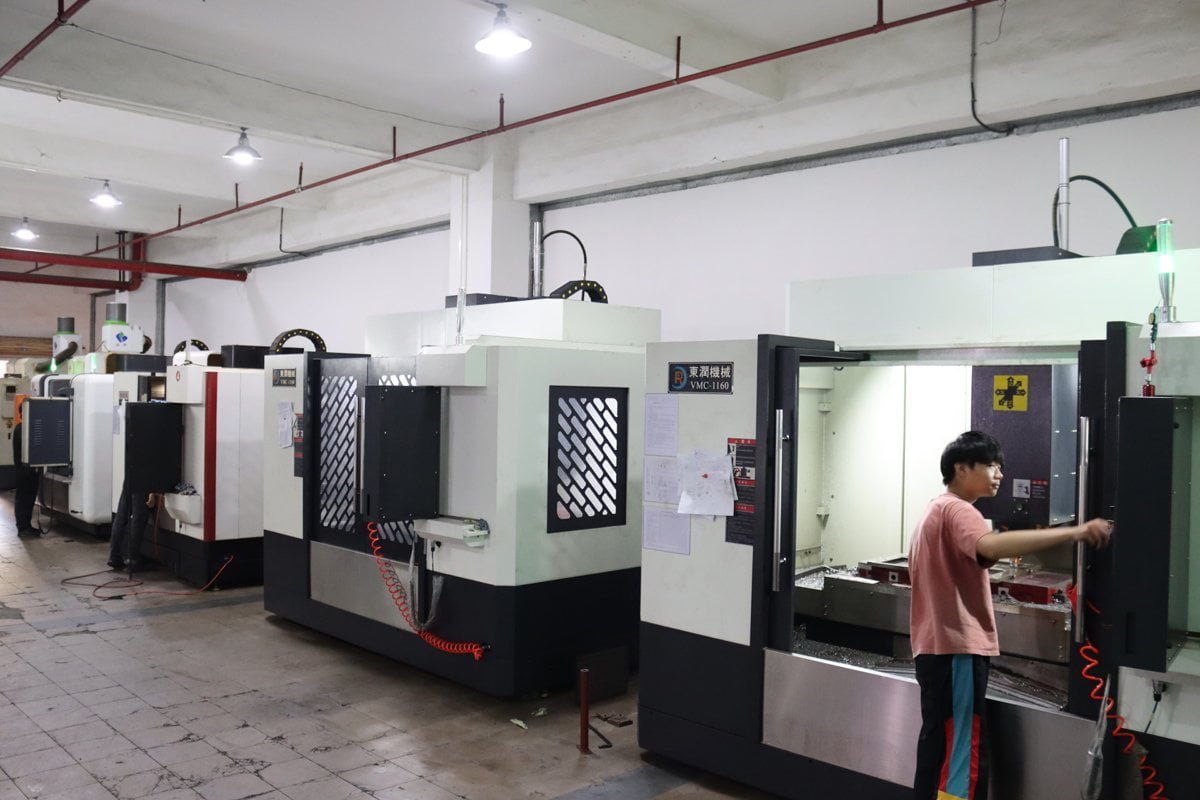
Rapid Iteration and Cost Reduction from Supply Chain Ecosystems
Local suppliers in the US, Europe, or Australia can manufacture silicone covers, but they must outsource mold making, import raw materials, and sub-contract packaging. Each step adds an extra layer of cost and time. The final product is not impossible to make locally, but it ends up more expensive, slower to produce, and costly to modify. Trusting a Chinese factory means trusting a mature supply chain ecosystem rather than relying on a single vendor's promises. When you need structural tweaks, local suppliers charge expensive re-tooling fees, whereas Chinese factories execute minor mold adjustments and new samples quickly. Before starting your project, you can review our guide on Custom Silicone Case to organize CAD files and requirements. Leveraging China's flexible supply chain helps brands launch products faster at lower testing costs.
| Evaluation Metric | Local Supplier Sourcing Model | Chinese Ecosystem Sourcing Model |
|---|---|---|
| Structural Tweak Costs | Long modification cycles with high extra fees | Flexible factory cooperation with low iteration costs |
| Production Cycle Control | Dependent on third-party subcontractor delays | Closed-loop local ecosystem ensures predictable lead times |
| Total Procurement Cost | High due to cumulative middleman markups | Cost-effective due to cluster economies of scale |
In conclusion, choosing a Chinese silicone manufacturer relies on leveraging a mature industrial cluster ecosystem. Efficient local support shortens mold iteration cycles, lowers procurement costs, and ensures stable mass production.
What is a Custom Silicone Sleeve? 2026 Latest Application Guide
A Custom Silicone Sleeve is a specialized protective housing solution designed to solve device damage, surface wear, and complex supplier management pain points. Its core function is to help users achieve high-impact shock protection, elevated brand value, and reduced supply chain costs in a short time.
> The 3 main advantages of applying Custom Silicone Sleeve in the industry include: > > Advantage 1: Superior Shock Protection: Relies on high-elasticity silicone to absorb and disperse drop impact force, reducing device breakage risk by over 90%. > > Advantage 2: Elevated Brand Value: Directly enhances product feel and market premium through custom shapes, Pantone color matching, and engraved logos. > > Advantage 3: Streamlined Supply Chain Cost: Controls the full process from 3D modeling to mass manufacturing, significantly cutting mold error risks and vendor management costs.
How to Specifically Operate Custom Silicone Sleeve?
To execute a Custom Silicone Sleeve project smoothly, clients and factories must follow standardized steps. According to third-party laboratory testing data, using liquid silicone injection molding and 200°C post-curing baking for 4 hours reduces dimensional tolerances to under 0.05 mm while purging 99.9% of volatile organic residues4.
- Requirements & 3D Modeling: Provide product 3D CAD files to set dimensions, wall thickness, cutouts, and anti-slip textures.
- Color and Logo Selection: Select Pantone color codes and specify molded, screen, pad, or UV printing crafts.
- Tooling & Prototype Testing: Build precision steel molds and produce sample prototypes to verify tolerances and textures.
- Mass Manufacturing & Post-Curing: Launch mass production after prototype approval and bake products at 200°C to purge volatiles.
About Me and Dibo Tech
My name is Kunfa Ye, but my friends call me Jeff. I was born in 1986 under the sign of the Tiger. I started working in the silicone rubber manufacturing industry in 2014, and I now have fifteen years of experience. Over these years, I started from scratch and experienced every rise and fall in manufacturing. I know the hardships and rewards of entrepreneurship deeply. I always focus on professionalism and integrity in every project.
The silicone manufacturing industry seems ordinary, but it affects every part of industrial production. I know that trust stands behind every product, and trade relies on mutual success. Over the years, my proudest achievement is not achieving personal financial independence, but helping my clients optimize their supply chains and improve production efficiency. Their success brings me far more joy than personal achievements.
Our brand, Dibo Tech (Dibo Technology Silicone Manufacturing Specialists, Official Website: https://samxine.com/), relies on technical strength and high quality. We specialize in custom OEM and ODM silicone rubber production, offering reliable custom solutions for our clients while fulfilling social responsibility for a sustainable future. I hope my experience helps your business grow. If I can assist you with experience, questions, or resources, I will do my absolute best to help.
"Pearl River Delta - Wikipedia", https://en.wikipedia.org/wiki/Pearl_River_Delta. Research on industrial clustering in China documents the geographic concentration of related industries in regions like the Pearl River Delta and Yangtze River Delta, where supply chain partners locate within close proximity to reduce transaction costs and enable rapid collaboration. Evidence role: general_support; source type: research. Supports: Geographic concentration of manufacturing supply chains in China's industrial regions. Scope note: General research on industrial clustering may not specify the exact 50-kilometer radius or focus specifically on silicone manufacturing. ↩
"Everything you always wanted to know about agglomeration (but ...", https://www.incontext.indiana.edu/2020/mar-apr/article1.asp. Economic geography research, notably in agglomeration theory, demonstrates that spatial concentration of related industries creates competitive advantages through reduced transaction costs, knowledge spillovers, specialized labor pools, and access to specialized suppliers—benefits that can exceed simple labor cost differentials. Evidence role: mechanism; source type: research. Supports: Theoretical foundation for competitive advantages from industrial clustering. ↩
"Is Co-Location the Next Big Game-Changer in Supply Chain?", https://scm.mit.edu/news-and-events/is-co-location-the-next-big-game-changer-in-supply-chain/. Research on manufacturing clusters documents that geographic proximity between manufacturers and specialized service providers enables rapid iteration cycles by reducing transportation time and facilitating face-to-face communication, though actual turnaround times depend on modification complexity and supplier capacity. Evidence role: mechanism; source type: research. Supports: Speed advantages from geographic proximity in manufacturing clusters. Scope note: The specific 1-2 day timeline represents an optimal scenario; actual turnaround varies with modification complexity, current workload, and specific cluster characteristics. ↩
".21 Control of Volatile Organic Compound (VOC) ...", https://regs.maryland.gov/us/md/exec/comar/26.11.19.21. Polymer science research documents that thermal post-curing of silicone rubber promotes complete crosslinking and drives off residual volatile compounds, with extended heating at elevated temperatures substantially reducing extractable materials, though exact removal percentages vary with time, temperature, and material formulation. Evidence role: mechanism; source type: research. Supports: Effectiveness of thermal post-curing in reducing volatile compounds in silicone products. Scope note: The specific 99.9% figure requires validation through controlled testing; general research describes the mechanism and effectiveness without confirming this exact percentage. ↩
Schreibe einen Kommentar