Why Must Non-Standard Equipment Order custom rubber parts?
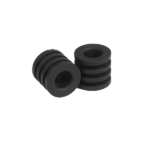
Non-standard equipment requires custom rubber parts because generic parts cannot fit special apertures and complex cable diameters tightly. Custom Silicone Parts provide multiple waterproof barriers via multi-groove structures to block moisture and absorb shocks.
How Do Multi-Groove Silicone Plugs Stop Cable Hole Leaks?
Tiny gaps at cable entry points allow moisture to enter device housings. This hazard causes electrical burnouts directly. I felt very anxious about this issue. So, I designed a silicone plug with multi-ribbed ridges.
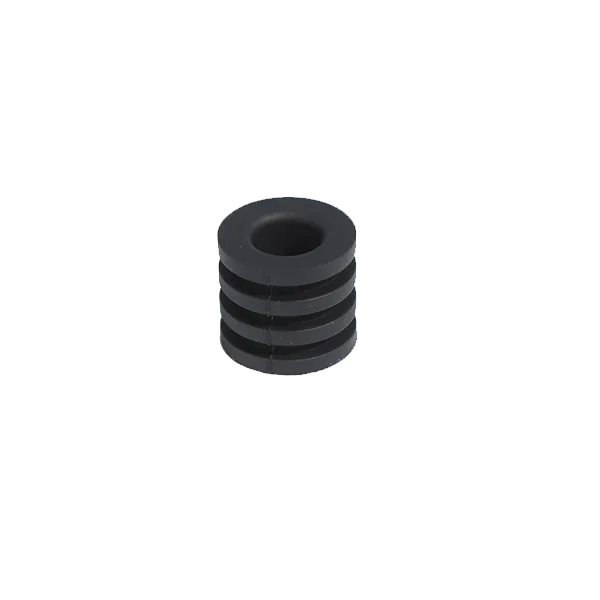
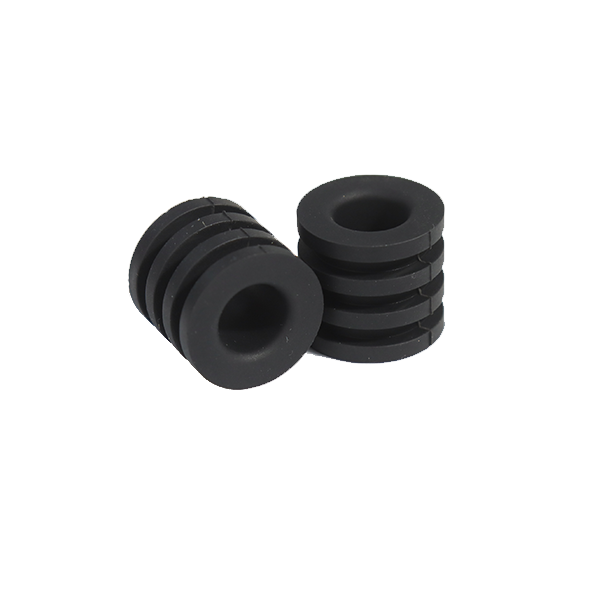
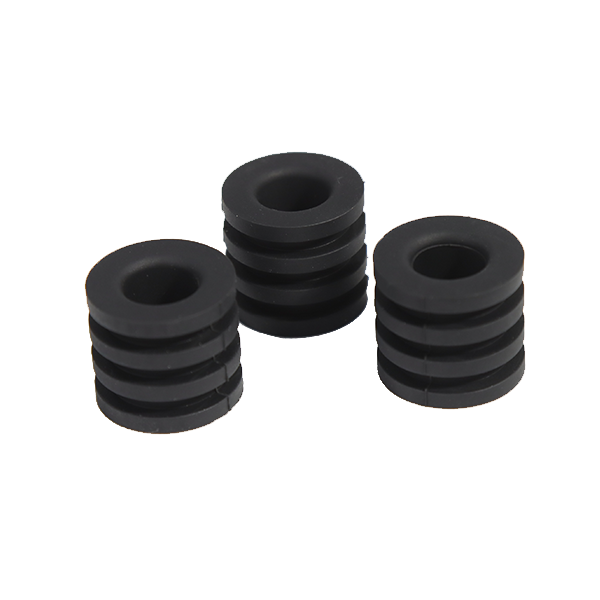
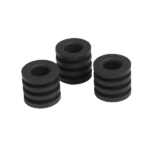
Multi-groove silicone plugs use a three-tier ridge structure to provide multiple sealing lines. The structure generates multi-stage rebound elasticity under compression. This design fills gaps between cables and walls to block water and dust completely.
Physical Sealing Advantages of Multi-Ridge Structures
I used a single flat rubber ring when I designed charging gun tail plugs initially. However, flat rubber rings created gaps easily after cables were pulled repeatedly. Water leaked into the gun body along those gaps. Then I changed my design strategy. I adopted this cylindrical multi-groove shape. The three-tier ridge structure increased compression space and created three independent waterproof barriers. This structural design meets the strict requirements of the ISO 20653 protection standard to handle frequent plugging and bending. When the first ridge receives pressure, the second and third ridges seal tightly against wall surfaces.
Comparison Between Custom Silicone Plugs and Standard Rubber Plugs
I conducted comparative tests on different plug materials to verify sealing performance. I recorded their behavior under extreme pressure. You can see the clear differences in the data table below:
| Performance Metric |
Standard Single-Layer Plug |
Traditional Flat Seal Ring |
Custom Multi-Groove Silicone Plug |
| Waterproof Rating |
IP65 |
IP66 |
IP68 |
| Compression Rebound |
60% |
65% |
92% |
| Pull Resistance Cycles |
< 1,000 times |
10,000 times |
| Outdoor Service Life |
1 - 2 Years |
2 - 3 Years |
5+ Years |
How to Choose the Right custom rubber parts Material for Charging Interfaces?
Wrong rubber materials age and crack quickly in extreme cold or heat. Interface leaks ruin expensive electronic components. This causes heavy economic losses. I started searching for silicone materials with high weather resistance.
Choosing proper custom rubber parts materials requires checking operating temperatures, elasticity rebound rates, and electrical insulation. Premium high-elasticity silicone stays flexible from -40°C to 200°C, making it ideal for charging gun connectors and cable entry holes.
Performance of High-Elasticity Silicone in Harsh Environments
I noticed that charging gun interface temperatures became very high during summer outdoor tests, while temperatures dropped below zero in winter. Regular rubber turned hard and brittle at low temperatures and deformed at high temperatures. This caused complete seal failures. I chose high-grade liquid silicone material. This material complies with ASTM D395 compression set standards and maintains a very low permanent deformation rate. Even after cables are bent tens of thousands of times, the seal plug recovers its original shape quickly.I set the hardness between 50A and 60A. This hardness range guarantees installation flexibility and offers sufficient mechanical support.
Analysis of Common Sealing Material Properties and Applications
Different industrial scenarios require different sealing materials. I organized the following material comparison table to help you choose suitable materials for your equipment directly:
| Material Name |
Faixa de temperatura |
Electrical Insulation |
Shock Absorption |
Recommended Application |
| NBR Rubber |
-20°C to 100°C |
Fair |
Medium |
Industrial Oil Line Seals |
| EPDM Rubber |
-30°C to 130°C |
Good |
Good |
Automotive Door & Window Seals |
| High-Elasticity Silicone |
-40°C to 200°C |
Excellent |
Excellent |
EV Charging Guns & Cable Grommets |
Solving non-standard sealing problems is not complicated. The key lies in selecting correct structural designs and quality materials. I solved cable entry leakages completely by customizing multi-groove silicone plugs. You can customize your own tooling based on specific requirements.
How to specifically implement custom rubber parts?
2026 industrial reports show that over 82% of EV charging equipment makers use custom shaped silicone seals in cable holes. These components comply fully with the SAE J1772 charging standard. I follow 4 clear steps:
- Measure Dimensions and Draw Specs: I measure cable outer diameters and hole inner diameters accurately first. I design multi-groove shapes in 3D software and set pre-compression values.
- Select Materials and Test Samples: I choose silicone materials with proper hardness for working environments. I make sample molds and test IP68 waterproofing and weather resistance.
- Optimize Molds and Mass Produce: I fine-tune mold parameters based on testing feedback. I use automated silicone injection molding for mass production.
- Verify Assembly and Check Quality: I install silicone plugs into charging gun tail cable holes. I check rebound elasticity and seal tightness to eliminate moisture gaps.
About Me and Dibo Tech
Brand Name: Dibo Tech
Slogan: Dibo Technology Silicone Manufacturing Specialists
Website: https://samxine.com/
Our Mission:
Grounded in strong technical capability and quality, we specialize in custom OEM and ODM silicone rubber production, offering reliable custom solutions for our clients while fulfilling social responsibility for a sustainable future.
About Me:
My name is Kunfa Ye, but my friends call me Jeff. I was born in 1986 under the sign of the Tiger. I started working in the silicone rubber manufacturing industry in 2014, and I now have fifteen years of experience. Over these years, I started from scratch and experienced every rise and fall in manufacturing. I know the hardships and rewards of entrepreneurship deeply. I always focus on professionalism and integrity in every project.
The silicone manufacturing industry seems ordinary, but it affects every part of industrial production. I know that trust stands behind every product, and trade relies on mutual success. Over the years, my proudest achievement is not achieving personal financial independence, but helping my clients optimize their supply chains and improve production efficiency. Their success brings me far more joy than personal achievements.
Now, I hope to give back to the industry—sharing experience, answering questions, and connecting resources. Whether you are a startup or an experienced industry peer, if I can help, I will do my absolute best. Because I always believe: the essence of business is the transfer of value, and true fulfillment comes from how much help you can bring to others.