
Custom Rubber Parts Manufacturers: 3 Fixes for Uncured Seals
Custom Rubber Parts Manufacturers: Why Do Uncured Defects Appear on 10,000 Automotive Silicone Seals?
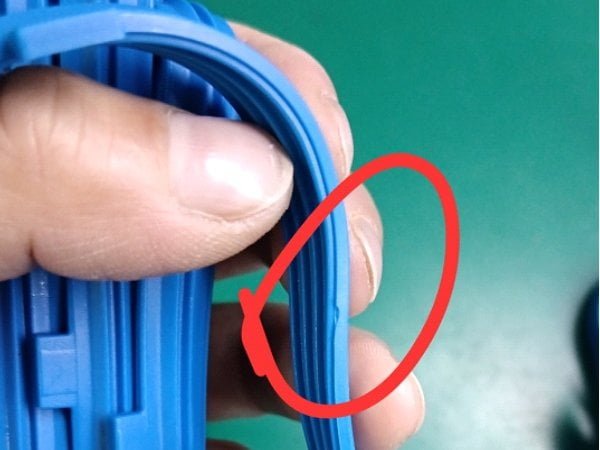
Discovering uncured raw rubber defects on delivered automotive silicone sealing rings? This severe flaw causes sealing leaks in functional components and risks whole-batch rejections. Today, I am recording a real factory report detailing how a manufacturer resolved uncured raw rubber defects.
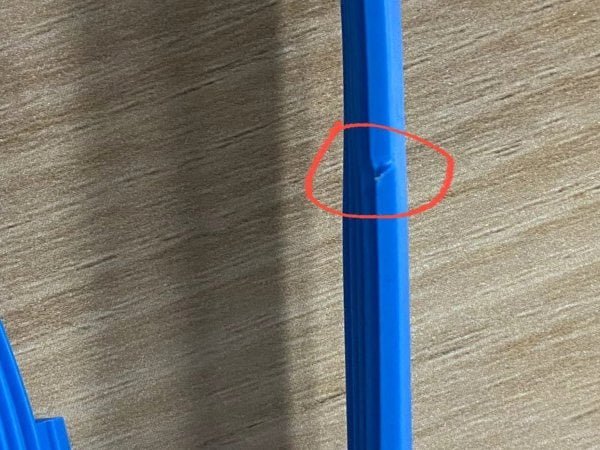
Uncured raw rubber on automotive silicone seals stems primarily from workers shortening molding times to boost piece-rate output, combined with hidden raw rubber along part sides. The manufacturing factory completely resolved this quality issue by locking molding vulcanization times to 80–85 seconds, appointing process patrol inspectors, and drafting molding operation inspection instruction sheets.
Why Does Insufficient Vulcanization Time Cause Uncured Raw Rubber in Custom Made Rubber Parts?
Insufficient vulcanization time prevents silicone along part sides from curing completely.
Under-cured raw rubber deforms and leaks under high-pressure automotive operating conditions. Finding process parameter root causes is essential to intercepting hidden flaws.
This factory report shows that the client reported uncured raw rubber anomalies on a shipment of 10,000 PCS automotive silicone sealing rings. Because these parts serve functional automotive applications requiring zero defects, immediate rework was required.
Upon receiving the complaint, the factory quality supervisor organized 5 inspectors for workshop isolation and sorting. After 3 hours of 100% sorting, the team isolated 59 defective PCS with uncured raw rubber, yielding a 0.59% defect rate.
The factory engineering team analyzed the root causes of the uncured defect.
First, raw rubber appeared primarily along part sides, making visual inspection difficult. The issue had to be eliminated at the molding stage.
Second, piece-rate compensation created quality risks as operators privately shortened molding cycle times to chase output. Lack of post-molding process patrol inspectors allowed individual uncured seals to escape. When manufacturing demanding custom made rubber parts, strict vulcanization cycle control determines physical performance.
| Defect Physical Appearance | Root Cause Generation (Factory Analysis) | Physical & Workstation Mechanism | Factory Corrective Action |
|---|---|---|---|
| Side Raw Rubber (Uncured) | Insufficient molding vulcanization time | Incomplete polymer cross-linking; hardness out of spec | Locked molding vulcanization time to 80–85 seconds |
| Hidden Defect Escape | Raw rubber located on sides; hard to spot | End-line visual inspection suffered visual fatigue | Appointed post-molding process patrol inspectors |
| Chasing Piece-Rate Output | Piece-rate pay lacked parameter oversight | Workers shortened molding cycle times privately | Drafted Molding Operation Inspection Instruction Sheets |
How Do Custom Rubber Parts Manufacturers Prevent Uncured Defect Outflows via Parameter Locking and Inspections?
Relying solely on end-line inspection cannot intercept hidden side raw rubber 100%.
Without locking molding cycles, uncured defects will recur continuously. The factory had to address process standardization and process patrols simultaneously.
Professional custom rubber parts manufacturers establish strict parameter control defense lines. The factory locked molding vulcanization times to 80–85 seconds, appointed process patrol inspectors for enhanced monitoring, and drafted operation instruction sheets to achieve 100% qualified delivery.
Factory Corrective Actions and 100% Inspection Verification Results
To resolve uncured raw rubber and process oversight gaps, the factory's quality improvement team implemented three corrective actions.
First, the factory locked molding process parameters strictly. The engineering department fixed molding vulcanization times to 80–85 seconds, ensuring every mold charge received adequate heat and complete cross-linking to guarantee process stability.
Second, to address quality risks from piece-rate incentives, the quality department trained post-molding inspection personnel on automotive standards. The factory appointed process patrol inspectors to enforce strict automotive quality controls.
Third, the engineering and quality departments jointly drafted Molding Operation Inspection Instruction Sheets. The instructions specified molding condition parameters and operational precautions, which were posted at machines and monitored strictly.
The silicone raw materials used by the factory comply with FDA Food Contact Regulations und RoHS Environmental Directives. The factory enforces quality controls under ISO 9001 Quality Standards. the reworked batch passed 100% inspection and satisfied the automotive client's zero-defect requirement.
| Verification Item | Detailed Engineering Standard & Execution | Actual Confirmation & Results |
|---|---|---|
| Vulcanization Cycle Locking | Fixed molding vulcanization time to 80–85 seconds | Side raw rubber eliminated; 100% cross-linking |
| Automotive Quality Training | Trained staff; appointed IPQC patrol inspectors | Enhanced process monitoring; 100% interception |
| Operation Instruction SOP | Drafted & posted Molding Operation Instruction Sheets | Standardized parameters; banned cycle adjustments |
| Rework Sorting & 100% QC | 5 staff sorted 59 defective PCS; full check on rest | 100% qualified; delivered smoothly to client |
Summarizing this factory report, precise vulcanization cycle control, strict process patrols, and standardized operation instructions are cornerstones for guaranteeing zero defects on automotive silicone seals. Through parameter locking and inspection controls, the factory successfully resolved the uncured rubber crisis.
How to Specifically Operate with custom rubber parts manufacturers?
When executing processes and quality systems with custom rubber parts manufacturers, factories must follow standardized procedures. Third-party testing data shows that using adequate vulcanization cross-linking time and high-temperature rubber processes, combined with process patrol mechanisms, keeps uncured defect rates at 0% while achieving a 100% outgoing pass rate.
- Emergency Rework & Defect Isolation: Organize inspection staff immediately upon complaint to sort inventory, isolate defective raw rubber parts, and log defect rates.
- Lock Molding Vulcanization Cycle: Fix molding vulcanization times to 80–85 seconds in engineering controls, strictly forbidding workers from shortening cycles.
- Appoint IPQC Patrol Inspectors: Add process patrol positions post-molding to perform high-frequency process spot checks and parameter verifications.
- Draft Operation Instruction SOPs: Draft Molding Operation Inspection Instruction Sheets, enforcing 100% full inspection under ISO 9001 standards before shipping.
External References & Industry Citations
- ISO 9001 Quality Certification: ISO 9001 Quality Management Systems Standard
- FDA Food Contact Regulations: U.S. FDA 21 CFR 177.2600 Food Contact Safety Regulations
- RoHS Environmental Directives: European Commission RoHS Directive 2011/65/EU
About Me and Dibo Tech
Brand Name: Dibo Tech
Slogan: Dibo Technology Silicone Manufacturing Specialists
Website: https://samxine.com/
Our Mission:
Grounded in strong technical capability and quality, we specialize in custom OEM and ODM silicone rubber production, offering reliable custom solutions for our clients while fulfilling social responsibility for a sustainable future.
About Me:
My name is Kunfa Ye, but my friends call me Jeff. I was born in 1986 under the sign of the Tiger. I started working in the silicone rubber manufacturing industry in 2014, and I now have fifteen years of experience. Over these years, I started from scratch and experienced every rise and fall in manufacturing. I know the hardships and rewards of entrepreneurship deeply. I always focus on professionalism and integrity in every project.
The silicone manufacturing industry seems ordinary, but it affects every part of industrial production. I know that trust stands behind every product, and trade relies on mutual success. Over the years, my proudest achievement is not achieving personal financial independence, but helping my clients optimize their supply chains and improve production efficiency. Their success brings me far more joy than personal achievements.
Now, I hope to give back to the industry—sharing experience, answering questions, and connecting resources. Whether you are a startup or an experienced industry peer, if I can help, I will do my absolute best. Because I always believe: the essence of business is the transfer of value, and true fulfillment comes from how much help you can bring to others.
Schreibe einen Kommentar