Liquid Silicone Rubber vs HCR: Medical Device Guide
What Are the Pros and Cons of HCR vs Liquid Silicone Rubber in Medical Devices?
Choosing the wrong medical silicone material causes compliance failures and costly rejections. Are you struggling to decide between HCR and LSR?
Medical silicone selection depends on application scenarios. High Consistency Rubber (HCR) suits low-cost, thick-walled, non-core components. Liquid silicone rubber (lsr silicone) offers high purity and zero peroxide residues, making it ideal for thin-walled precision parts and core medical consumables.
Many buyers focus only on raw material prices, suffering huge hidden costs during mass production. Drawing on fifteen years of manufacturing experience, I will break down the true differences between these silicone materials.
Why Use HCR Over liquid silicone for mold making for Cost Efficiency in Simple Parts?
Over-specifying materials inflates medical device manufacturing costs. If your product design is simple, using high-cost materials weakens your market competitiveness. You need to balance cost and performance.
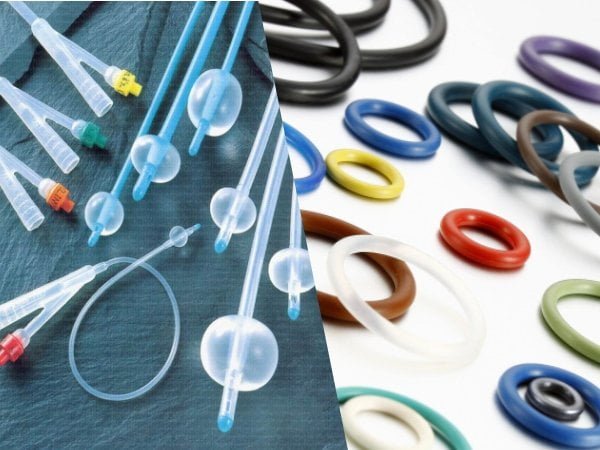
HCR silicone relies on heat vulcanization and compression molding. It offers lower equipment barriers and raw material costs, delivering reliable stability for thick-walled and large parts. It works well for drainage bulbs, medical handle sleeves, and non-implantable accessories.

Processing Constraints and Limits of HCR Silicone
HCR silicone utilizes peroxide or platinum curing systems. However, HCR processing requires extensive manual labor. Workers must perform manual weighing, mixing, cutting, and trimming. Peroxide curing can leave residual byproducts. This requires a post-curing step to meet medical-grade standards. For complex, thin-walled cavities, HCR yields fall short compared to lsr silicone.
We strictly follow ISO 10993 standards for medical device biocompatibility. Using HCR for non-critical external parts reduces initial capital outlay. However, for high-precision components, manual labor costs increase significantly.
| Parameter | HCR Solid Silicone | LSR Liquid Silicone |
|---|---|---|
| Molding Method | Compression Molding | Automated Injection Molding |
| Labor Dependence | High (Manual Cutting/Trimming) | Low (Flashless Molding) |
| Residue Risk | Peroxide Byproducts Possible | Zero Peroxide Residue |
| Primary Application | Thick-Walled/Large Components | Thin-Walled Precision Consumables |
Why Do Core Medical Consumables Prefer lsr silicone and liquid silicone injection molding ?
Leachables or flash debris on medical consumables cause serious medical hazards. Manual trimming of traditional silicone leaves safety risks. You cannot afford to compromise on core component quality.
lsr silicone is a two-component liquid platinum-cured material. It uses automated metering injection, producing zero peroxide residues without post-curing. It offers high batch consistency, making it the top choice for infusion tubes, laryngeal masks, and catheter balloons.
How to Evaluate Total Costs for liquid silicone rubber vs Solid Silicone?
Selecting materials based solely on raw price leads to wrong decisions. Evaluating only material unit costs overlooks high labor and scrap expenses. Proper total cost accounting saves significant capital over time.
Total cost analysis must account for mold tooling, cycle times, and labor. HCR offers cheaper initial molds but higher labor costs. LSR requires expensive tooling and machinery, but its automation and low scrap rate lower overall costs in high-volume production.

Long-Term Supply Chain Strategy Under Strict Regulations
With FDA and EU MDR regulations tightening, medical device manufacturing continues upgrading toward stricter compliance. Many components originally produced with HCR are migrating to lsr silicone.
Produkte build trust. HCR remains practical for low-volume, budget-sensitive, or thick-walled parts. For high-volume, thin-walled precision parts touching medical fluids, liquid silicone injection molding is the smarter choice.
Molds form the foundation of quality. Precision liquid silicone for mold making requires mirror polishing and micron-level parting lines. Higher upfront tooling investments are offset by long-term automated production. Mastering both processes covers all medical market needs.
| Expense Category | HCR Solid Solution | LSR Liquid Solution |
|---|---|---|
| Tooling & Machine Capital | Lower | Higher (Precision Molds & Injection Units) |
| Raw Material Price | Lower | Higher |
| Hidden Labor Costs | High (Mixing/Trimming/Post-Cure) | Extremely Low (Automated) |
| Long-Term Mass Production Cost | Increases linearly with volume | Drops rapidly with volume |
In conclusion, neither solid nor liquid silicone is inherently superior for medical devices. Choosing HCR or LSR depends on product geometry, cleanliness requirements, and production volume. Use HCR for low-volume large parts, and LSR for high-volume precision components. Quality control begins with materials and tooling. As silicone manufacturing specialists, Dibo Tech delivers reliable engineering solutions for all medical silicone requirements.
Frequently Asked Questions (FAQ)
Q1: Why does medical grade lsr silicone require no post-curing? Answer: lsr silicone uses a platinum-catalyzed addition-cure system. The reaction produces no peroxide residue or volatile byproducts, eliminating the need for lengthy post-bake operations required by peroxide-cured HCR.
Q2: Can HCR solid silicone pass ISO 10993 medical compliance testing? Answer: Yes. Using medical-grade base gum, platinum curing agents, and high-temperature post-curing to extract volatile residue allows HCR to pass ISO 10993 biocompatibility standards.
Q3: Does changing materials require re-submitting medical device FDA filings? Answer: Yes. Switching core contact parts from HCR to liquid silicone rubber constitutes a major change, typically requiring new biocompatibility testing data and updated regulatory submissions.
About Me and Dibo Tech
Brand Name: Dibo Tech
Slogan: Dibo Technology Silicone Manufacturing Specialists
Website: https://samxine.com/
Our Mission:
Grounded in strong technical capability and quality, we specialize in custom OEM and ODM silicone rubber production, offering reliable custom solutions for our clients while fulfilling social responsibility for a sustainable future.
About Me:
My name is Kunfa Ye, but my friends call me Jeff. I was born in 1986 under the sign of the Tiger. I started working in the silicone rubber manufacturing industry in 2014, and I now have fifteen years of experience. Over these years, I started from scratch and experienced every rise and fall in manufacturing. I know the hardships and rewards of entrepreneurship deeply. I always focus on professionalism and integrity in every project.
The silicone manufacturing industry seems ordinary, but it affects every part of industrial production. I know that trust stands behind every product, and trade relies on mutual success. Over the years, my proudest achievement is not achieving personal financial independence, but helping my clients optimize their supply chains and improve production efficiency. Their success brings me far more joy than personal achievements.
Now, I hope to give back to the industry—sharing experience, answering questions, and connecting resources. Whether you are a startup or an experienced industry peer, if I can help, I will do my absolute best. Because I always believe: the essence of business is the transfer of value, and true fulfillment comes from how much help you can bring to others.
Schreibe einen Kommentar