
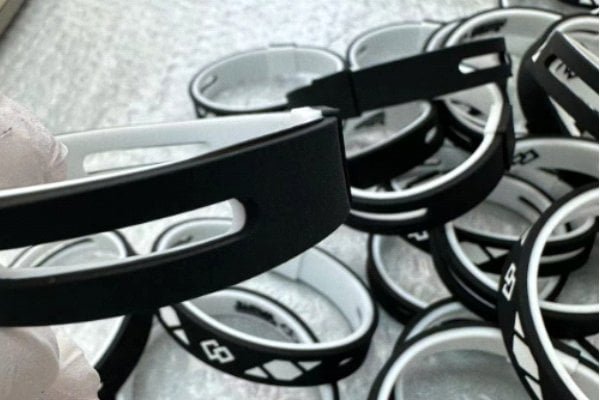
Silicone Grommet Ring: 80% Flash Defect Case Study
Silicone Grommet Ring at 80% Flash: What Went Wrong?
Our sample run of a silicone grommet ring came back with 80% flash. The customer was waiting.
Two causes. The mold plates did not close tight, so flash grew thick. Trimming was rushed, so burrs stayed.
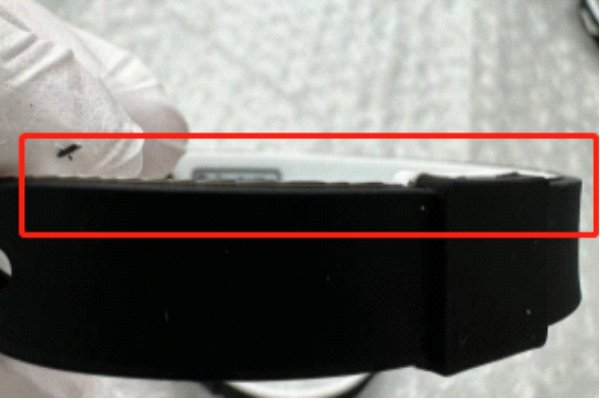
A few days ago, the customer sent me the sample photos. The red box marked the problem area. The burrs were very clear. The edge was uneven. I looked at those photos for a long time, and I did not feel good, because the problem came from us. I will tell the story in order. From the complaint, to the cause, to the new sample, to the customer's approval. Every step is written down.
Why Does Flash on a Silicone Grommet Ring Get Out of Control in Sampling?
There was no part number yet, and the mold was not finished. But the edge came out with a thick layer of flash.
The parting line had a gap, and the compound flowed too easily. Two conditions together, and flash had to be out of spec.
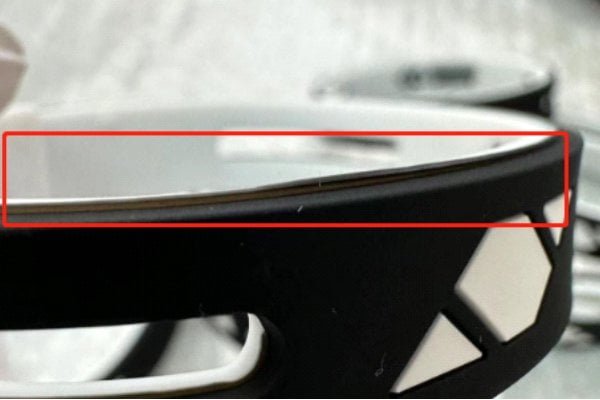
Where the flash actually comes from
In the sample stage, we were too optimistic about the mold. The operator ran a hand along the parting line and said it felt flat enough. But under molding pressure, a very small gap gets filled. The compound runs out through that gap. When it cools, it becomes a hard ring of flash. In the customer's photos, that ring was not a thin line. It was a thick layer. You could hear it when you scratched it with a nail.
We also ignored the compound. With the same mold, a new batch of silicone can behave differently. In the sample stage we did not run a small trial first. We went straight to the machine. That was the second miss.
Later, during the review, I put the three steps into one table.
| Step | What we saw | Root cause | What we did |
|---|---|---|---|
| Mold closing | A visible gap at the parting line | Mold not finished, surface not flat | Reground the parting surface |
| Gießen | Flash thickness varied | Pressure too high, compound too fluid | Lowered pressure, controlled overflow |
| Trimming | Torn edges, burrs left | Blunt tools, no fixed method | Sharp tools, one standard motion |
I showed this table to the workshop. Many people saw it for the first time. The three steps were not three small mistakes. They were mistakes stacked on each other. Thick flash makes trimming harder. Trimming that is not clean pushes the defect rate up. That is why we changed all three at once. Changing only one would not work.
How Should We Adjust the Parting Line and the Molding Pressure?
We took the mold apart with our engineer. The parting surface was not flat.
We reground the parting surface and lowered the pressure a little. The flash thickness came under control.
Fix the mold first, then talk about settings
The parting surface had to be reground. There is no shortcut here. After grinding, we ran a trial, measured the flash, and then set the pressure. We lowered the pressure a little. The flash changed from a thick edge to a thin edge. Only then could trimming work. If you only change settings and leave the mold alone, the gap is still there. The compound still runs out.
Keep a record of every setting
I asked the team to write down every change. Pressure, temperature, time, and flash thickness. Four items, every time. Only with records do you know which set is stable. ISO 3302-1:2014 sets tolerance classes for molded rubber products. We put the customer's tolerance into that table, and then we really understood what "flash within tolerance" means. For the material side, we use ASTM D2000 designations to align with the customer. Hardness, tensile strength, and tear strength are written clearly. When we change compound later, we have a basis.
| Item | Before | After | Purpose |
|---|---|---|---|
| Parting surface | Not finished, had a gap | Reground flat | Close the overflow path |
| Molding pressure | Too high | Lowered slightly | Hold the flash thin |
| Overflow control | By feel | Set from trial data | Thin and even flash |
After this round, the flash thickness was stable. But the flash was still there. It was only thinner. Thin flash still needs trimming. If the trimming step does not change, the defect rate will not come down.
How Do We Set a Trimming Standard That Holds the Defect Rate Down?
The problem at trimming was not speed. It was the method.
The tool must be sharp, and the cut must be one clean pass. No tearing. First piece checked for burrs, inspection every two hours.
One clean cut, no tearing
Some operators pull the flash off by hand. A torn edge always leaves burrs. The right way is one pass of the blade along the edge. The blade must be sharp. The angle must be fixed. The pressure must be even. If the hand is not steady, the edge will be rough. So we changed the tools first, then trained the motion. A blunt blade costs the most time, and it creates the most defects.
Write the standard down
We set three rules. First, the first piece must be checked for burrs. If it fails, the run does not start. Second, inspection every two hours, with flash and burr recorded. Third, any machine over the limit stops at once and is adjusted before restart. These three rules are written into the work instruction and posted at the station. In the past we said "watch the burrs". That sentence did nothing. Now there are numbers, a frequency, and a person responsible.
| Item | Old way | New standard |
|---|---|---|
| Blade | Worn blade, used anyway | Replaced on schedule, kept sharp |
| Motion | Tearing, free hand | One pass along the edge, fixed angle |
| First piece | Checked sometimes | Checked every lot, signed |
| Inspection | When someone remembered | Every two hours, recorded |
After this was in place, the new sample had smooth edges. The flash fell inside the tolerance the customer gave us. I sent the corrective action report to the customer. Our quality team confirmed it internally first, then we shipped the sample. The customer reviewed it and said it was fine. We passed. I felt relief, but I knew this was only the sample.
What Must Be Confirmed Before the Sample Moves to Mass Production?
The customer approved the new sample. Flash was within tolerance. The edges were smooth.
But a good sample does not mean a good production run. A few things must be closed before mass production.
Three items, none optional
First, the mold must be finished properly. The grinding in the sample stage was only a fix. The production mold must be reworked to drawing, and the flatness of the parting surface must be measured. Second, the trimming standard must be executed, not just posted on the wall. New operators need training, and experienced operators need to go through the motion again. Third, records must be kept. First piece, inspection, and exception handling, all traceable. That is what a customer audit looks at.
Material also matters. If the product is exported, customers often raise the requirements for rubber articles intended for repeated use, such as US FDA 21 CFR 177.2600. These points should be confirmed at the sampling stage, not added later.
| Item | Owner | Done when |
|---|---|---|
| Mold finishing | Mold team | Flatness passed, trial flash in spec |
| Trimming training | Production supervisor | Training signed, practical test passed |
| Standard documents | Quality team | Work instruction posted at station |
| Records | Quality team | First piece and inspection logs complete |
Our lesson was simple. We rushed the sample. The mold was not finished, trimming had no standard, and 80% defects followed. Custom silicone parts look simple. These details decide the result. If you are also looking for a reliable partner among silicone rubber mold manufacturers, read about our custom silicone molding process. If you have a specific question, just contact us.
Schlussfolgerung
An 80% flash defect came down to two things. The mold gap was not set right, so flash grew thick. Hand trimming was not up to standard, so burrs stayed. Together, they pushed the defect rate up. Our fix was not complex. Regrind the parting surface, lower the pressure a little, change to sharp blades, retrain the motion, and set first-piece and inspection rules. After the new sample, the customer approved it. But the real lesson is that a good sample is only the start. Finish the mold, execute the standard, keep the records. Do these three, and mass production will not repeat the same mistake. After fifteen years in silicone, I believe one thing more and more. Problems will come. What matters is knowing why they came.
FAQ
How much flash is acceptable on a silicone grommet ring?
It depends on the drawing and the tolerance the customer gives. As a rule, the edge should not affect assembly, should not feel sharp, and should be smooth. The exact value follows the drawing and the agreed acceptance standard.
Is thick flash a mold problem or a material problem?
Most of the time it is both. The parting line has a gap, and the compound flows too easily, so overflow cannot be held back. Fix the mold first, then adjust pressure and compound. Do not reverse the order.
Does every silicone part need hand trimming?
No. For large volumes, a precision mold can keep flash thin enough that almost no trimming is needed. For small sample lots and complex shapes, hand trimming is more flexible. The key is a standard for the blade and the motion.
About the Author & Dibo Tech
My name is Kunfa Ye, but friends call me Jeff. I was born in 1986, the year of the Tiger. In 2011, my brother Autumn Ye and I co-founded Dibo Tech, rooting ourselves in the silicone rubber industry for fifteen years. Building from scratch, we navigated industry cycles and learned the true rewards of hard work. We have always built our business on technical expertise and integrity.
The silicone industry touches every corner of modern manufacturing. I deeply believe that behind every product lies trust, and the essence of business is mutual gain. Over these years, my proudest achievement is not personal financial independence, but helping our clients optimize supply chains and boost production efficiency. Their success is far more rewarding than personal milestones. Today, I aim to give back by sharing insights, answering engineering questions, and connecting resources.
Brand Name: Dibo Tech Slogan: Dibo Technology Silicone Manufacturing Specialists Website: https://samxine.com/ Our Mission: Based on strong technical capabilities and quality first, we are committed to innovative and eco-friendly silicone rubber production, providing reliable silicone solutions while fulfilling social responsibilities for a sustainable future.
Schreibe einen Kommentar