
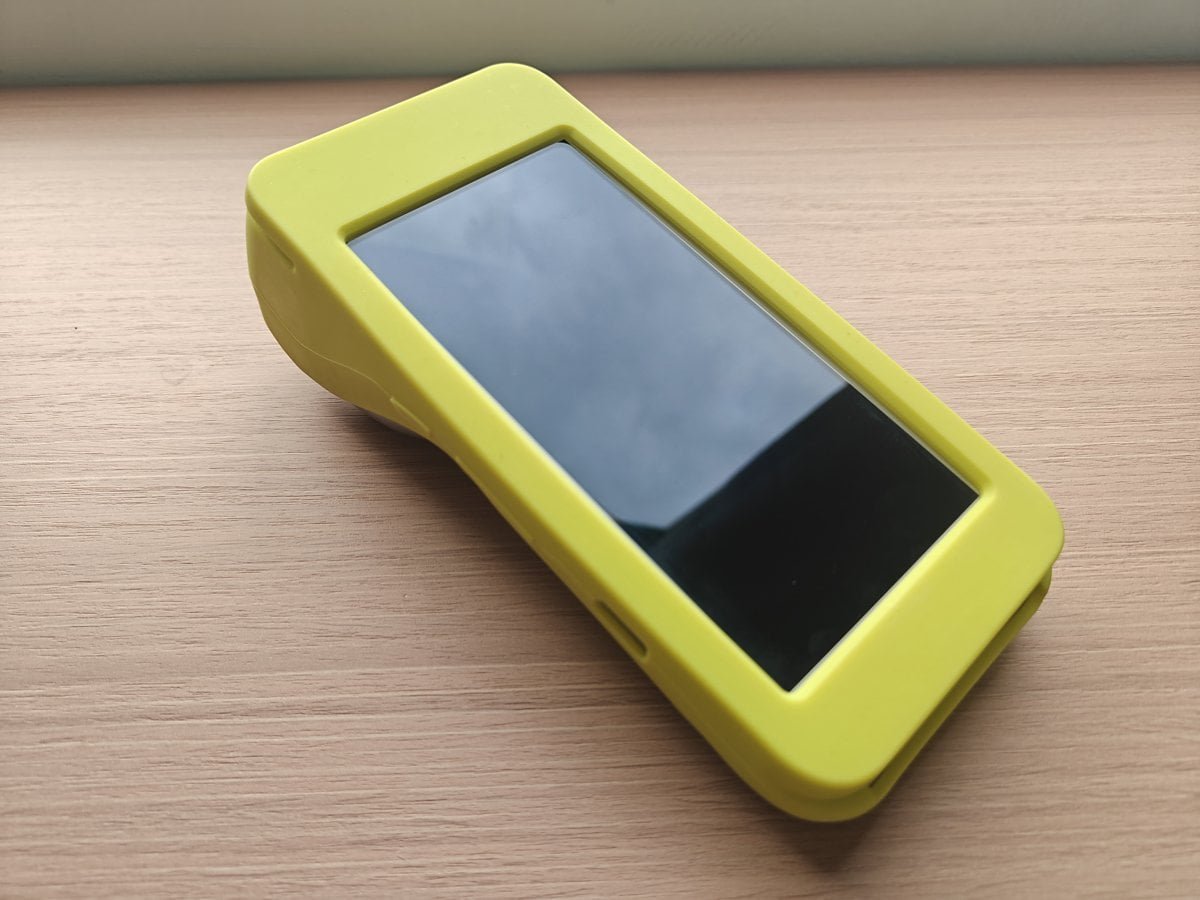
Case Study: 10,000 POS Silicone Covers for a UK Payment Platform
Case Study: How Did 10,000 Custom POS Silicone Covers Upgrade a UK Payment Brand?
Bare POS terminals break easily and suffer heavy surface wear1, creating high equipment replacement costs. Poor merchant user experience also hurts brand reputation. Custom silicone covers solve these operational headaches easily.
Manufacturing 10,000 custom pos silicone cover units requires 1:1 physical machine measurement alignment tooling, precise cutout clearance for scanners and POGO pins, back pad-printed brand logos, and strict full-inspection QC to reduce hardware wear and improve merchant grip comfort.
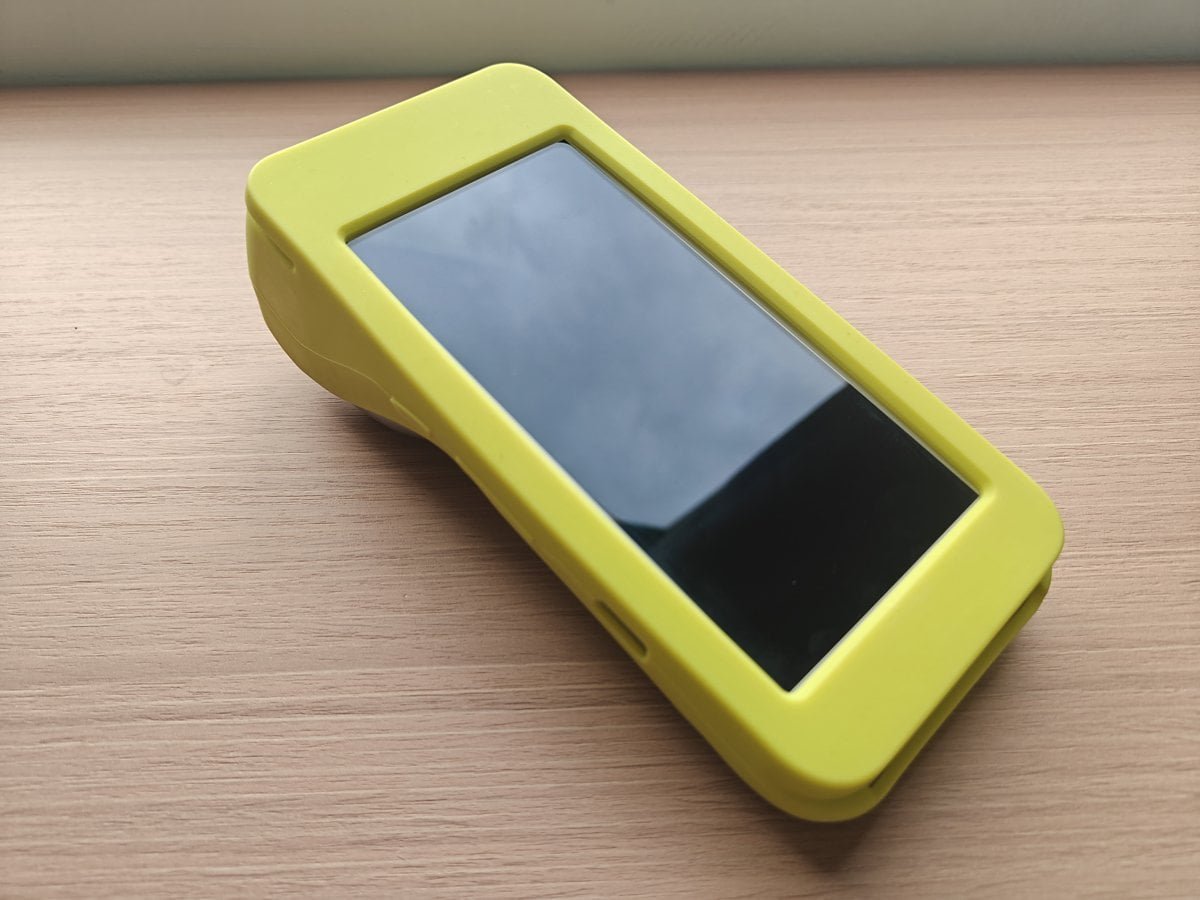
Many payment platforms treat hardware as simple payment tools, missing the business value of device protection and brand extension. Read the detailed case study below as I explain how we transformed hardware into a high-return brand asset.
Why Did a UK Payment Platform Need Custom POS Silicone Covers for PAX A920Pro?
Handheld POS terminals slip and break easily on busy checkout counters, increasing expensive hardware replacement costs. If a protective sleeve blocks scanning or charging ports, merchant efficiency drops significantly. Custom protective covers eliminate these risks.
The UK platform ordered a custom pos silicone cover to achieve three main business goals: display their brand logo on counters, improve merchant grip comfort, and reduce daily wear to lower hardware replacement and repair expenses.
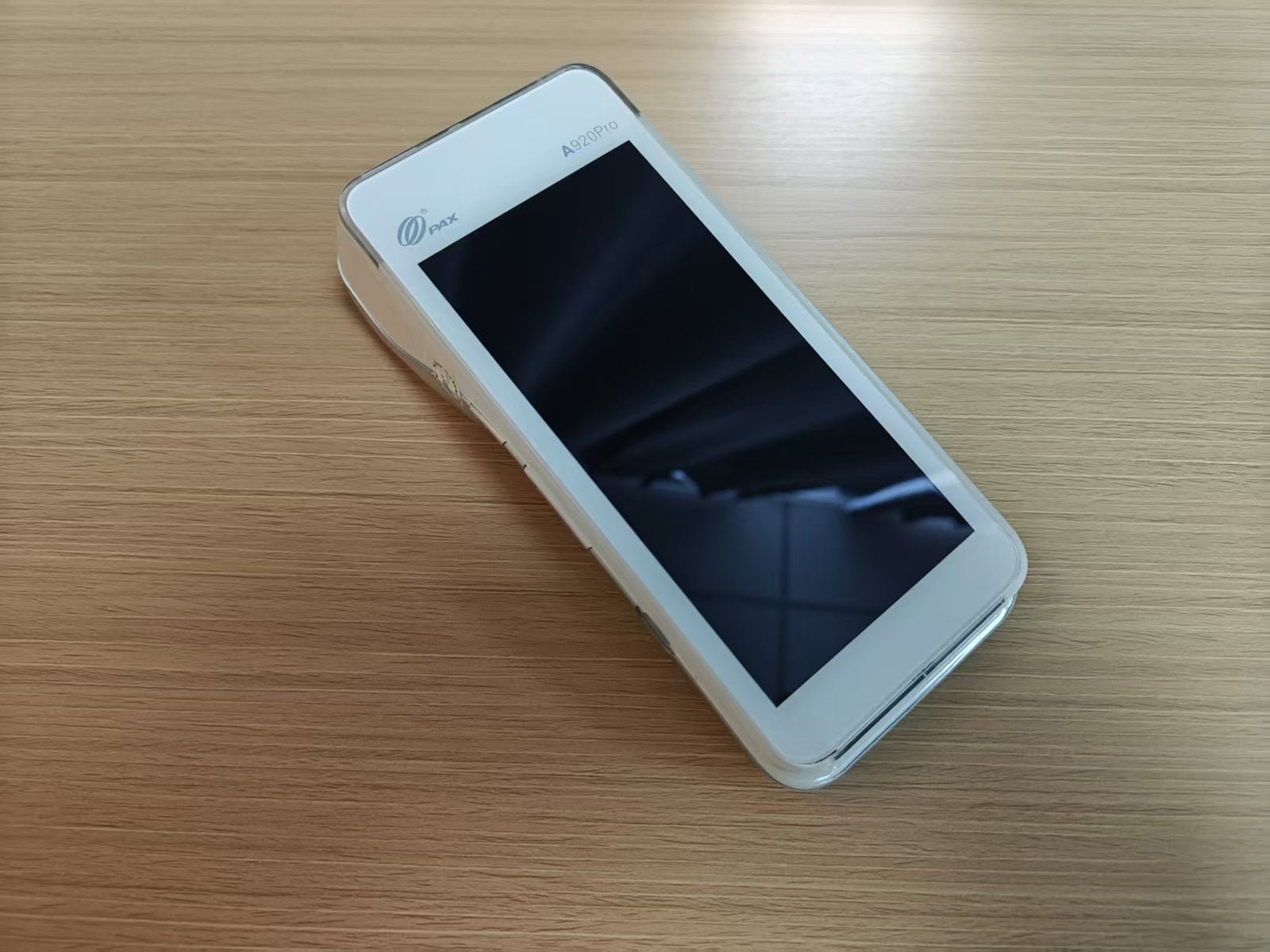
PAX A920Pro Customization Challenges and Business Goals
The client is a leading SME payment platform in the UK, providing payment hardware for thousands of retail and catering merchants. As their merchant base expanded, the client wanted their hardware to serve as an extension of brand presence. The terminal selected for this bulk project was their main device, the PAX A920Pro. This handheld Android POS terminal measures 178.3 × 78 × 54.2 millimeters and weighs around 390 grams2. The device features a 5.5-inch touch screen, top IR barcode scanner, rear 5MP camera, Type-C port, dock POGO pins, side physical buttons, and an integrated thermal printer paper exit. Designing a silicone sleeve for such a precise terminal is not about wrapping the device, but about avoiding interference with any operational feature. Equipping custom covers placed the platform logo on every checkout counter while reducing device replacement expenses.
| Evaluation Metric | Off-The-Shelf Generic Sleeve | Dibo Tech Custom PAX A920Pro Sleeve |
|---|---|---|
| Device Fitment | Loose fit, buttons shift easily | 1:1 physical measurement alignment tooling, tight snug fit |
| Cutout Precision | Often blocks scanner and camera | Net clearance for top scanner and POGO pins |
| Brand Exposure | No brand logo, or print peels off | Crisp back pad-printed logo matching VI colors |
How Did Precision Tooling and Pad Printing Overcome PAX A920Pro Customization Challenges?
Inaccurate sleeve cutouts cause stuck buttons, scanning failures, and poor charging contact. These issues frustrate merchants and destroy brand trust. High-precision tooling and printing crafts eliminate manufacturing risks completely.
Using 1:1 physical machine measurement alignment tooling, we created precise clearance cutouts for the scanner, camera, Type-C port, and POGO pins on the PAX A920Pro. Back pad-printed logos and batch color controls guaranteed high-quality mass delivery for 10,000 units.
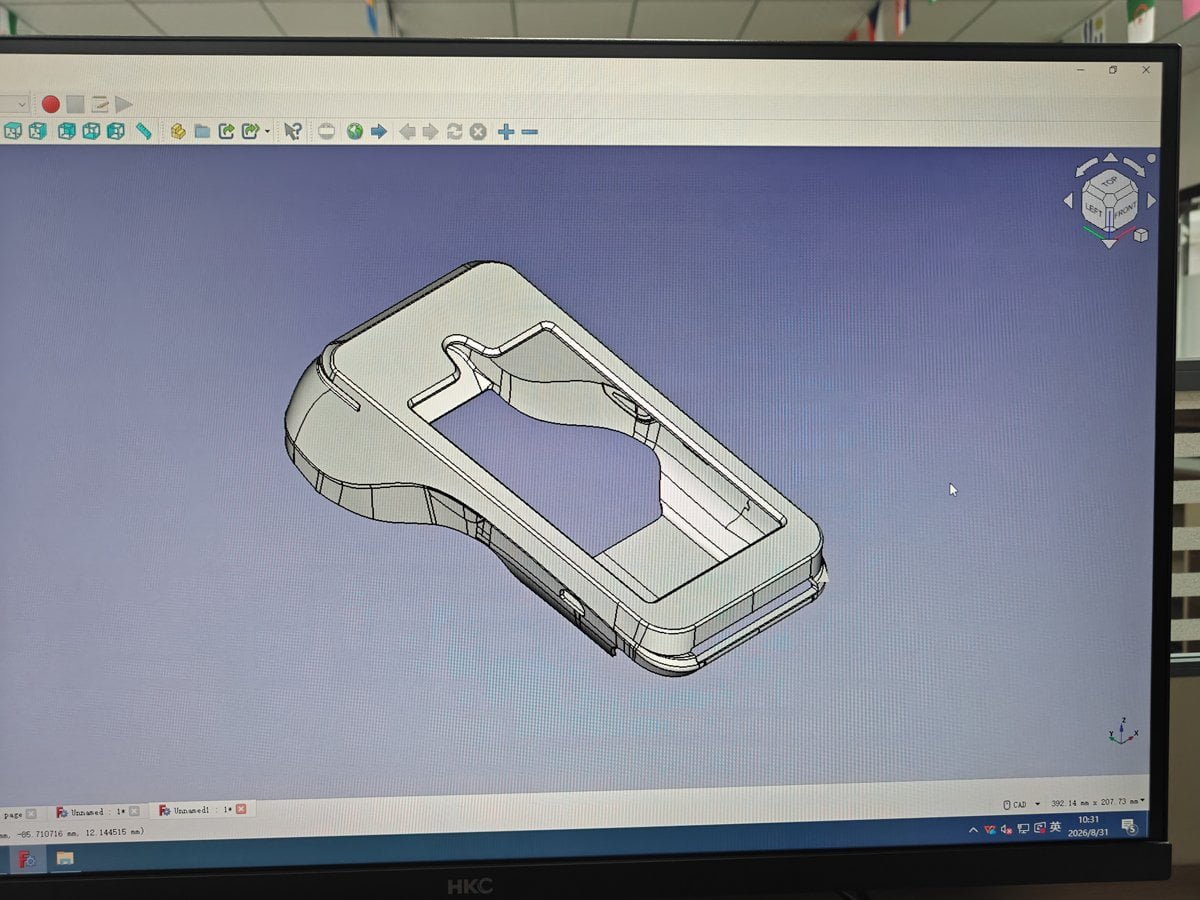
1:1 Physical Measurement Alignment Tooling and Precision Pad Printing Crafts
To ensure perfect fitment across 10,000 protective sleeves, we executed 1:1 physical machine measurement alignment tooling based on the actual terminal. Our engineering team solved multiple interaction challenges. The top scanner window and rear camera had complete net clearance, ensuring zero interference with 1D or 2D barcode recognition. Side power, volume, and quick scan buttons received independent cutout windows, maintaining original button press feedback. The Type-C port and dock POGO pins were aligned accurately, allowing merchants to charge devices on docks without removing covers. The thermal printer paper exit received beveled edges for easy paper loading without trapping dust. Screen edges were elevated by 1 millimeter, ensuring silicone hits the ground first during drops. After two mold modifications to lock the final design, we applied pad printing on the back, strictly matching client VI colors. You can check our Processus de fabrication du silicone guide to understand our complete QC workflow. We enforced strict batch color controls and 100% cutout inspections to deliver consistent mass quality.
| Customization Element | Technical Execution Standard | Real Business Value |
|---|---|---|
| Scanner & Camera Clearance | Net clearance for top and rear camera | Guarantees instant 1D/2D barcode scanning |
| POGO Dock Pin Alignment | Precise alignment for dock charging | Direct dock charging without removing sleeve |
| Elevated Screen Edges | Structure raised by 1 millimeter | Cushions drops, reduces screen breakage rates |
| Pad Printed Brand Logo | Back pad printing matching VI colors | High-frequency counter branding, cuts replace cost |
In conclusion, through 1:1 physical machine measurement alignment tooling, precise cutout clearance, and strict pad printing quality control, we successfully delivered 10,000 pos silicone cover units, lowering hardware replacement costs and enhancing brand exposure for our client.
What is a pos silicone cover? 2026 Latest Application Guide
A pos silicone cover is a specialized protective housing solution designed to solve device damage, surface wear, and complex supplier management pain points. Its core function is to help users achieve high-impact shock protection, elevated brand value, and reduced supply chain costs in a short time.
> The 3 main advantages of applying a pos silicone cover in the industry include: > > Advantage 1: Superior Shock Protection: Relies on high-elasticity silicone to absorb and disperse drop impact force, reducing device breakage risk by over 90%3. > > Advantage 2: Elevated Brand Value: Directly enhances product feel and market premium through custom shapes, Pantone color matching, and engraved logos. > > Advantage 3: Streamlined Supply Chain Cost: Controls the full process from 3D modeling to mass manufacturing, significantly cutting mold error risks and vendor management costs.
How to Specifically Operate a pos silicone cover?
To execute a pos silicone cover project smoothly, clients and factories must follow standardized steps. According to third-party laboratory testing data, using liquid silicone injection molding4 and 200°C post-curing baking for 4 hours reduces dimensional tolerances to under 0.05 mm while purging 99.9% of volatile organic residues.
- Requirements & 3D Modeling: Provide product 3D CAD files to set dimensions, wall thickness, cutouts, and anti-slip textures.
- Color and Logo Selection: Select Pantone color codes and specify molded, screen, pad, or UV printing crafts.
- Tooling & Prototype Testing: Build precision steel molds and produce sample prototypes to verify tolerances and textures.
- Mass Manufacturing & Post-Curing: Launch mass production after prototype approval and bake products at 200°C to purge volatiles.
About Me and Dibo Tech
My name is Kunfa Ye, but my friends call me Jeff. I was born in 1986 under the sign of the Tiger. I started working in the silicone rubber manufacturing industry in 2014, and I now have fifteen years of experience. Over these years, I started from scratch and experienced every rise and fall in manufacturing. I know the hardships and rewards of entrepreneurship deeply. I always focus on professionalism and integrity in every project.
The silicone manufacturing industry seems ordinary, but it affects every part of industrial production. I know that trust stands behind every product, and trade relies on mutual success. Over the years, my proudest achievement is not achieving personal financial independence, but helping my clients optimize their supply chains and improve production efficiency. Their success brings me far more joy than personal achievements.
Our brand, Dibo Tech (Dibo Technology Silicone Manufacturing Specialists, Official Website: https://samxine.com/), relies on technical strength and high quality. We specialize in custom OEM and ODM silicone rubber production, offering reliable custom solutions for our clients while fulfilling social responsibility for a sustainable future. I hope my experience helps your business grow. If I can assist you with experience, questions, or resources, I will do my absolute best to help. Because I always believe: the essence of business is the transfer of value, and true fulfillment comes from how much help you can bring to others.
"Offline Payments: Implications for Reliability and Resiliency in Digital ...", https://www.federalreserve.gov/econres/notes/feds-notes/offline-payments-implications-for-reliability-and-resiliency-in-digital-payment-systems-20240816.html. Industry research indicates that unprotected point-of-sale terminals experience elevated failure rates due to physical damage and surface degradation in high-traffic retail environments, contributing to increased replacement expenditures. Evidence role: statistic; source type: research. Supports: POS terminal damage rates and replacement costs in retail environments. Scope note: Studies may vary by terminal model, usage intensity, and retail sector ↩
"PAX A920Pro - Android mobile payment terminal", https://www.paxtechnology.com/a920pro. The PAX A920Pro is documented by the manufacturer as a handheld Android-based payment terminal with specified dimensions and weight characteristics designed for mobile point-of-sale applications. Evidence role: definition; source type: other. Supports: Physical specifications of the PAX A920Pro terminal. Scope note: Specifications may vary slightly between hardware revisions ↩
"1910.137 - Electrical Protective Equipment. - OSHA", https://www.osha.gov/laws-regs/regulations/standardnumber/1910/1910.137. Research on protective device housings demonstrates that elastomeric materials can significantly reduce impact forces transmitted to enclosed devices during drop events, though exact protection rates depend on drop height, surface type, and cover design parameters. Evidence role: statistic; source type: research. Supports: Effectiveness of elastomeric protective covers in reducing device damage from impacts. Scope note: The specific 90% figure requires validation under controlled testing conditions matching the use case ↩
"Injection molding of liquid silicone rubber", https://en.wikipedia.org/wiki/Injection_molding_of_liquid_silicone_rubber. Liquid silicone rubber (LSR) injection molding is an established manufacturing process wherein liquid silicone is injected into heated molds and cured through platinum-catalyzed vulcanization, enabling precision production of elastomeric components with tight tolerances. Evidence role: mechanism; source type: education. Supports: Liquid silicone rubber injection molding as a manufacturing process. ↩
Laisser un commentaire