
Custom Rubber Parts Manufacturers: Factory Report Fix for Tool Marks
Custom Rubber Parts Manufacturers: Why Do Surface Grinding Pits and Tool Marks Appear on Silicone Parts?
Discovering surface grinding pits and hidden tool marks on delivered custom silicone parts? This causes client assembly lines to reject shipments immediately. Today, I am recording a real factory report detailing how a manufacturer resolved surface defects.
Surface grinding pits and tool marks on custom silicone parts stem primarily from operators using grinders improperly to remove black spots, as well as micro-tool marks along mold R-corners. The manufacturing factory completely resolved these quality issues by banning surface grinding, implementing pre-molding needle cleaning for black spots, and repairing 6 sets of production molds.
Why Do Manual Trimming and Improper Grinding Cause Pits in Custom Made Rubber Parts?
Grinding black spots manually with power tools easily damages soft silicone surfaces. Operator visual fatigue also leads to uncleaned flash. Non-standard post-processing causes surface pass rates to crash instantly.
Factory operators exerted uneven hand pressure while grinding away black spots, causing excessive surface abrasion and pits. Extended manual trimming created eye fatigue, leaving bottom flash uncleaned on certain pieces.

Deep Analysis of Manual Grinding Mechanics and Visual Fatigue
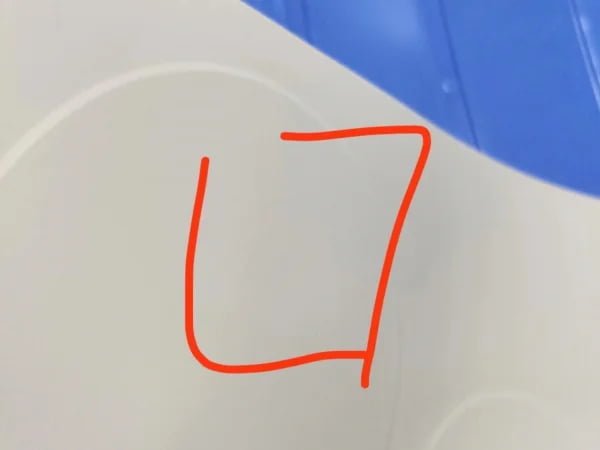
This factory report shows that the client's assembly department reported bottom flash remnants, A-surface grinding pits, and 2# A-surface tool marks.
The factory quality leader immediately led QA teams to inspect the workshop and warehouse. Audit isolation results were: 0 PCS uncleaned flash, 75 PCS A-surface grinding pits, and 1,350 PCS 2# A-surface tool marks. The production supervisor halted production immediately and banned all surface grinding operations.
The factory engineering team analyzed the root causes of the three defects.
First, uncleaned bottom flash resulted from operators suffering visual fatigue and distraction during long manual trimming sessions.
Second, A-surface pits occurred because when black spots appeared in raw rubber, operators privately used power grinders to buff surfaces. Uneven hand pressure with high-speed grinding wheels abraded the soft silicone, creating pits.
Third, 2# A-surface tool marks were located along the curved edge of an R-corner. Because R-corner curves refract light, visual inspectors could not detect slight tool marks easily, allowing a batch to escape. When manufacturing demanding custom made rubber parts, rough surface grinding is strictly forbidden.
| Defect Physical Appearance | Root Cause Generation (Factory Analysis) | Physical & Workstation Mechanism | Factory Corrective Action |
|---|---|---|---|
| Uncleaned Bottom Flash | Operator visual fatigue during manual trimming | Repeating motions reduced focus; missed edges | Retrained SOPs; standardized FQC scanning |
| A-Surface Grinding Pits | Workers used power grinders on black spots | Uneven pressure abraded soft silicone surface | Banned grinding; switched to pre-molding needle picks |
| 2# A-Surface R-Corner Tool Marks | Molding mold R-corners had micro tool marks | Light refraction on curves hid tool marks | Issued repair orders; polished 6 mold sets |
How Do Custom Rubber Parts Manufacturers Eliminate Defects via Mold Repairs and Pre-Poka-Yoke?
Hidden R-corner tool marks are difficult to spot with the naked eye. Without repairing molds, bulk shipments face mass returns. The factory must address risks starting from mold repairs and pre-vulcanization poka-yoke.
Professional custom rubber parts manufacturers establish strict pre-molding poka-yoke defense lines. The factory eliminated tool marks by repairing 6 sets of surface molds, picking out black spots with needles during raw rubber mixing, banning surface grinding, and training FQC on standardized scanning procedures to ensure a 100% pass rate.
Verification Results of 6 Mold Repairs and Pre-Vulcanization 5S Controls
To resolve grinding pits and tool marks, the factory's quality improvement team implemented three corrective actions.
First, for surface black spots, the factory shifted control nodes to the uncured rubber stage. The factory required 5S shift handovers during rubber mixing, supervising operators to pick out impurities with needles before molding, while strictly banning any post-molding surface grinding.
Second, for 2# A-surface R-corner tool marks, the engineering department issued a mold repair order immediately. The factory completed repairs and polishing on 6 sets of surface molds. Trial runs passed smoothly, and samples were confirmed OK by engineering and QC teams before obtaining formal client sign-off.
Third, the quality department educated operators using physical defect boards, requiring practical testing before job assignment. Simultaneously, FQC inspectors were trained on standardized "top-to-bottom, left-to-right" scanning inspection protocols to eliminate visual fatigue leaks.
The silicone raw materials used by the factory comply with FDA Food Contact Regulations et RoHS Environmental Directives. The factory enforces quality controls under ISO 9001 Quality Standards.
| Verification Item | Detailed Engineering Standard & Execution | Actual Confirmation & Results |
|---|---|---|
| Pre-Vulcanization Needle Pick | Pick out black spots with needles in raw rubber stage | Surface grinding pits eliminated; 100% surface integrity |
| 6 Mold Sets Repaired | Polished R-corner tool marks on 6 mold sets | Tool marks eliminated; client signed off samples |
| FQC Visual Scan SOP | Enforced "top-to-bottom, left-to-right" scanning | Visual fatigue leaks eliminated; flash leak rate 0% |
| Practical Test & Onboarding | Educate via physical boards; test staff before work | Standardized execution boosted; max interception |
Summarizing this factory report, banning improper grinding, implementing pre-vulcanization poka-yoke, and executing precise mold repairs are cornerstones for guaranteeing silicone part appearance. Through pre-controls and mold repairs, the factory successfully rescued product quality.
How to Specifically Operate with custom rubber parts manufacturers?
When executing processes and quality systems with custom rubber parts manufacturers, factories must follow standardized procedures. Third-party testing data shows that using pre-vulcanization impurity controls and High-Temperature Vulcanized (HTV) silicone rubber processes, combined with 6 mold repairs, keeps surface defect rates extremely low and achieves 100% outgoing quality.
- Halt Improper Grinding & Quarantine: Stop all surface grinding immediately upon receiving complaints, auditing warehouses and workshops to isolate abnormal parts.
- Pre-Vulcanization Needle Pick Poka-Yoke: Supervise operators to pick out black spots with needles in the raw rubber stage, banning all post-molding grinding.
- 6 Mold Repairs & Sample Sign-Off: Issue mold repair orders to polish R-corner tool marks. Resume mass production after engineering, QC, and client sample approval.
- FQC Standardized Scan & Onboarding Test: Train operators on standardized "top-to-bottom, left-to-right" visual inspection flows, requiring testing before job assignment.
External References & Industry Citations
- ISO 9001 Quality Certification: ISO 9001 Quality Management Systems Standard
- FDA Food Contact Regulations: U.S. FDA 21 CFR 177.2600 Food Contact Safety Regulations
- RoHS Environmental Directives: European Commission RoHS Directive 2011/65/EU
About Me and Dibo Tech
Brand Name: Dibo Tech
Slogan: Dibo Technology Silicone Manufacturing Specialists
Website: https://samxine.com/
Our Mission:
Grounded in strong technical capability and quality, we specialize in custom OEM and ODM silicone rubber production, offering reliable custom solutions for our clients while fulfilling social responsibility for a sustainable future.
About Me:
My name is Kunfa Ye, but my friends call me Jeff. I was born in 1986 under the sign of the Tiger. I started working in the silicone rubber manufacturing industry in 2014, and I now have fifteen years of experience. Over these years, I started from scratch and experienced every rise and fall in manufacturing. I know the hardships and rewards of entrepreneurship deeply. I always focus on professionalism and integrity in every project.
The silicone manufacturing industry seems ordinary, but it affects every part of industrial production. I know that trust stands behind every product, and trade relies on mutual success. Over the years, my proudest achievement is not achieving personal financial independence, but helping my clients optimize their supply chains and improve production efficiency. Their success brings me far more joy than personal achievements.
Now, I hope to give back to the industry—sharing experience, answering questions, and connecting resources. Whether you are a startup or an experienced industry peer, if I can help, I will do my absolute best. Because I always believe: the essence of business is the transfer of value, and true fulfillment comes from how much help you can bring to others.
Laisser un commentaire