
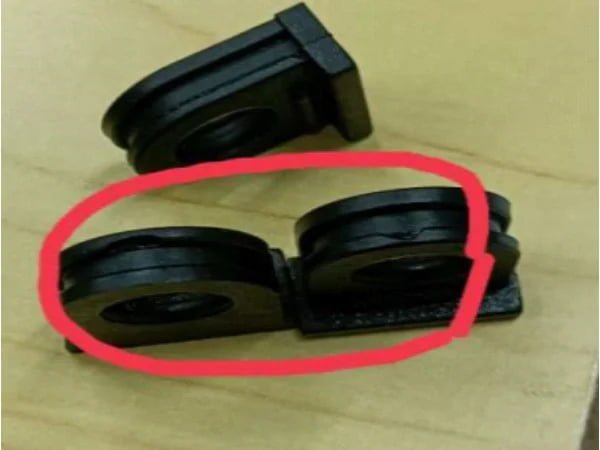
Custom Rubber Parts: How to Fix Trimming Tear Defects on Silicone Pads?
Custom Rubber Parts: How to Fix Trimming Tear Defects on Silicone Pads?
Trimming tear defects on silicone pads lead to customer returns. Thick flash increases tearing risks. I solve this problem using a real weighing scale training case study.
When manufacturing custom rubber parts, tear defects usually stem from scale zeroing errors that create thick flash. Oil-bleeding silicone tear easily when operators pull thick flash. Training workers on scale zeroing and inspecting 3 full batches eliminated tear defects completely.
Read on as I share how we reduced tear defect rates on custom silicone pads to zero using scale training and quality inspection defenses.
Why Do Scale Zeroing Errors and Oil-Bleeding Silicone Properties Cause Tears in Custom Rubber Parts?
New operator weighing errors create thick flash. Trimming workers pull heavy flash forcibly, tearing soft silicone. This creates mass scrap batches. Standardized weighing prevents thick flash.
When manufacturing custom rubber parts, failing to zero electronic scales increases raw rubber charge weights inside cavities. Thick flash combined with low tear strength in oil-bleeding silicone causes parts to tear during trimming.
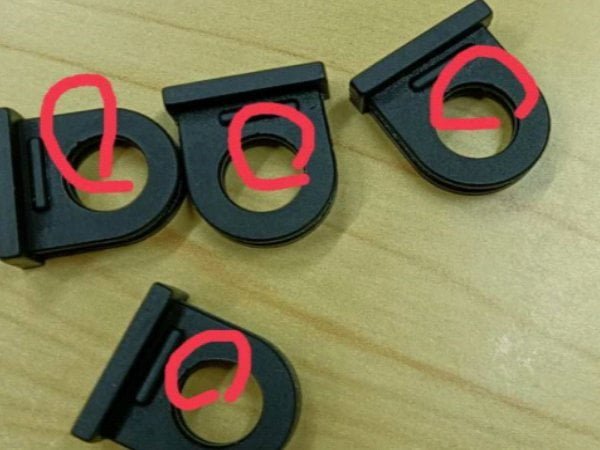
Heavy Cavity Charge and Trimming Tear Mechanical Analysis
In my fifteen years of silicone manufacturing experience, I have handled many trimming tear anomalies. A client reported that among a 20,000 pcs silicone pad shipment, sampling 315 pcs revealed 7 torn parts, yielding a 2.2% defect rate. This model never experienced similar issues before. I scrapped the sorted 69 defective parts immediately and arranged replenishment.
I led my engineering team in a deep teardown. We discovered that a new operator failed to zero the electronic scale before weighing preform rubber sheets. This increased preform charge weights, creating thick parting line flash after molding.
This product used oil-bleeding silicone. Oil-bleeding formulations exhibit lower tear strength with slight oil bleeding on surfaces. When packing staff pulled thick flash manually, stress concentrated along parting lines, tearing the silicone pads. When manufacturing custom silicone parts and other silicone pads, controlling preform weight tolerances is essential.
| Process Metric | Pre-Improvement State (Scale Error) | Upgraded Standard (Scale Zeroed) | Physical Impact on Trimming Tears |
|---|---|---|---|
| Electronic Scale Zeroing | New worker missed zeroing; tare accumulated | Mandatory zeroing before every charge | Preform weight precise; zero overweight |
| Molded Flash Thickness | Cavity overweight; flash thick | Preform weight standard; flash paper-thin | Reduced trimming stress; easy to trim |
| Trimming Tear Rate | Manual pulling tear rate at 2.2% | Precision trimming tear rate at 0% | Tear notches eliminated; 100% yield |
How Did Scale Zeroing Training and 100% QC Inspections Solve Custom Rubber Parts Tear Defects?
Relying on manual trimming habits alone fails to intercept thick flash tearing. Without correcting preform charge weights, trimming tears recur continuously. Operator training and 100% QC inspections provide dual protection.
When producing custom rubber parts, we trained new workers on scale zeroing procedures. Meanwhile, we mandated QC inspectors to perform 100% full inspections on the next 3 delivery batches to block defect outflows.
SOP Training Execution and 3-Batch Full QC Inspection Results
To resolve weighing errors and trimming tears, I led my team to execute corrective actions. First, we conducted specialized operational training for new production operators, mandating scale zeroing verification before every weighing step.
Second, to address previous inspection gaps, we instituted temporary tightened controls. We mandated 100% full QC inspections on the next 3 consecutive shipments for this part number before release. Trimmers switched to precision shears instead of manual pulling.
Our raw materials comply with FDA Food Contact Regulations et RoHS Environmental Directives. Our factory enforces quality controls under ISO 9001 Quality Standards. the improved silicone pads passed delivery checks with 100% qualification across subsequent orders.
| Verification Item | Engineering Standard & Specification | Actual Confirmation & Results |
|---|---|---|
| Weighing SOP Training | Train new workers on scale zeroing & weight limits | Weighing accuracy reached 100%; flash normalized |
| Trimming Tool Upgrade | Replaced manual pulling with precision shears | Stress concentration avoided; tear rate dropped to 0% |
| Full QC Inspection Defense | Enforce 100% full QC on next 3 consecutive batches | Micro-tears intercepted; delivery pass rate reached 100% |
| Outgoing Quality Approval | Zero defects confirmed; restored standard AQL checks | Client feedback positive; bulk production stabilized |
In summary, strict preform weight control and standardized trimming habits are essential to safeguard oil-bleeding silicone pad quality. Through operator training and 3-batch 100% QC inspections, we eliminated trimming tear defects permanently.
What are custom rubber parts?
custom rubber parts are specialized rubber and silicone components designed to solve industrial sealing, electronic device shock absorption, and silicone pad trimming tear pain points. Their core function is to help users achieve high-precision dimension control, reliable sealing, and reduced scrap rates in a short time.
The 3 main advantages of applying custom rubber parts in manufacturing include:
Advantage 1: Superior Shock Protection & Sealing: Relies on high-elasticity rubber to absorb impact force and reduce device breakage and leakage risks by over 90%.
Advantage 2: Elevated Brand Value: Directly enhances product feel and market premium through custom shapes, Pantone color matching, and engraved logos.
Advantage 3: Streamlined Supply Chain Cost: Controls quality from 3D modeling to mass manufacturing, significantly cutting mold errors, rework, and return costs.
How to Specifically Operate custom rubber parts?
When manufacturing custom custom rubber parts in volume, factories must follow standardized procedures. Third-party testing data shows that using precision preform weighing and compression molding with High-Temperature Vulcanized (HTV) silicone rubber combined with 200°C post-curing baking for 4 hours keeps dimensional tolerances within ±0.05 mm while outgoing AQL reaches MA:0.4 / MI:0.65 standards.
- Preform Weighing & Scale Zeroing: Confirm electronic scale zeroing before every weighing step to control charge tolerances.
- Compression Molding & Flash Control: Utilize high-precision custom rubber moulding steel molds to keep parting line flash paper-thin.
- Precision Shearing & IPQC Patrols: Trim flash using precision shears while inspectors check parting lines for tears.
- Full QC Inspection & AQL Sampling: Enforce 100% QC inspections on abnormal batches while routine shipments follow ISO 9001 standards.
External References & Industry Citations
- ISO 9001 Quality Certification: ISO 9001 Quality Management Systems Standard
- FDA Food Contact Regulations: U.S. FDA 21 CFR 177.2600 Food Contact Safety Regulations
- RoHS Environmental Directives: European Commission RoHS Directive 2011/65/EU
About Me and Dibo Tech
Brand Name: Dibo Tech
Slogan: Dibo Technology Silicone Manufacturing Specialists
Website: https://samxine.com/
Our Mission:
Grounded in strong technical capability and quality, we specialize in custom OEM and ODM silicone rubber production, offering reliable custom solutions for our clients while fulfilling social responsibility for a sustainable future.
About Me:
My name is Kunfa Ye, but my friends call me Jeff. I was born in 1986 under the sign of the Tiger. I started working in the silicone rubber manufacturing industry in 2014, and I now have fifteen years of experience. Over these years, I started from scratch and experienced every rise and fall in manufacturing. I know the hardships and rewards of entrepreneurship deeply. I always focus on professionalism and integrity in every project.
The silicone manufacturing industry seems ordinary, but it affects every part of industrial production. I know that trust stands behind every product, and trade relies on mutual success. Over the years, my proudest achievement is not achieving personal financial independence, but helping my clients optimize their supply chains and improve production efficiency. Their success brings me far more joy than personal achievements.
Now, I hope to give back to the industry—sharing experience, answering questions, and connecting resources. Whether you are a startup or an experienced industry peer, if I can help, I will do my absolute best. Because I always believe: the essence of business is the transfer of value, and true fulfillment comes from how much help you can bring to others.
Laisser un commentaire