

Does food safe silicone Release microplastics? Truth Guide
Does Silicone Release Microplastics?
Are you worried that silicone kitchenware releases microplastics into food? Choosing wrong kitchen tools leads to long-term hidden chemical residues.
Pure cured silicone contains zero petroleum carbon chains, releasing no traditional microplastics. Under high-heat steam or physical friction, silicone can shed micron-scale polysiloxane particles. Certified food-grade silicone maintains particle release levels far below standard plastics.
Why Is Particle Shedding From food safe silicone Different From Plastic microplastics ?
Global anxieties surrounding microplastics raise concerns about silicone tableware. Confusing chemical polymer structures leads to wrong purchasing decisions.
Standard plastics derive from petroleum carbon chains, shedding traditional microplastics. Food safe silicone relies on a siloxane backbone, releasing polysiloxane particles rather than petroleum plastic fragments.

Siloxane Backbone Structure and Low Particle Migration
Traditional petroleum plastics like polypropylene possess carbon-carbon polymer backbones. These plastics shed carbon-chain microplastics under heat and physical scraping. In contrast, genuine food safe silicone relies on a polydimethylsiloxane structure. Its main chain consists of siloxane silicon-oxygen bonds rather than petroleum carbon chains.
Compliant with eCFR 21 CFR 177.2600 regulations, food-grade silicone remains chemically stable under standard kitchen temperatures. It does not release traditional petroleum microplastics into food. However, physical friction can dislodge micron-scale polysiloxane particles. These particles differ fundamentally from petroleum plastic fragments. Learn more on our Dibo Tech homepage.
| Material Category | Polymer Backbone Structure | Shed Particle Type | High Risk Usage Scenario |
|---|---|---|---|
| Standard Food Plastics (PP/PE) | Carbon-Carbon (C-C) Petroleum | Carbon Microplastics / Nanoplastics | Microwave heating, boiling, physical scraping |
| Food Safe Silicone | Silicon-Oxygen (Si-O) Inorganic | Polysiloxane Particles (PDMS) | Extreme dry heat, long steam sterilization |
| Low-Grade Blended Silicone | Siloxane Chain + Mineral Oil | Plasticizers + Silicone Particles | Bubbling in hot oil, sticky oil weeping |
Under What Extreme Conditions Does food safe silicone Release Polysiloxane Particles?
Does steam sterilization and heating cause silicone parts to age and bubble? Using cheap silicone increases chemical leaching risks. You need clear operational parameters.
Physical Degradation Mechanisms Under Extreme Operating Parameters
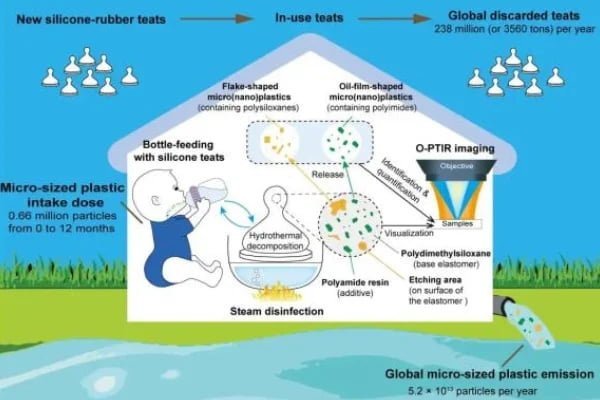
Evaluating particle release from food safe silicone requires analyzing real operating conditions. Academic studies show that repeated steam sterilization corrodes silicone teats over time. This corrosion generates micron-scale polysiloxane particles.
Exceeding 250 degrees Celsius or dry-burning silicone triggers thermal degradation. Low-grade silicone filled with paraffin oil and calcium carbonate bubbles in hot oil, leaching hazardous additives.
We reference ISO 10993 biocompatibility principles to regulate raw material purity. Plastic containers cooked in microwaves can release millions of microplastics per square centimeter. Platinum-cured silicone maintains far lower particle shedding rates. The European Chemicals Agency ECHA maintains strict oversight regarding synthetic polymer particles. Choosing high-grade platinum-cured silicone ensures minimum particle release during food contact.
| Usage Parameter | Released Particle Type | Relative Release Quantity | Safety Recommendation |
|---|---|---|---|
| Standard Cooking (≤200°C) | Trace siloxane molecules | Negligible (Below safety limit) | Safe for daily cooking |
| Repeated Steam Sterilization | 0.6–332 μm Polysiloxane particles | Low to moderate | Replace worn teats regularly |
| Bubbling in Hot Oil (Low-Grade) | Paraffin plasticizers + fillers | High | Discard immediately |
| Over 250°C or Open Flames | Volatile siloxanes + thermal ash | Moderate to high | Avoid dry burn and open flame |
In conclusion, certified food-grade silicone is not a petroleum plastic. It releases no traditional microplastics under standard operation. However, extreme heat, steam sterilization, or low-grade fillers can shed micron-scale polysiloxane particles. Choosing quality platinum-cured silicone guarantees safe use.
Frequently Asked Questions (FAQ)
Q1: What is the difference between silicone polysiloxane particles and petroleum microplastics? Answer: Petroleum microplastics originate from carbon-chain plastics, carrying persistent environmental and chemical migration risks. Silicone sheds siloxane particles with a silicon-oxygen backbone, free from BPA and phthalates, offering higher chemical inertness.
Q2: Why is a bubbling silicone spatula in hot oil more dangerous than particle shedding? Answer: Bubbling and sticky oil weeping indicate that cheap mineral oil or fillers were blended into the rubber. These additives leach rapidly in hot oil, presenting far higher chemical toxicity risks than pure silicone particles.
Q3: How can I minimize particle shedding from food safe silicone components? Answer: Select certified platinum-cured silicone products and avoid dry heating silicone kitchenware above 250°C. For infant silicone products subjected to frequent steam sterilization, inspect surfaces for wear and replace aged components promptly.
About Me and Dibo Tech
Brand Name: Dibo Tech
Slogan: Dibo Technology Silicone Manufacturing Specialists
Website: https://samxine.com/
Our Mission:
Grounded in strong technical capability and quality, we specialize in custom OEM and ODM silicone rubber production, offering reliable custom solutions for our clients while fulfilling social responsibility for a sustainable future.
About Me:
My name is Kunfa Ye, but my friends call me Jeff. I was born in 1986 under the sign of the Tiger. I started working in the silicone rubber manufacturing industry in 2014, and I now have fifteen years of experience. Over these years, I started from scratch and experienced every rise and fall in manufacturing. I know the hardships and rewards of entrepreneurship deeply. I always focus on professionalism and integrity in every project.
The silicone manufacturing industry seems ordinary, but it affects every part of industrial production. I know that trust stands behind every product, and trade relies on mutual success. Over the years, my proudest achievement is not achieving personal financial independence, but helping my clients optimize their supply chains and improve production efficiency. Their success brings me far more joy than personal achievements.
Now, I hope to give back to the industry—sharing experience, answering questions, and connecting resources. Whether you are a startup or an experienced industry peer, if I can help, I will do my absolute best. Because I always believe: the essence of business is the transfer of value, and true fulfillment comes from how much help you can bring to others.
Lascia un commento