

How Do You Choose a Custom Silicone Products Manufacturer Without Burning Your Budget?
How Do You Choose a Custom Silicone Products Manufacturer Without Burning Your Budget?
Every week, I open my inbox to find beautifully rendered CAD files from buyers ready to start production. They've designed the perfect product—only to discover during our technical review that the wall thickness won't hold shape, the undercut can't eject from the mold, or the requested material grade doesn't match their certification needs. The conversations that follow waste weeks and sometimes tank entire projects before a single prototype exists.
When you select a custom silicone products manufacturer, you're not buying unlimited design freedom—you're buying expertise in matching your product concept with material physics, mold constraints, and order economics. The manufacturer's technical review process determines whether your project gets quoted accurately or hits expensive revision loops after you've already committed deposits.

Here's what separates smooth custom silicone projects from budget-draining nightmares: understanding what your manufacturer actually evaluates before saying yes. Let me walk you through the four checkpoints that determine whether your RFQ moves forward cleanly or gets sent back for costly redesigns.
What Material Grade Does Your Application Actually Require?
Three weeks ago, a wholesaler sent us an RFQ for silicone baking mats with "food-safe material" noted in the requirements. During our intake call, I asked which certification they needed. Silence. Then: "Aren't all food silicones the same?"
Industrial-grade, food-grade, and medical-grade silicone use different base polymers, catalysts, and quality control protocols. Your manufacturer should ask about your target market's regulatory requirements before recommending a material—not after you've approved the quotation.

When clients come to us saying they need "food-grade silicone," I pull out a decision matrix I've built from hundreds of requirement reviews:
Application → Material Grade → Certification Path
| Your Product Goes | Minimum Grade | Required Certifications | Testing Cost Impact |
|---|---|---|---|
| In contact with food (EU market) | Food-grade | LFGB | +$800–$1,200 per material |
| In contact with food (US market) | Food-grade | FDA 21 CFR 177.2600 | +$600–$1,000 per material |
| Medical device component | Medical-grade | ISO 10993 biocompatibility | +$3,000–$8,000 per material |
| Industrial sealing/cushioning | Industrial-grade | REACH compliance | +$200–$400 per material |
| Infant products | Food-grade | CPSIA, LFGB, FDA | +$1,500–$2,500 per material |
Here's the trap: industrial-grade silicone costs 20–30% less than food-grade, which itself costs 40–60% less than medical-grade. Buyers naturally gravitate toward the cheaper option—then discover during production that their target retailer requires LFGB certification, which industrial-grade material can't pass.
I've walked clients through this material selection breakdown dozens of times, and the same confusion surfaces: they think "platinum-cured" automatically means food-safe. It doesn't. Platinum curing is a manufacturing method; food-grade is a material specification with testing requirements. A manufacturer might use platinum-cured industrial silicone that never underwent FDA migration testing.
How to Verify Material Claims During Supplier Selection
When I quote a food-grade project, clients should ask me for:
- Material Safety Data Sheet (MSDS) showing the specific silicone formulation
- FDA compliance letter from the raw material supplier
- Third-party test reports for the specific material batch (not generic certification)
- Production lot traceability system documentation
A manufacturer who deflects these requests with phrases like "our material is certified" without providing documentation numbers isn't managing material grades properly. You'll face audit failures when your brand reaches retail buyers.
The cost difference between material grades doesn't stop at raw material pricing. Medical-grade projects require cleanroom molding environments, which add facility overhead to every quote. Food-grade needs dedicated production lines to prevent cross-contamination with industrial materials. Factor these into your budget comparison between suppliers—a manufacturer quoting 15% below market on food-grade may be substituting industrial material or skipping validation testing.
Can Your Design Actually Get Out of the Mold?
Last month, a brand owner sent us drawings for a silicone tablet sleeve with a decorative lip that curved inward around the edges. Beautiful design. Physically impossible to manufacture without destroying the mold every time we tried to eject the finished part.
Before you commit to a manufacturer's quote, ask them to mark up your drawings showing where geometry changes are required. If they quote without requesting design modifications, they either haven't reviewed your files properly or plan to surprise you with changes after you've paid the deposit.
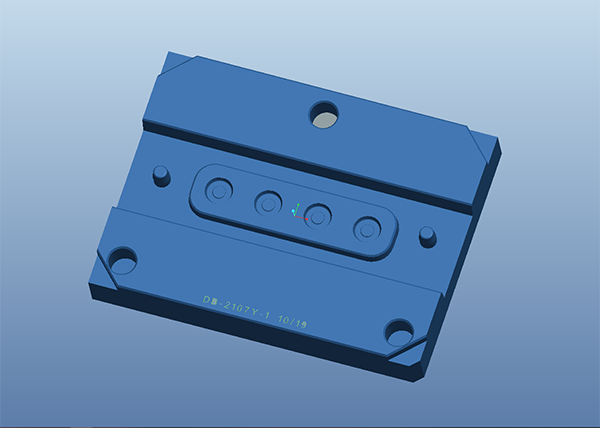
When I open a client's CAD file, I'm checking for three geometry problems that block production:
1. Draft Angle Violations
Silicone parts need draft angles—slight tapers—so they release from the mold without tearing. Vertical walls stick. Here's what I mark up most often:
- Submitted design: Straight vertical walls (0° draft)
- Production requirement: Minimum 2–3° draft angle on all vertical surfaces
- Client impact: The part will look slightly tapered instead of perfectly vertical
Buyers designing products in CAD software naturally draw 90° angles because they look cleaner. But when the mold opens, those vertical surfaces create suction that either tears the part or requires demolding forces that crack the mold cavity. I've had clients argue that their previous manufacturer made vertical walls work—usually, those manufacturers were hand-trimming torn edges and hiding the quality issue.
2. Wall Thickness Inconsistencies
I received drawings last week for a silicone storage container with walls ranging from 0.8mm to 4mm in the same part. The thin sections would tear during demolding; the thick sections would trap air bubbles during vulcanization.
- Workable range: 1.5mm minimum, 3mm maximum, with gradual transitions
- Common mistake: Thin decorative sections connecting thick structural areas
- Fix: Gradual thickness transitions over at least 5mm of distance
When wall thickness jumps suddenly, silicone flows unevenly during injection. You get incomplete filling in thin areas or air voids in thick sections. The manufacturer should show you a thickness analysis overlay before quoting—if they don't mention wall thickness, they haven't simulated material flow.
3. Undercut Traps
An undercut is any feature that prevents straight mold separation. That decorative groove you added? If it faces the wrong direction, the part physically can't come out without a complex side-action mold that costs 60–80% more.
Acceptable undercuts: Shallow textures under 0.5mm depth on external surfaces
Expensive undercuts: Internal grooves, recessed logos, snap-fit features requiring slides
Impossible undercuts: Reverse-draft cavities or enclosed voids
I've reviewed hundreds of designs where clients added internal grips or recessed branding without realizing each undercut adds a mold component. A two-cavity simple mold costs $3,000–$5,000. Add three undercuts requiring slides, and you're at $8,000–$12,000 for the same part count.
The Technical Review Process You Should Demand
A legitimate custom silicone manufacturer will provide a marked-up drawing within 48 hours of receiving your files, showing:
- Areas requiring draft angle adjustment (marked in red)
- Wall thickness violations (noted with measurements)
- Undercut features that need redesign or will add mold cost
- Parting line location (where the mold halves meet—affects appearance)
If your manufacturer quotes without providing this markup, you're heading into a revision loop. They'll "discover" these issues after you've approved pricing, then charge change order fees to fix problems they should have caught during technical review.
How Do MOQ and Mold Costs Actually Affect Your Unit Price?
A trading company contacted me last month asking for quotes on silicone kitchen utensils at 500 units. Their target retail price meant they needed a $2.80 unit cost. I sent them the reality check: at 500 units, their actual cost would be $11.60 per piece. At 5,000 units, we could hit $2.95.
Your custom silicone manufacturer's unit price means nothing without knowing how mold costs amortize across your order quantity. The same product from the same supplier can cost 4x more per unit depending on volume.
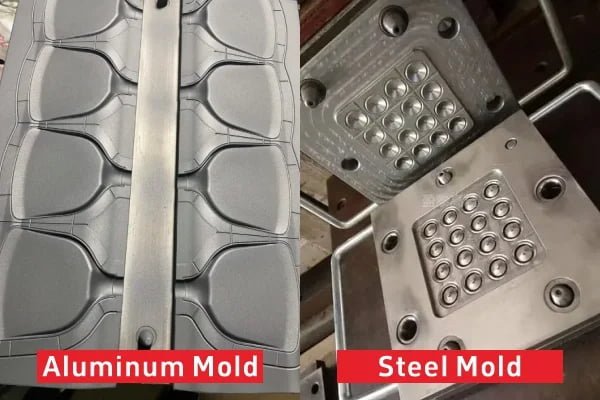
Here's the cost structure buyers miss when comparing manufacturer quotes:
The Real Cost Breakdown
For a medium-complexity silicone product (like a phone case or kitchenware item):
| Componente di costo | One-Time | Per-Unit | How It Divides |
|---|---|---|---|
| Mold tooling | $4,000–$7,000 | — | Across total lifetime production |
| Materiale | — | $0.60–$1.20 | Every unit |
| Labor (molding, deflashing, QC) | — | $0.40–$0.80 | Every unit |
| Packaging | — | $0.10–$0.30 | Every unit |
At 500 units with a $5,000 mold:
- Mold cost per unit: $10.00
- Material + labor + packaging: ~$1.50
- Total: $11.50 per unit
At 5,000 units with the same $5,000 mold:
- Mold cost per unit: $1.00
- Material + labor + packaging: ~$1.50 (slight volume discount)
- Total: $2.50 per unit
I walk through this calculation with every client who submits an RFQ below our 3,000-unit MOQ. The conversation usually goes:
Client: "Can you do 500 units at $3 per piece?"
Me: "The mold costs $5,000. At 500 units, you're paying $10 per unit just for tooling."
Client: "But Supplier B quoted me $4 per unit at 500 pieces!"
Here's what's happening with Supplier B's quote: they're either absorbing the mold cost as a loss leader (planning to make profit on your reorders), using a low-quality mold that won't survive 5,000 cycles, or they're planning to spread your mold cost across multiple clients' orders—meaning your design isn't exclusive.
The MOQ Conversation You Must Have
When a manufacturer states their MOQ, ask these specific questions:
-
"Is the mold cost included in the unit price or quoted separately?"
Some manufacturers bundle mold into per-unit pricing; others separate it. You need to know which to compare quotes accurately. -
"How many production cycles is the mold rated for?"
A $3,000 mold might only survive 10,000 units. A $6,000 mold using hardened steel can produce 100,000+ units. If you're planning multiple orders, mold longevity affects total program cost. -
"Who owns the mold tooling?"
Some manufacturers retain ownership and charge you per-use fees. Others transfer ownership after your first order. This determines whether you can move production to another supplier later. -
"What's your reorder MOQ after the initial tooling order?"
Initial orders often require 3,000–5,000 units to justify mold cost. Reorders using existing tooling might drop to 1,000–1,500 units since you've already paid for the mold.
I've had clients choose manufacturers based purely on low per-unit quotes, then discover their "savings" disappeared when forced into 5,000-unit reorders instead of the 1,000-unit replenishment runs their cash flow needed.
Hidden Costs in Below-MOQ Orders
If you absolutely need a quantity below the manufacturer's stated MOQ, expect these adjustments:
- Setup fee surcharge: $300–$800 to justify machine setup time
- Rush tooling premium: 20–40% markup if you need faster mold turnaround
- Reduced quality tolerance: Some manufacturers won't commit to tight tolerances on short runs
- No mold modifications included: Standard quotes include one round of tweaks; short runs often exclude this
One trading company I worked with pushed for a 300-unit trial order on a $6,000 mold. We agreed, but with clear terms: the $20-per-unit price included no design revisions, standard tolerance only, and full payment upfront. They approved, got their samples to test the market, then came back with a 5,000-unit order at $3.20 per unit when their retail tests succeeded.
That's the legitimate use case for below-MOQ orders: market testing when you're uncertain of demand. But don't mistake trial pricing for production economics.
What Material Properties Can Your Manufacturer Actually Guarantee?
A wholesaler sent us a spec sheet last week requesting silicone with "Shore A 70 hardness, temperature resistance to 300°C, and high tensile strength." I called them back: "Are you designing a gasket or a kitchenware handle? These specs conflict."
Your custom silicone manufacturer should question spec requests that exceed material physics or mismatch your application. If they accept impossible specifications without pushing back, they're either inexperienced or planning to deliver something different than what you specified.
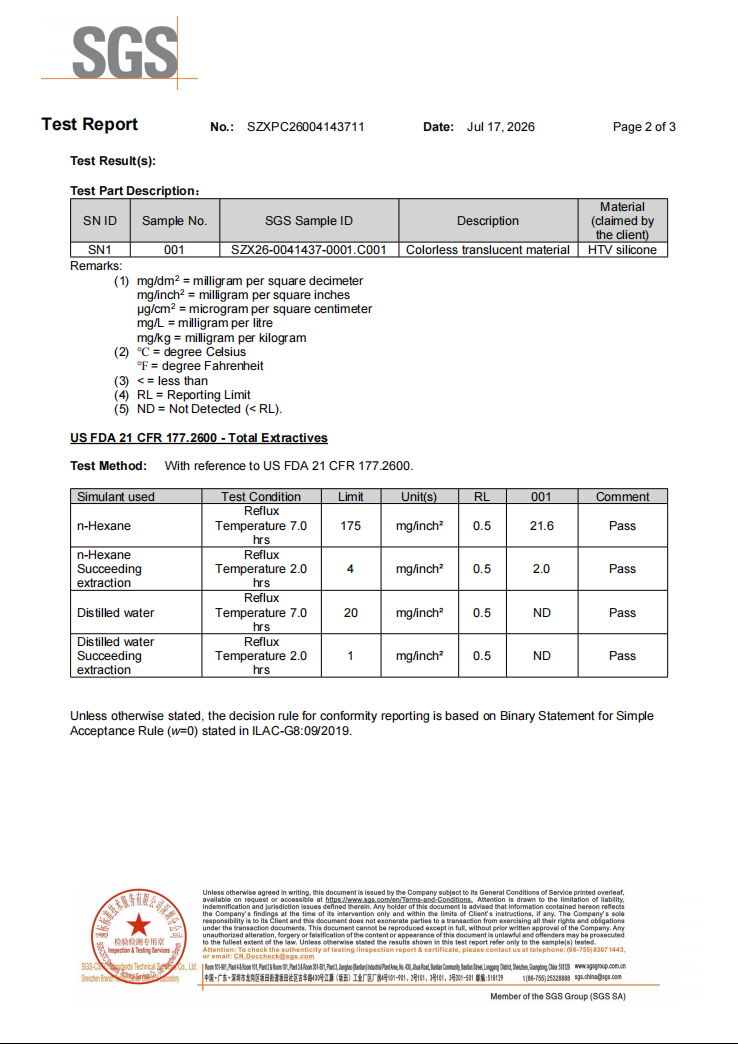
Here's where spec confusion creates post-production disputes:
The Hardness-Flexibility Trade-Off
Buyers frequently request:
- Shore A 70 hardness (firm, structural feel)
- High flexibility and bend recovery
- Soft-touch surface texture
You can't have all three. Hardness and flexibility move inversely:
| Shore A Hardness | Typical Application | Flexibility Level | Structural Stability |
|---|---|---|---|
| 10–30 | Gel cushions, soft grips | Extremely flexible | Poor—deforms under load |
| 40–60 | Kitchenware, phone cases | Moderate flex | Good—holds shape |
| 70–80 | Industrial seals, gaskets | Minimal flex | Excellent—rigid structure |
When I receive a spec sheet asking for Shore A 70 with "excellent flexibility," I send back the question: "Which matters more for your application—dimensional stability or bend recovery?" Nine times out of ten, the buyer hasn't tested the actual use case and copied specs from a reference product made in a different hardness range.
Temperature Resistance Reality Check
Standard silicone temperature ratings:
- Continuous use: -40°C to +200°C
- Short-term exposure: Up to 250°C for under 30 minutes
- Special high-temp grades: -60°C to +300°C (significant cost increase)
I've had kitchen product buyers request "oven-safe to 300°C" without realizing:
- Most home ovens rarely exceed 230°C
- High-temp grades cost 50–70% more than standard food-grade silicone
- Even high-temp silicone degrades with prolonged exposure above 250°C
The conversation I have goes like this:
Client: "We need oven-safe to 300°C."
Me: "What's the actual use case? Baking at 200°C for an hour, or handling pans at 250°C for seconds?"
Client: "Baking at 180–200°C mostly."
Me: "Standard food-grade silicone rated to 230°C will work fine and cost 40% less."
If your manufacturer doesn't ask about real-world use conditions before recommending high-temp grades, they're overselling material you don't need.
Tensile Strength vs. Tear Resistance
Spec sheets often list tensile strength requirements without understanding what the number means. Here's the breakdown:
- Tensile strength: Force required to stretch the material until it breaks (measured in MPa)
- Tear resistance: Force required to propagate an existing cut or nick (measured in kN/m)
- Elongation at break: How far the material stretches before tearing (measured in %)
For most consumer products, tear resistance matters more than tensile strength. A silicone tablet sleeve needs to resist tearing when you pull it over the tablet's corners—tensile strength alone won't predict that performance.
When clients submit specs copied from technical datasheets without context, I ask: "What failure mode are you trying to prevent?" Usually they're worried about tearing during use, not stretching during assembly. That shifts the material selection toward tear-resistant formulations, which might have lower tensile numbers but better real-world durability.
The Testing Conversation That Protects Your Budget
Before your manufacturer quotes, ask them:
-
"What property testing do you perform in-house vs. through third-party labs?"
In-house testing for hardness and basic properties is standard. Certifications like FDA or LFGB require third-party validation. Know what you're paying for. -
"Can you provide test reports from previous batches using this material grade?"
Legitimate manufacturers keep test records. If they can't show you existing data, they may not have process controls in place. -
"What tolerance ranges do you guarantee for [critical spec]?"
Shore hardness typically varies ±5 points in production. If your spec absolutely requires Shore A 50, the manufacturer should explain how they'll control the range to 47–53 instead of 45–55. -
"What happens if test results fall outside specifications?"
Define this in your purchase agreement. Do they remake the batch? Issue partial credit? The answer reveals their quality commitment.
I've seen projects collapse because buyers specified Shore A 60 ±2 (nearly impossible in mass production) without discussing realistic tolerances during quoting. The manufacturer delivered Shore A 58–62, which met industry standards but violated the PO terms. Both sides lost time and money in disputes that a pre-production tolerance conversation would've prevented.
Frequently Asked Questions
How long does custom silicone mold development typically take?
From approved drawings to first samples: 25–35 days for standard molds, 40–50 days for complex molds with multiple slides or intricate details. Rush service can compress this to 18–22 days with premium fees, but rushed molds often require more revisions. When I review project timelines with clients, I always add 10–15 days buffer for the technical review and drawing modification cycle that happens before mold-making starts.
What's the minimum order quantity for truly custom silicone products?
Most manufacturers set MOQs at 3,000–5,000 units for first orders involving new mold tooling. Below 3,000 units, you're paying disproportionate mold costs—unless you're doing market testing and accept the premium. For reorders using existing molds, MOQs often drop to 1,000–1,500 units since tooling is paid. We've done 500-unit runs for established clients testing new colorways, but the per-unit economics only work when the core mold already exists.
Can I get my custom silicone products certified after production?
Certification testing should happen during material selection—not after you've produced inventory. Testing labs need raw material samples and production samples to validate compliance with FDA, LFGB, or medical standards. Retroactive testing often fails because manufacturers might have used industrial-grade material without documentation. I've walked three clients through expensive lessons here: they produced 10,000 units with uncertified material, then discovered their retail buyer required LFGB certificates they couldn't obtain. The inventory became unusable.
What color options exist for custom silicone manufacturing?
Standard Pantone color matching works for most projects, with minimum order quantities per color typically around 1,000–1,500 units. Special effects like glow-in-the-dark, glitter, or marbled patterns require 3,000+ units and 15–25% cost premiums. I recommend starting with solid colors for initial orders—test market response before investing in specialty colors that increase both mold complexity and minimum order requirements. Color consistency across batches varies ±5% in standard production; tighter matching needs controlled pigment batching.
How do I protect my custom silicone product design from being copied?
Mold ownership is your primary protection. Purchase agreements should specify that you own the tooling and the manufacturer cannot use your mold for other clients. Request mold destruction or return clauses if you change suppliers. For design protection, file design patents in your target markets before showing drawings to manufacturers—especially if your product has unique functional or ornamental features. I've seen manufacturers replicate client designs for other buyers six months after the original order, claiming the geometry was "standard industry design."
Conclusione
Choosing a custom silicone products manufacturer isn't about finding the lowest per-unit price—it's about identifying who will catch design problems before they cost you money, recommend appropriate material grades for your actual use case, and explain how mold costs affect your order economics honestly. The manufacturer who quotes fastest often skips the technical review that prevents expensive revisions later.
When you're evaluating suppliers, watch for these green flags: they mark up your drawings with required changes within 48 hours, they question spec requests that exceed material physics, they explain mold cost amortization across different order quantities, and they provide third-party test reports for their material claims. If a manufacturer accepts your RFQ without technical pushback, you're heading into a revision loop.
I've spent years reviewing client drawings and explaining why beautiful CAD designs need modification for production reality. The projects that succeed start with this conversation, not after deposits are paid. Ready to start your custom silicone project with a manufacturer who'll review your requirements honestly? Contact us with your drawings and target specifications—we'll send you a marked-up technical review within two business days, showing exactly what's feasible and what needs adjustment before quoting.
Lascia un commento