
LSR Injection Molding vs HTV: Food Grade Silicone Guide
HTV Compression vs LSR Injection Molding: How to Choose the Right Food-Grade Silicone Mold Process?
Selecting the wrong silicone molding process causes high tooling costs and low production efficiency. You need a clear selection guide for your project.
HTV compression molding suits low-volume, large-size, and simple products at lower tooling costs. LSR injection molding suits high-volume, high-precision, and flashless parts with short cycle times and extreme cleanliness.
Many buyers focus solely on cheap tooling upfront, suffering low efficiency and high rejection rates during mass production. Follow my guide to understand the true differences between both processes.
Why Are Low-Volume and Large-Sized Parts Better Suited for HTV food grade silicone molding ?
Does investing in expensive tooling during early product testing create huge financial risks? If your order volume is low, excessive upfront costs will drain your cash flow. You need a low-cost launch solution.
HTV food grade silicone molding utilizes solid rubber and simple steel molds, offering lower tooling costs and flexible MOQs. It is ideal for cake molds, ice trays, and large baking mats.
HTV Solid Compression Molding Details and Boundaries
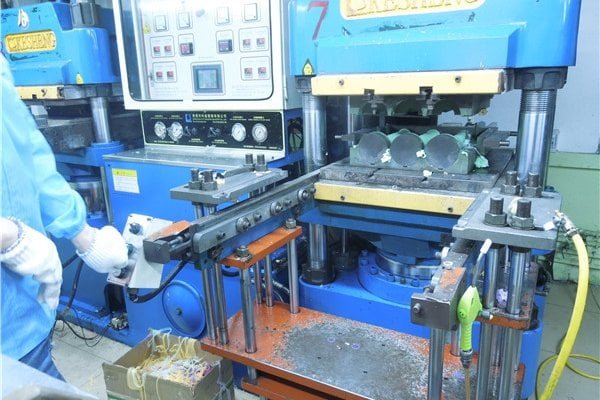
HTV (High Temperature Vulcanized) compression molding uses solid rubber compounds. Workers weigh raw rubber manually and place it inside open mold cavities before heating and pressing with hydraulic presses. Mold structures remain simple, using P20 steel or aluminum alloys. This keeps tooling costs low, allowing production runs starting at a few hundred pieces. This process suits large cake molds, ice trays, and baking mats.
However, this process generates parting line flash that requires manual or cryogenic trimming. If using peroxide curing systems, parts must undergo hours of high-temperature post-curing baking to remove residual odors and pass eCFR 21 CFR 177.2600 food contact tests. For simple startup projects, this process saves significant capital.
HTV Compression Process Profile and Cost Analysis.
| Evaluation Dimension | HTV Solid Compression Profile | Sourcing Decision Insight |
|---|---|---|
| Tool Steel & Capital | P20 steel or aluminum, lower cost | Ideal for projects with limited initial budgets |
| MOQ & Launch Threshold | Flexible runs starting at 500 pcs | Ideal for prototype testing & market validation |
| Flash & Post-Processing | Heavy flash requires manual trimming | Increases long-term labor expenses |
| Target Product Types | Large baking mats, cake molds, ice trays | Best for simple, thick-walled products |
Why Must High-Precision and High-Volume Parts Use LSR injection molding ?
Are flash debris and dimensional errors causing quality test failures for your food-grade parts? Manual trimming causes low efficiency and secondary contamination risks. Without upgrading your process, you cannot meet strict compliance standards.
LSR injection molding utilizes liquid silicone and closed mirror-finish molds, completing injection cycles in minutes. It yields tolerances of ±0.02 mm with virtually zero flash, perfect for precision components.
Liquid Injection Precision Control and Efficiency Benefits
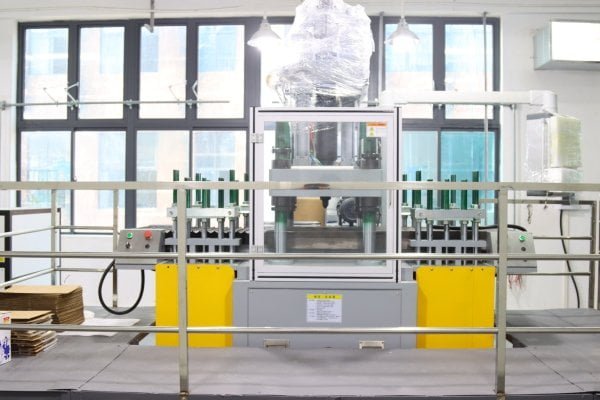
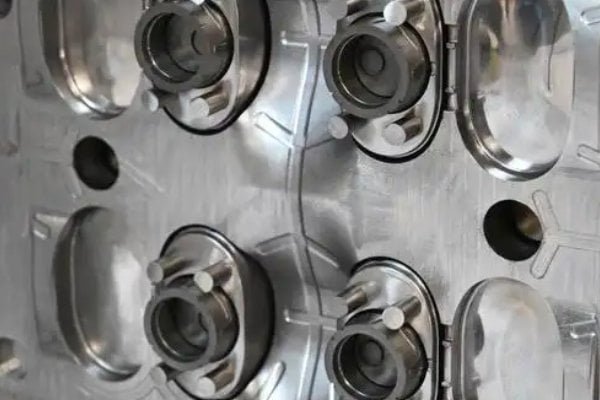
LSR (Liquid Silicone Rubber) injection molding pumps two-part liquid silicone into closed mold cavities using precision dosing units. The material cures rapidly under platinum catalysis. Molds use S136 mirror-finish steel machined via high-precision CNC and EDM. Although tooling costs are higher, production efficiency is remarkable. One mold can feature dozens of cavities with short cycle times.
Parts emerge virtually flashless with dimensional tolerances reaching ±0.02 mm. This process naturally suits gummy trays, chocolate inserts, and pacifier parts. Platinum cure systems are pure and odorless, passing European BfR LFGB e ISO 10993 standards easily. High automation eliminates secondary contamination risks.
LSR Injection Molding Profile and Efficiency Analysis
| Evaluation Dimension | LSR Liquid Injection Profile | Sourcing Decision Insight |
|---|---|---|
| Tool Steel & Accuracy | S136 mirror steel, ±0.02mm accuracy | High tooling cost, extreme consistency |
| Efficienza della produzione | Multi-cavity, 1-2 min cycle time | Extremely low unit cost in mass production |
| Part Flash & Surface | Virtually zero flash, zero trimming | Eliminates labor costs and contamination |
| Target Product Types | Gummy trays, pacifiers, precision inserts | Best for complex, small-scale parts |
How Can Buyers Select the Right silicone molding process Based on Volume and Cost?
Is hesitating between two manufacturing processes delaying your product launch? Looking only at unit prices while ignoring tooling amortization leads to wrong decisions. You need a clear evaluation framework.
Selecting a silicone molding process depends on order volume and part complexity. Choose HTV compression for runs under 1,000 units to minimize tooling barriers; choose LSR injection for high-precision runs over 10,000 units for total cost savings.
Order Volume and Lifecycle Cost Evaluation
Selecting the right silicone molding process requires matching real order demands. If your order volume stays below 1,000 units, or if the part is large and simple, HTV compression lowers initial investment barriers. If your order volume stabilizes above 10,000 units and demands high precision, LSR injection molding lowers unit costs significantly over time.
Custom tooling lacks flat pricing because costs shift based on cavity counts and surface finishes. A responsible supplier performs DFM analysis on your 3D CAD files to recommend the most economical route. Choosing a vendor equipped with both HTV and LSR lines ensures objective solutions across all product lifecycle stages. Read our food grade silicone molding guide for additional engineering insights.
Manufacturing Route Decision Matrix
| Evaluation Category | HTV Compression Route | LSR Injection Route |
|---|---|---|
| Initial Tooling Capital | Lower | Higher |
| Unit Production Cost | Lower for short runs, higher for long runs | Extremely low for mass production |
| Quality Consistency | Dependent on operator labor | High (Fully automated) |
| Optimal Order Volume | Under 1,000 units | Over 10,000 units |
In conclusion, neither HTV compression nor LSR injection is universally superior. Your choice depends on order volume, part geometry, and precision requirements. Use HTV compression for low-volume large parts, and LSR injection for high-volume precision components. Conducting thorough DFM analysis early in product development saves significant capital.
Frequently Asked Questions (FAQ)
Q1: Why do some food-grade silicone parts require high-temperature post-curing baking?
Answer: When peroxide curing systems are used, molded parts must undergo hours of post-curing baking at elevated temperatures. This process volatilizes residual acidic byproducts and odors, ensuring compliance with eCFR 21 CFR 177.2600 food safety standards.
Q2: Why are LSR injection molds significantly more expensive than HTV compression molds?
Answer: LSR molds require hardened S136 mirror-finish stainless steel, high-precision CNC milling, and EDM processing. They also feature integrated cold runner systems and vacuum sealing, maintaining tolerances within micron levels.
Q3: How should I evaluate which molding process to select during early product development?
Answer: You should submit your 3D CAD files to a factory operating both HTV and LSR lines for DFM analysis. Evaluate initial tooling capital against unit cost amortization based on target production volumes, precision demands, and regulatory standards.
About the Author & Dibo Tech
My name is Kunfa Ye, but friends call me Jeff. I was born in 1986, the year of the Tiger. In 2011, my brother Autumn Ye and I co-founded Dibo Tech, rooting ourselves in the silicone rubber industry for fifteen years. Building from scratch, we navigated industry cycles and learned the true rewards of hard work. We have always built our business on technical expertise and integrity.
The silicone industry touches every corner of modern manufacturing. I deeply believe that behind every product lies trust, and the essence of business is mutual gain. Over these years, my proudest achievement is not personal financial independence, but helping our clients optimize supply chains and boost production efficiency. Their success is far more rewarding than personal milestones. Today, I aim to give back by sharing insights, answering engineering questions, and connecting resources.
Brand Name: Dibo Tech Slogan: Dibo Technology Silicone Manufacturing Specialists Website: https://samxine.com/ Our Mission: Based on strong technical capabilities and quality first, we are committed to innovative and eco-friendly silicone rubber production, providing reliable silicone solutions while fulfilling social responsibilities for a sustainable future.
Lascia un commento