
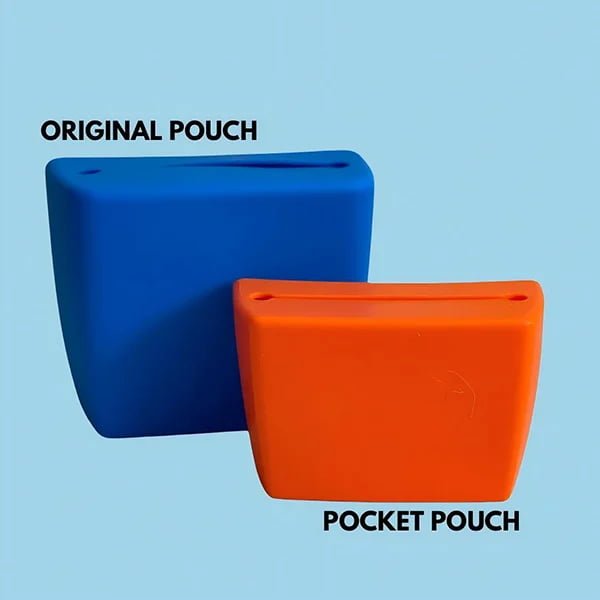
How to Fix Silicone Dog Treat Pouch Deformation Issues?
How to Fix Silicone Dog Treat Pouch Deformation Issues?
Opening collapse and body distortion on a custom silicone dog treat pouch after delivery? This disrupts marketing launches and damages brand reputation. I solve this technical issue using a real quality improvement case study.
Deformation in a silicone dog treat pouch stems primarily from tight stacking and uneven heating during post-curing. Switching placement from vertical to flat baking, extending baking to 180°C for 3 hours, and locking raw material hardness at 60A-65A resolves defects.
Many buyers assume silicone pouch deformation disappears with simple hand squeezing. Read on as I break down the deep structural impacts of uneven heat distribution and insufficient material hardness on a silicone treat pouch.
Why Does Tight Stacking During Post-Curing Cause Structural Deformation in a Silicone Dog Treat Pouch?
Deformed pouch openings on bulk shipments after delivery? Clients demand complete product returns immediately! I will help you identify the root cause inside post-curing ovens.
Tight stacking during post-curing creates uneven thermal conduction across silicone dog treat pouch surfaces. Under-cured zones develop internal residual stress during cooling, triggering opening collapse and overall body distortion.
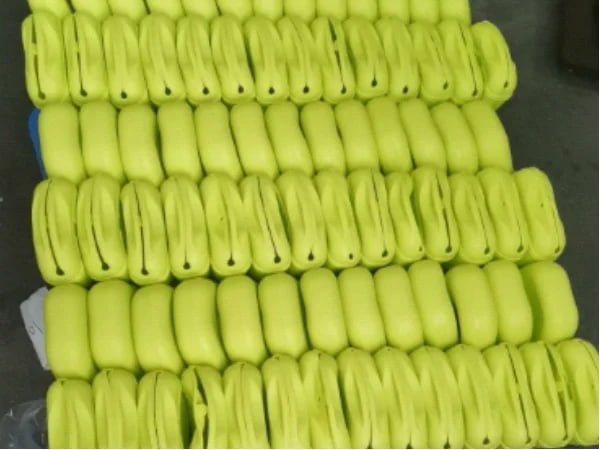
Obststructed Thermal Conduction and Stress Release Mechanics in Post-Curing
In my fifteen years of silicone manufacturing experience, I have handled many molding deformation issues. A client informed me that previously delivered treat pouches exhibited severe deformation.
I ordered immediate returns for all defective items, confirming 0 in-transit items for this model. I led my engineering team in analyzing returned products.
We discovered that pouches were stacked too tightly during post-curing baking. The previous process used vertical placement, pressing pouches tightly against each other.
This created severe heat distribution gaps across contact faces, failing post-curing completely. When manufacturing custom silicone parts and other silicone pouches, hot air circulation must remain unobstructed.
Incomplete polymer cross-linking causes demolded pouch bodies to deform continuously at room temperature.
| Process Dimension | Previous Process (Vertical Tight Stacking) | Upgraded Process (Even Flat Placement) | Physical Impact on Product |
|---|---|---|---|
| Post-Curing Placement | Vertical tight rows; contact faces squeezed | Flat placement on trays; independent spacing | Ensures uniform heating; eliminates stress points |
| Hot Air Flow & Heating | Airflow blocked at contact faces; uneven heat | 360-degree hot air circulation; even heat | Complete cross-linking; firm, non-deforming structure |
| Post-Curing Parameters | 180°C baking for 2 hours (2H) | Adjusted to 180°C baking for 3 hours (3H) | Volatiles purged completely; elasticity increased |
How Did Flat Baking and 60A-65A Hardness Control Restore Silicone Dog Treat Pouch Quality?
Worried that bulk runs will remain soft or deform again after process updates? Lacking standardized hardness testing and baking protocols leads to uncontrollable quality. Here is our engineering solution.
Manufacturing a silicone dog treat pouch requires changing post-curing placement from vertical to even flat placement, with parameters set to 180°C for 3 hours. Raw materials must pass hardness block testing to lock 60A-65A hardness, ensuring tactile feel matches approved samples.
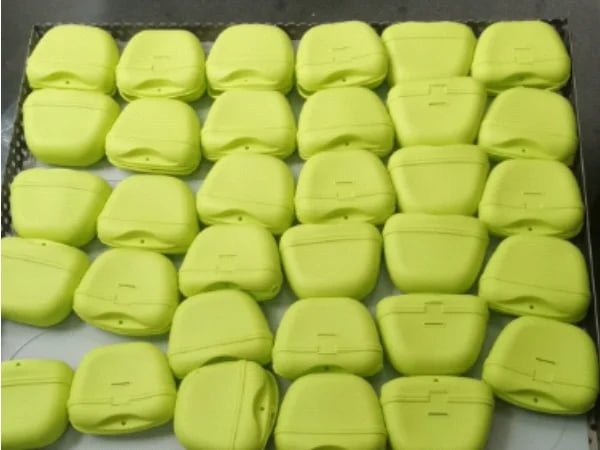
Flat Heating Process Upgrade and Raw Material Hardness Inspection
To resolve deformation, I led my team to execute two critical corrective actions. First, we changed product placement orientation during post-curing.
We replaced tight vertical placement with flat placement, ensuring uniform spacing between every dog treat pouch silicone for even heat distribution.
Meanwhile, we extended post-curing time from 180°C for 2 hours to 180°C for 3 hours. Second, we enforced raw material hardness controls.
We mandated that product hardness must remain locked between Shore 60A and 65A. Before every production run, we test raw materials using hardness test blocks.
Upon passing hardness block tests, we inspect first-piece molded samples, verifying hardness and tactile feel against client-approved samples.
We guarantee production hardness never drops below 60A and record measured values on shipping reports. Our raw materials comply with FDA Food Contact Regulations e RoHS Environmental Directives.
Our factory enforces quality controls under ISO 9001 Quality Standards. Aligning with PAX Technology Specs, the improved silicone dog treat pouches restored firm structural integrity.
| Verification Item | Detailed Engineering Standard & Inspection | Actual Confirmation & Results |
|---|---|---|
| Raw Material Hardness | 60A–65A; test via hardness blocks before molding | Hardness verified >= 60A; values logged in reports |
| First-Piece Tactile Check | Verify hardness & tactile feel against approved samples | 100% match with approved samples before mass runs |
| Post-Curing Orientation | Changed from vertical stacking to flat placement | Contact faces heated evenly; zero heating blind spots |
| Post-Curing Parameters | Adjusted from 180°C for 2H to 180°C for 3H | Complete vulcanization; deformation resistance boosted |
In summary, uniform heat distribution and sufficient vulcanization time are essential to ensure firm, non-deforming silicone treat pouches. Through 3-hour flat baking and strict 60A-65A hardness checks, we eliminated deformation defects permanently.
What is a silicone dog treat pouch? 2026 Latest Application Guide
A silicone dog treat pouch is a specialized silicone pet accessory technology designed to solve pet training treat portability, grease cleaning difficulty, and pouch opening collapse pain points. Its core function is to help users achieve high elasticity, waterproof ease of cleaning, and reduced product return rates in a short time.
> The 3 main advantages of applying a silicone dog treat pouch in manufacturing include:
>
> Advantage 1: Superior Shock Protection & Structural Firmness: Relies on high-elasticity silicone and 60A-65A hardness controls to absorb impact force and maintain pouch shape.
>
> Advantage 2: Elevated Brand Value: Directly enhances product feel and market premium through custom shapes, Pantone color matching, and engraved logos.
>
> Advantage 3: Streamlined Supply Chain Cost: Controls quality from 3D modeling to mass manufacturing, significantly cutting mold errors, rework, and return costs.
How to Specifically Operate a silicone dog treat pouch?
When manufacturing custom silicone dog treat pouch units in volume, factories must follow standardized procedures. Third-party testing data shows that using 60A-65A raw materials and compression molding with High-Temperature Vulcanized (HTV) silicone rubber combined with flat placement and 180°C post-curing baking for 3 hours keeps dimensional tolerances within ±0.05 mm while outgoing AQL reaches MA:0.4 / MI:0.65 standards.
- Raw Material Hardness & Block Testing: Inspect raw silicone before production to enforce hardness between 60A and 65A.
- First-Piece Inspection & Sample Verification: Confirm first-piece hardness and tactile feel match approved samples 100%.
- Even Flat Post-Curing Placement: Switch pouch placement from vertical to flat on baking trays, maintaining uniform spacing.
- 180°C 3-Hour Post-Curing & Quality QC: Bake per ISO 9001 standards and log hardness readings on shipping inspection reports.
External References & Industry Citations
- ISO 9001 Quality Certification: ISO 9001 Quality Management Systems Standard
- FDA Food Contact Regulations: U.S. FDA 21 CFR 177.2600 Food Contact Safety Regulations
- RoHS Environmental Directives: European Commission RoHS Directive 2011/65/EU
About Me and Dibo Tech
Brand Name: Dibo Tech Slogan: Dibo Technology Silicone Manufacturing Specialists Website: https://samxine.com/
Our Mission: Grounded in strong technical capability and quality, we specialize in custom OEM and ODM silicone rubber production, offering reliable custom solutions for our clients while fulfilling social responsibility for a sustainable future.
About Me: My name is Kunfa Ye, but my friends call me Jeff. I was born in 1986 under the sign of the Tiger. I started working in the silicone rubber manufacturing industry in 2014, and I now have fifteen years of experience. Over these years, I started from scratch and experienced every rise and fall in manufacturing. I know the hardships and rewards of entrepreneurship deeply. I always focus on professionalism and integrity in every project.
The silicone manufacturing industry seems ordinary, but it affects every part of industrial production. I know that trust stands behind every product, and trade relies on mutual success. Over the years, my proudest achievement is not achieving personal financial independence, but helping my clients optimize their supply chains and improve production efficiency. Their success brings me far more joy than personal achievements.
Now, I hope to give back to the industry—sharing experience, answering questions, and connecting resources. Whether you are a startup or an experienced industry peer, if I can help, I will do my absolute best. Because I always believe: the essence of business is the transfer of value, and true fulfillment comes from how much help you can bring to others.
Lascia un commento