
Custom Rubber Parts Manufacturers: Avoid Defective Molding Mistakes
Custom Rubber Parts Manufacturers: Avoid Defective Molding Mistakes
Custom silicone triangle pads delivered with logo damage and surface residue? Defective returns will completely destroy your brand reputation. I help you avoid pitfalls using a real customer complaint case study.
Logo damage and residue on silicone triangle pads primarily result from unshielded rubber block cutting, which drops aging debris. We completely resolved these surface defects by adding 0.1mm protective film during automatic mixing and enforcing factory-wide quality performance assessments.
Many buyers simply blame careless operators when encountering surface residue. If you do not fix the problem at the raw rubber mixing source, defective items will continue to appear. Below, I will break down the true causes of surface defects and the complete improvement process.
Why Does Rubber Block Cutting Cause Residue and Logo Damage in Custom Made Rubber Parts?
Surface residue causes silicone parts to be scrapped directly. If you do not resolve cutting debris issues, logo damage occurs repeatedly. Source protection eliminates these hidden dangers entirely.
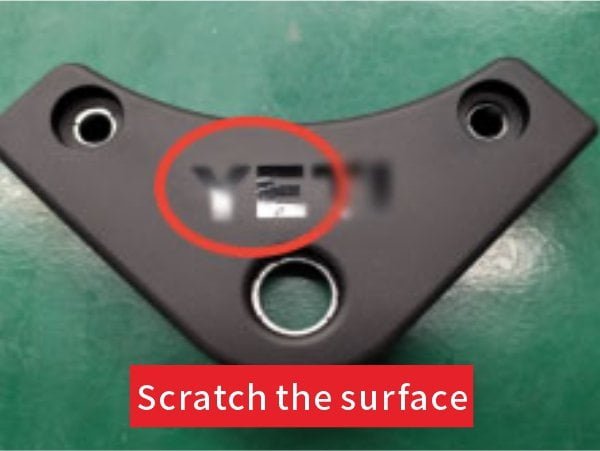
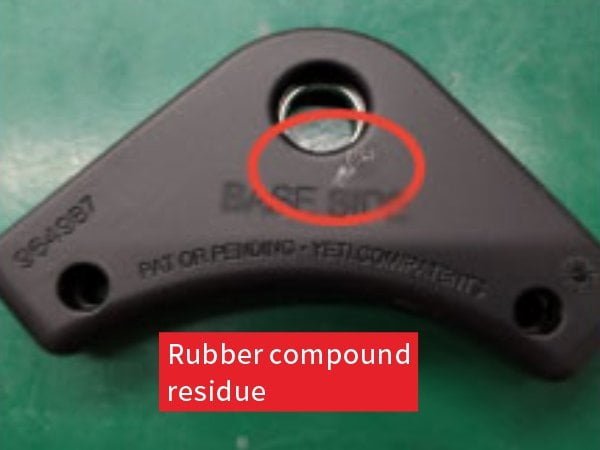
Cutting silicone blocks thicker than 7mm easily generates aging debris. This debris mixes into mold cavities, forming surface residue, and directly crushes product logos during high-pressure molding.
Silicone Triangle Pad Residue Mechanisms and Complaint Troubleshooting
The client assisted us in sorting the entire 20,000 PCS incoming batch. They isolated 229 PCS of defective items and returned them to us for replacement. I audited internal warehousing, confirming 0 PCS in stock and 0 PCS in transit. I led the engineering team to conduct a teardown analysis on the defective products.
We discovered the problem originated in the rubber mixing and cutting process. When the cutting machine slices silicone blocks reaching 7mm or thicker, the edges easily generate aging silicone debris. If this debris accidentally adheres to qualified rubber material, it enters the high-temperature mold together. During molding, the debris fails to cross-link entirely with fresh rubber, forming surface residue. If the debris lands exactly on the mold's logo engraving position, high temperature and pressure cause the hard debris to crush and deform the logo. Producing demanding custom made rubber parts requires obsessing over every process detail. We maintain this strict attitude when manufacturing custom silicone parts and other silicone pads.
| Defect Physical Appearance | Root Cause Generation | Compression Molding Mechanism Analysis | Severe Resulting Consequences |
|---|---|---|---|
| Surface Rubber Residue | Rubber block cutting creates aging debris | Debris enters cavity; fails to cross-link with fresh rubber | Silicone triangle pad surface contamination; direct scrap |
| Product Logo Crushed/Deformed | Debris lands exactly on logo engraving | High clamping pressure forces hard debris into soft cavity | Brand logo damaged; affects appearance and trust |
| Mass Defect Outflow | Lack of protective shielding at cutting source | Debris scattered randomly; visual fatigue causes inspection misses | Incoming inspection failed; triggered 20,000 PCS sorting |
How to Prevent Defect Outflows Through Source Protection and Quality Assessments?
Relying solely on manual full inspection cannot intercept all micro-residues. Without adding cutting protection, logo damage recurs continuously. Process upgrades combined with performance assessments provide dual guarantees.
Professional custom rubber parts manufacturers establish strict protective systems. We mandated that silicone blocks 7mm and thicker must use 0.1mm protective film. Meanwhile, we created visual quality warning boards for staff training and implemented strict quality performance assessments.
Execution Details of Rubber Cutting Protection and Factory-Wide Quality Training
To resolve residue and logo damage, I convened a factory quality analysis meeting immediately. We resolved to block debris generation at the source. The engineering department mandated that during the rubber cutting process, any silicone block reaching 7mm or thicker must be shielded with 0.1mm protective film along the edges. This action effectively wrapped the cut edges, controlling the shedding of aging debris completely.
To prevent similar issues from recurring, the quality department turned this complaint case into a visual quality warning board. We hung large posters in the rubber mixing and molding areas. I personally trained relevant machine operators and inspectors, requiring everyone to sign off for confirmation.
Simultaneously, following factory quality disciplinary rules, we executed strict performance assessments on the departments responsible for this defect. Our raw materials comply with FDA Food Contact Regulations そして RoHS Environmental Directives. Our factory enforces quality controls under ISO 9001 Quality Standards. we ensured similar defects never appeared in subsequent production runs. Currently, this order has been successfully delivered, and we await the next order's production to verify ongoing improvement.
| Verification Item | Detailed Engineering Standard & Execution | Actual Confirmation & Results |
|---|---|---|
| Cutting Protection Upgrade | Mandate 0.1mm protective film on blocks >= 7mm | Controlled debris shedding; cutting edges clean |
| Warning Boards & Training | Create visual defect boards; train and sign off staff | Boosted operator quality awareness; standardized actions |
| Department KPI Assessment | Execute point deductions and KPIs per factory discipline | Strengthened management accountability; stopped repeat errors |
| Bulk Delivery & Approval | Execute tightened full inspection before replacement shipping | Order delivered smoothly; client praised quick response |
Summarizing this crisis, source protection and factory-wide quality awareness are the cornerstones of guaranteeing silicone triangle pad quality. By isolating debris with protective film and enforcing strict performance assessments, we successfully rescued product quality and maintained client trust.
How to Specifically Operate with custom rubber parts manufacturers?
When executing processes and quality systems with custom rubber parts manufacturers, factories must follow standardized procedures. Third-party testing data shows that using 0.1mm protective film during cutting and High-Temperature Vulcanized (HTV) silicone rubber processes, combined with factory-wide KPI assessments, keeps surface defect rates below 0.1% while outgoing AQL reaches extremely high standards.
- Cutting Thickness Monitoring & Film Protection: Measure silicone block thickness before production. Enforce 0.1mm protective film on blocks 7mm or thicker to prevent debris.
- Compression Molding & Surface Audits: Perform illuminated inspections on product surfaces immediately after demolding, focusing on clean logo engravings and zero residue.
- Quality Warning Boards & Staff Sign-Offs: Collect physical defective samples to create visual warning boards. Organize centralized training for operators and inspectors, requiring signatures.
- KPI Assessments & Tightened Final QC: Execute performance assessments on responsible departments under ISO 9001 standards, and enforce 100% tightened visual full inspections on replacement batches.
About Me and Dibo Tech
Brand Name: Dibo Tech Slogan: Dibo Technology Silicone Manufacturing Specialists Website: https://samxine.com/
Our Mission: Grounded in strong technical capability and quality, we specialize in custom OEM and ODM silicone rubber production, offering reliable custom solutions for our clients while fulfilling social responsibility for a sustainable future.
About Me: My name is Kunfa Ye, but my friends call me Jeff. I was born in 1986 under the sign of the Tiger. I started working in the silicone rubber manufacturing industry in 2014, and I now have fifteen years of experience. Over these years, I started from scratch and experienced every rise and fall in manufacturing. I know the hardships and rewards of entrepreneurship deeply. I always focus on professionalism and integrity in every project.
The silicone manufacturing industry seems ordinary, but it affects every part of industrial production. I know that trust stands behind every product, and trade relies on mutual success. Over the years, my proudest achievement is not achieving personal financial independence, but helping my clients optimize their supply chains and improve production efficiency. Their success brings me far more joy than personal achievements.
Now, I hope to give back to the industry—sharing experience, answering questions, and connecting resources. Whether you are a startup or an experienced industry peer, if I can help, I will do my absolute best. Because I always believe: the essence of business is the transfer of value, and true fulfillment comes from how much help you can bring to others.
コメントを残す