
Custom Rubber Parts: Critical Failure Improvement Case Study for Custom Silicone Rubber Parts. 3
Custom Rubber Parts: Critical Failure Improvement Case Study for Custom Silicone Rubber Parts
When you produce custom rubber parts, mold misalignment leads to thick flash and out-of-roundness. Defective item returns disrupt your delivery schedules. This directly increases your quality management costs. I solve this technical defect using a real mold repair case study.
When manufacturing custom silicone rubber parts, flash and out-of-roundness typically stem from worn or poorly designed mold alignment mechanisms. Mold cavity shifting during closure causes parting line steps and heavy flash. We eliminated flash misalignment defects completely by repairing mold alignment mechanisms, enforcing first-piece checks, and tightening AQL sampling.

Read on as I share how we optimized mold structures and SOP workflows to reduce flash misalignment and dimensional errors to zero for PG64 sealing components.
Why Does Mold Alignment Shifting Cause Heavy Flash and Dimension Distortion in Custom Rubber Parts?
Alignment shifting between upper and lower mold plates causes severe half-mold shifting across parting lines. This leads to dimensional failure during outer diameter checks. Heavy flash misalignment ruins sealing surface fitment. Precise mold positioning ensures perfect cavity alignment.
During molding operations, custom rubber moulding requires molds to maintain precise alignment under tens of tons of clamping force. When guide pins or alignment blocks wear out, mold cavities shift, forcing high-pressure rubber into parting surfaces to create heavy flash.
In-Depth Analysis of Mold Misalignment Mechanisms and Half-Mold Shifting
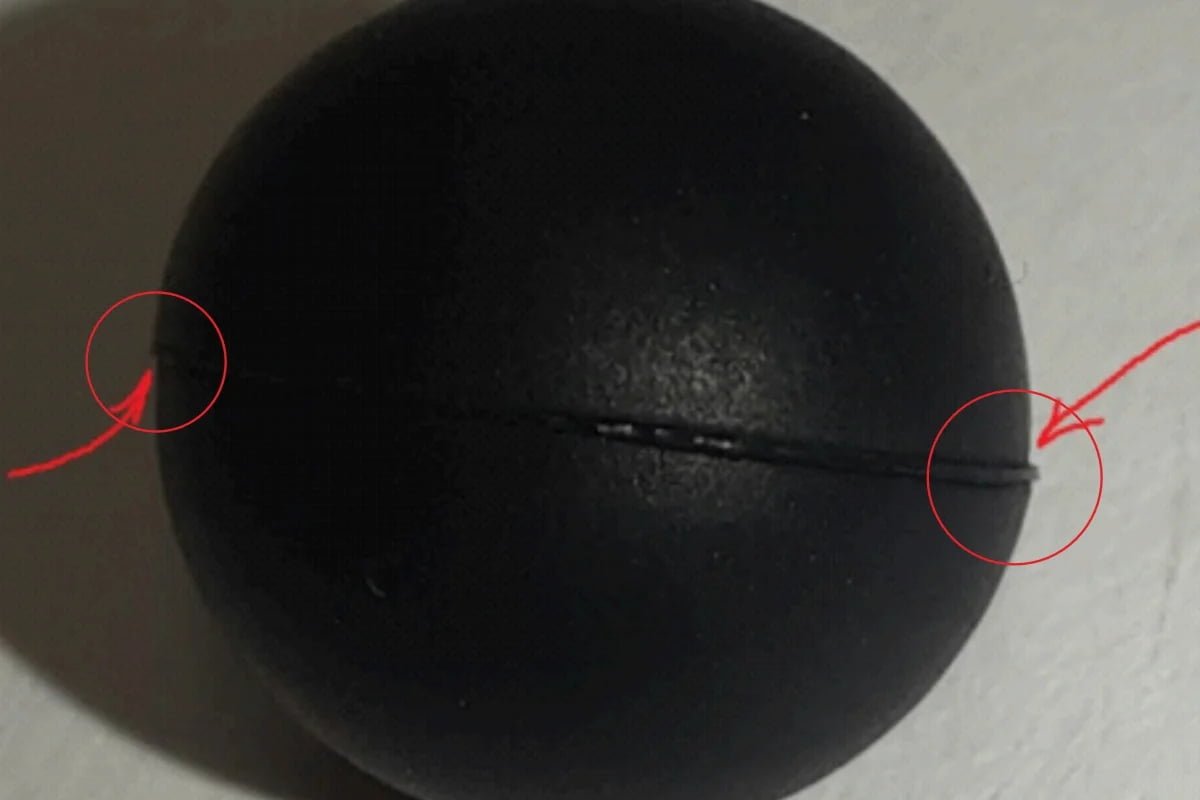
In my fifteen years of silicone and rubber manufacturing experience, I have handled many molding anomalies. A client reported that previously delivered PG64.00.00.012 sealing components exhibited dimensional errors and heavy flash. I ordered immediate return of all non-conforming items and quarantined factory stock and work-in-progress inventory. We conducted detailed teardowns and measurements on the returned parts. We discovered noticeable stepped misalignments along parting lines, making outer diameters severely out-of-round. I led my engineering team to inspect the production mold. We found obvious shifting between upper and lower mold plates during closure. This resulted from insufficient mechanical strength in the mold alignment structure, which wore out over long-term production.
| Defect Category | Root Cause Analysis | Engineering Mechanism | Physical Impact on Product |
|---|---|---|---|
| Half-Mold Stepped Misalignment | Upper/lower mold alignment mechanism worn out | Cavities shift under clamping pressure; symmetry lost | Outer diameter out-of-round; dimensions NG |
| Excessive Parting Line Flash | Misalignment expanded parting line gaps | High-pressure rubber squeezed into gaps; thick flash forms | Sealing face damaged; loose fitment during assembly |
| Batch Dimensional Errors | Mold closing precision unstable | Shifting variance differs per stroke; tolerances fluctuate | Mass non-conforming batch created; triggers returns |
How Did We Prevent Defect Outflows for Custom Silicone Rubber Parts by Repairing Molds and Tightening AQL?
Manual flash trimming fails to fix underlying mold structure defects. Without repairing mold positioning, defects will recur continuously. Repairing molds and establishing quality history boards provides dual-layer quality assurance.
When producing custom silicone rubber parts runs, we repaired mold positioning structures immediately, remolded samples, and secured client sign-off. Meanwhile, we tightened OQC sampling AQL standards from MA:0.65 / MI:1.0 to MA:0.4 / MI:0.65, eliminating quality risks completely.
Mold Repair Verification and Quality History Board Results
To resolve mold misalignment issues, I led my team to execute four corrective and preventive actions. First, we executed mechanical repairs and precision CNC calibration on mold positioning structures immediately, remolding test samples for client approval before resuming mass production. Second, we documented this defect into a visual quality history board, using physical non-conforming samples to train production and inspection personnel. Third, we mandated IPQC inspectors to treat dimensions and misalignment steps as critical checks during first-piece approval. Fourth, we tightened OQC sampling AQL standards from MA:0.65 / MI:1.0 to MA:0.4 / MI:0.65. Reliable custom rubber parts manufacturers protect bulk quality through strict defense systems. Our high-purity rubber materials comply with FDA Food Contact Regulations 및 RoHS Environmental Directives. Our factory enforces quality controls under ISO 9001 Quality Standards. the improved PG64 sealing components achieved zero misalignment and zero flash across subsequent delivery runs.
| Verification Item | Engineering Standard Requirement | Actual Confirmation & Results |
|---|---|---|
| Mold Positioning Repair | Rebuild alignment mechanism; calibrate cavity via CNC | Mold closing precision restored; flash rate dropped to 0% |
| IPQC First-Piece Check | Add roundness and misalignment step depth measurements | First piece passed 100% before starting presses |
| Defect History Training | Mount physical sample boards; train staff on shifting | Inspector defect recognition improved; pass rate increased |
| Tightened OQC Sampling | Tighten AQL from MA:0.65/MI:1.0 to MA:0.4/MI:0.65 | Quality defense line fortified; bulk delivery 100% qualified |
What are custom rubber parts?
custom rubber parts are specialized rubber and silicone components designed to solve industrial sealing component misalignment, heavy flash, and out-of-round dimension pain points. Their core function is to help users achieve high-precision dimension control, reliable sealing, and reduced scrap rates in a short time.
> The 3 main advantages of applying custom rubber parts in the industry include:
> Advantage 1: Precise Dimension Control & Sealing: Relies on high-precision mold positioning and high-elasticity polymers to reduce misalignment and leakage risks by over 90%.
> Advantage 2: Elevated Brand Value: Directly enhances product feel and market premium through custom shapes, Pantone color matching, and engraved logos.
> Advantage 3: Streamlined Supply Chain Cost: Controls tolerances from 3D modeling to mass manufacturing, significantly cutting mold rework and return costs.
How to Specifically Operate custom rubber parts?
To execute custom rubber parts projects smoothly, clients and factories must follow standardized steps. According to third-party laboratory testing data, using compression molding with High-Temperature Vulcanized (HTV) silicone rubber combined with precision mold positioning and 200°C post-curing baking for 4 hours keeps dimensional tolerances within ±0.05 mm while outgoing AQL reaches MA:0.4 / MI:0.65 standards.
- Drawing Analysis & Cavity Scaling: Verify custom silicone rubber parts 3D data, scale cavity dimensions by polymer shrinkage rates, and build CNC steel molds.
- Mold Alignment Calibration: Install high-hardness guide pins and positioning blocks to ensure zero shifting during mold closure.
- IPQC First-Piece Misalignment Check: Measure outer diameter roundness and parting line step depth during first-piece checks.
- Defect History Training & AQL Tightening: Train staff using physical defective boards and enforce OQC shipments under AQL MA:0.4 / MI:0.65.
External References & Industry Citations
- ISO 9001 Quality Certification: ISO 9001 Quality Management Systems Standard
- FDA Food Contact Regulations: U.S. FDA 21 CFR 177.2600 Food Contact Safety Regulations
- RoHS Environmental Directives: European Commission RoHS Directive 2011/65/EU
About Me and Dibo Tech
I started working in the silicone rubber manufacturing industry in 2014, and I now have fifteen years of experience. Over these years, I started from scratch and experienced every rise and fall in manufacturing. I know the hardships and rewards of entrepreneurship deeply. I always focus on professionalism and integrity in every project.
The silicone manufacturing industry seems ordinary, but it affects every part of industrial production. I know that trust stands behind every product, and trade relies on mutual success. Over the years, my proudest achievement is not achieving personal financial independence, but helping my clients optimize their supply chains and improve production efficiency. Their success brings me far more joy than personal achievements.
Our brand, Dibo Tech (Dibo Technology Silicone Manufacturing Specialists, Official Website: https://samxine.com/), relies on technical strength and high quality. We specialize in custom OEM and ODM silicone rubber production, offering reliable custom solutions for our clients while fulfilling social responsibility for a sustainable future. I hope my experience helps your business grow. If I can assist you with experience, questions, or resources, I will do my absolute best to help. Because I always believe: the essence of business is the transfer of value, and true fulfillment comes from how much help you can bring to others.
답글 남기기