
6,000 PCS at Risk: How Custom Rubber Parts Manufacturers Fix Deformation
6,000 PCS at Risk: How Do Custom Rubber Parts Manufacturers Solve Silicone Cap Deformation?
Silicone cap deformation causes assembly failures. Defective items destroy brand trust. I use a real mold repair case study to help you avoid this trap.
The core solution for custom rubber parts manufacturers to fix silicone cap deformation is repairing worn mold inserts. We eliminated bulging defects by calibrating molds, displaying visual defect boards, and tightening AQL to MA:0.4.
Many buyers just ask workers to check more carefully when facing silicone deformation. If you do not fix the mold at the source, defective items will continue to appear. Below, I will break down how we diagnosed and fixed silicone cap deformation caused by aging mold inserts.
Why Do Aging Mold Inserts Cause Bulging Deformation in Custom Made Rubber Parts?
Long-term high-pressure molding creates metal fatigue and wear. Aging inserts cause silicone dimensions to lose control. Finding the mold root cause stops scrap production.
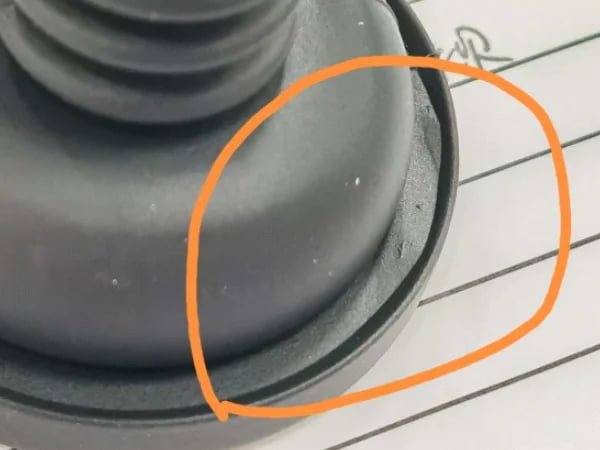
When producing custom made rubber parts, mold inserts suffer micro-deformation after tens of thousands of molding cycles. This alters the cavity space, causing the molded silicone cap surface to bulge irregularly and deform entirely.
Deep Analysis of High-Pressure Molding and Insert Deformation
In my fifteen years of silicone manufacturing experience, I have handled various complex mold anomalies. A client reported that during an incoming inspection of 6,000 silicone caps, they sampled 200 pieces and found 35 deformed items. The defect rate reached 17.5%. This product had no prior defect history. I activated an emergency response immediately.
Our factory re-inspected 563 pieces in warehouse stock and scrapped the defective items. After communication, the client accepted the 6,000 pieces conditionally but demanded a complete fix for the next batch. In-transit items were confirmed as 0.
I led the engineering team to disassemble the production mold. We discovered that two cavity inserts suffered slight physical deformation after long-term high-temperature and high-pressure production. The liquid silicone cured along the distorted cavity during vulcanization, causing the demolded caps to bulge. Professional custom rubber parts manufacturers must monitor mold lifespan strictly.
| Mold Status & Defect Dimension | Pre-Improvement State (Aging Inserts) | Upgraded Standard (Mold Calibration) | Physical Impact on Cap Appearance |
|---|---|---|---|
| Mold Insert Deformation | Slight physical distortion from pressure | CNC calibration restores precision | Standardized cavity; irregular bulging eliminated |
| FQC Inspection Recognition | Missed minor deformations easily | Visual physical board warns staff | Intercepted visual variants promptly |
| IPQC Patrol Frequency | Routine visual checks on schedule | Unscheduled checks on demolded parts | Real-time monitoring; shifted defense line |
How Do Custom Rubber Parts Manufacturers Intercept Defects Using Mold Repairs and AQL Tightening?
Relying on manual visual checks causes fatigue and missed defects. Without repairing molds, scrap rates will never drop. Mold maintenance and strict quality control lines provide dual protection.
We repaired and calibrated the deformed mold inserts immediately. We also hung physical defect boards at FQC tables, increased IPQC machine patrols, and tightened OQC outgoing AQL to MA:0.4 / MI:0.65 to ensure zero defects.
Execution Details of Mold Verification and Quality Control Upgrades
To resolve insert deformation and inspection gaps, I organized my team to implement four fundamental improvement measures. First, the engineering department performed CNC mold repairs on the deformed inserts immediately. After repairing the mold, we produced new samples and sent them to the client for confirmation. We only proceeded with mass production after receiving written approval.
Second, the quality department created a detailed defect history board. We hung the deformed silicone caps and photos at the FQC inspection table to warn all inspectors and improve their ability to recognize minor bulging.
Third, IPQC inspectors started conducting unscheduled random checks on freshly molded products at the machines. IPQC also strictly controlled the molding machine temperature and pressure parameters to prevent parameter drift.
Fourth, we tightened the OQC outgoing sampling AQL standard significantly from MA:0.65 / MI:1.0 to MA:0.4 / MI:0.65. This comprehensive quality control defense line successfully prevented any defective products from leaving the factory. Subsequent order deliveries achieved 100% qualification.
| Verification Item | Engineering Standard & Specification | Actual Confirmation & Results |
|---|---|---|
| Mold Insert Repair | CNC repair inserts; remold samples for approval | Cavity precision restored; bulging rate dropped to 0% |
| Quality History Board | Mount physical defective boards at FQC table | Standardized inspection; enhanced execution force |
| IPQC Machine Patrols | Unscheduled checks; control temp & pressure | Faster anomaly detection; zero batch scrap risk |
| Tightened OQC Sampling | Tighten AQL standard to MA:0.4/MI:0.65 | Maximized factory interception; zero subsequent complaints |
Summarizing this crisis, routine mold maintenance and a strict OQC sampling defense line are the cornerstones of ensuring custom silicone part quality. By repairing molds promptly and tightening AQL standards, we successfully saved product quality and earned the client's long-term trust.
How to Specifically Operate with custom rubber parts manufacturers?
When executing processes and quality systems with custom rubber parts manufacturers, factories must follow standardized procedures. Third-party testing data shows that using regular mold insert maintenance and High-Temperature Vulcanized (HTV) silicone rubber combined with 200°C post-curing baking keeps dimensional tolerances within ±0.05 mm while outgoing AQL reaches MA:0.4 / MI:0.65 standards.
- Mold Status Monitoring & Repair Approval: Check insert wear before production. Perform CNC repairs immediately upon finding deformation and send samples for client approval.
- Quality History Training & Board Setup: Collect defective physical samples to create visual boards. Hang them at FQC tables to warn all inspectors.
- IPQC Process Patrols & Parameter Locking: Conduct unscheduled checks on molded parts at the machines. Lock temperature and pressure molding parameters strictly.
- Tightened OQC Sampling AQL: Enforce tightened outgoing AQL sampling at MA:0.4 / MI:0.65 under ISO 9001 standards to intercept defects.
About Me and Dibo Tech
Brand Name: Dibo Tech Slogan: Dibo Technology Silicone Manufacturing Specialists Website: https://samxine.com/
Our Mission: Grounded in strong technical capability and quality, we specialize in custom OEM and ODM silicone rubber production, offering reliable custom solutions for our clients while fulfilling social responsibility for a sustainable future.
About Me: My name is Kunfa Ye, but my friends call me Jeff. I was born in 1986 under the sign of the Tiger. I started working in the silicone rubber manufacturing industry in 2014, and I now have fifteen years of experience. Over these years, I started from scratch and experienced every rise and fall in manufacturing. I know the hardships and rewards of entrepreneurship deeply. I always focus on professionalism and integrity in every project.
The silicone manufacturing industry seems ordinary, but it affects every part of industrial production. I know that trust stands behind every product, and trade relies on mutual success. Over the years, my proudest achievement is not achieving personal financial independence, but helping my clients optimize their supply chains and improve production efficiency. Their success brings me far more joy than personal achievements.
Now, I hope to give back to the industry—sharing experience, answering questions, and connecting resources. Whether you are a startup or an experienced industry peer, if I can help, I will do my absolute best. Because I always believe: the essence of business is the transfer of value, and true fulfillment comes from how much help you can bring to others.
답글 남기기