
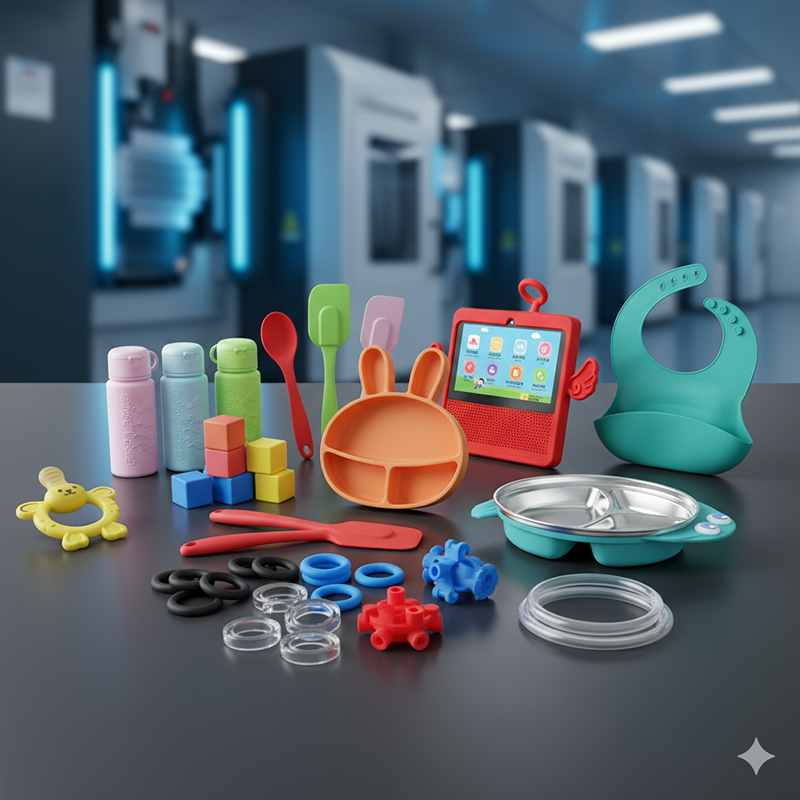
5 Steps to Make Silicone Sleeve for POS Machines: Steel Mold & Factory Process
5 Steps to Make Silicone Sleeve for POS Machines
If you've searched "how to make a silicone sleeve", you probably fall into one of two camps: you're either an engineer evaluating manufacturing partners, or you're a buyer who wants to understand what goes into the product before placing a bulk order. Either way, this article walks you through the entire process—from 3D file to finished sleeve—exactly as we do it in our silicone factory.
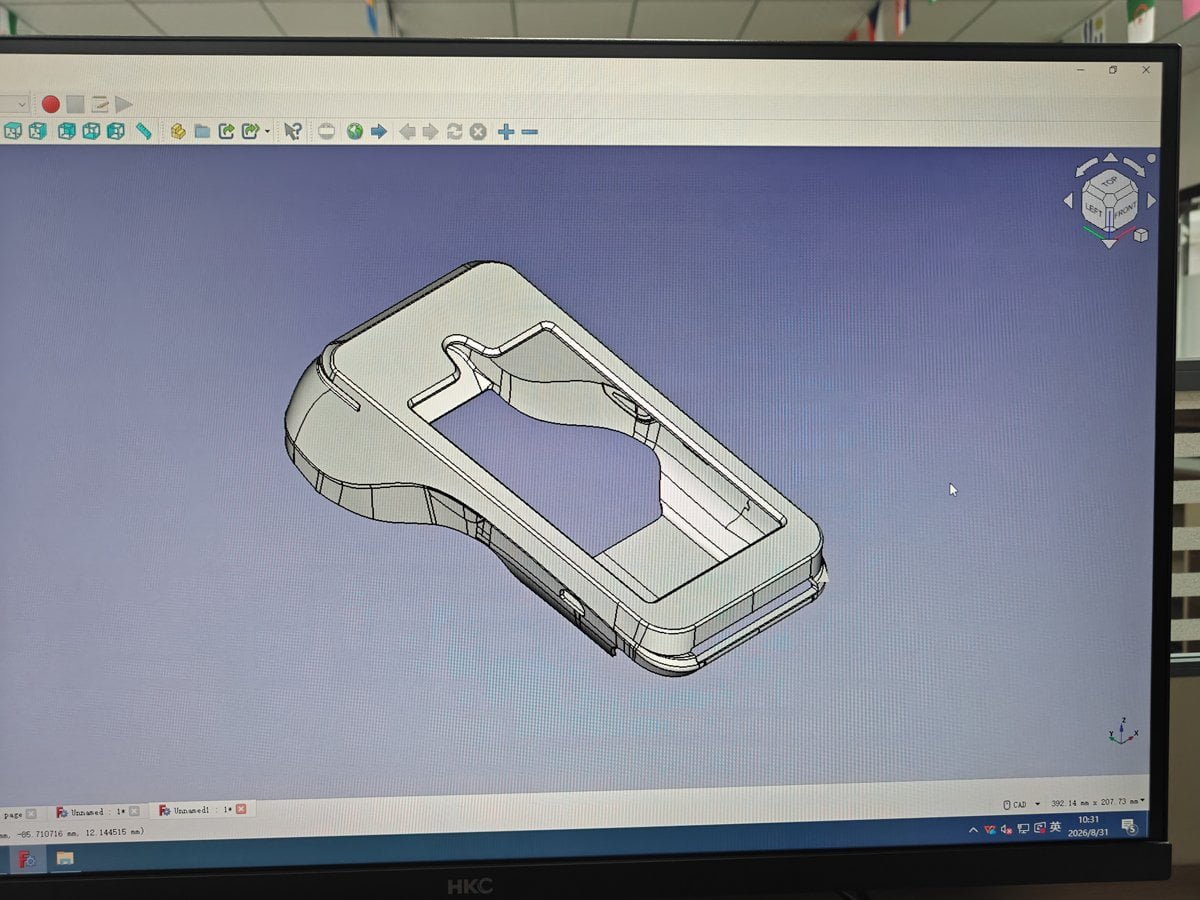
Step 1: 3D Modeling & Design Confirmation
Everything starts with a precise 3D model of the POS terminal. We need the exact dimensions of the device—length, width, thickness, port locations, button positions, and camera/receipt cutouts.
If the client provides a 3D file, our engineers import it into Pro-E (Creo) and build the sleeve geometry around it. If not, we physically measure the terminal with calipers (accuracy ±0.05mm).
Key design decisions at this stage:
- Wall thickness: 2mm for light retail, 3mm for high-traffic environments like bars and kitchens.
- 경도: 40–60 Shore A. Softer (40A) feels more grippy; firmer (60A) holds its shape better on wall-mounted units.
- Tolerance: ±0.3mm around ports to ensure a snug fit without blocking functionality.
- Special features: Pocket on the back? Strap hole? Embossed logo? All decided here.
Typical lead time: 10–15 days for design, including 1 round of revision. Custom cover from 3D drawing to mass production, full control. Must read before mold: Custom Silicone Case 및 Custom Silicone Case. For usage, see: How to Use Silicone Covers?.
Step 2: Mold Making (CNC Steel Mold)
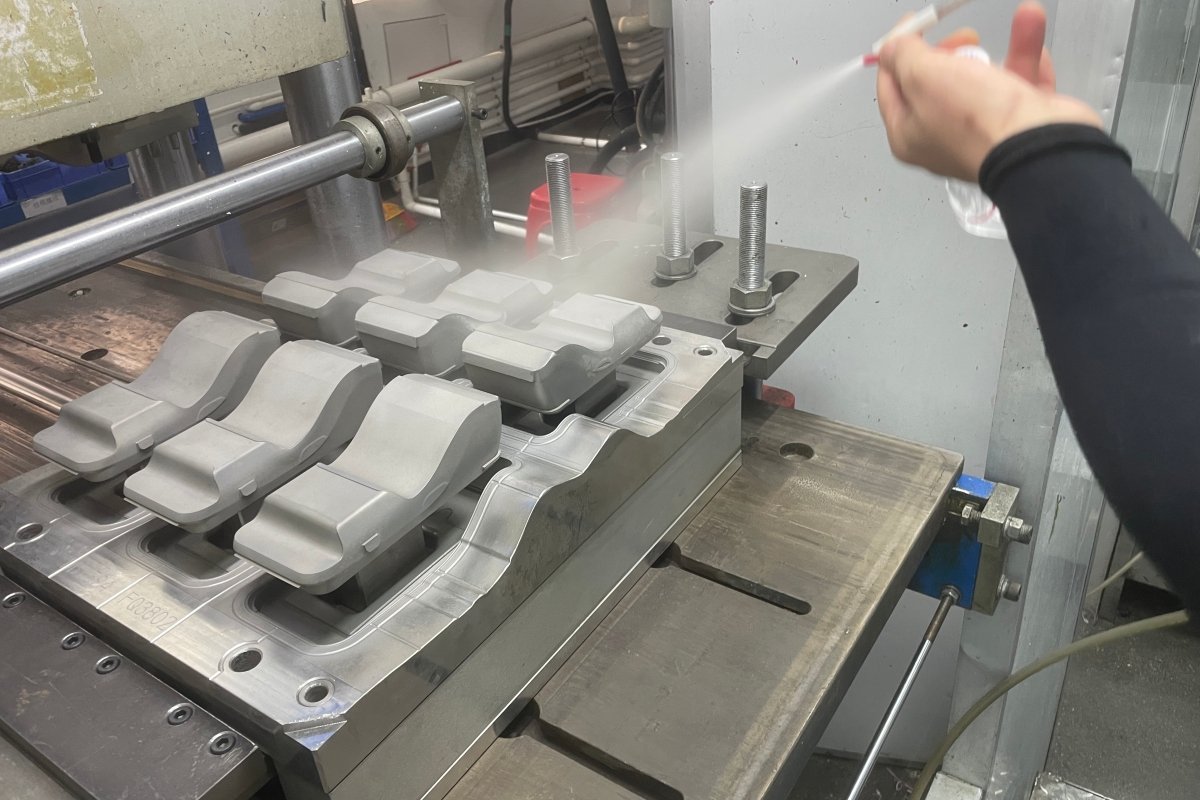
Once the 3D design is approved, we machine a steel mold (typically 45# steel or P20 steel). Steel molds are the industry standard for silicone sleeve production because they offer superior durability, precision, and a long service life that can handle hundreds of thousands of cycles without deformation.
The mold consists of two halves: a cavity (outer shape) and a core (inner shape). For sleeves with pockets or complex geometry, we may add sliding cores or side pulls.
Mold specifications for POS sleeves:
| Parameter | Typical Value |
|---|---|
| Mold material | Steel (45# / P20) |
| Cavity count | 1–4 cavities per mold |
| Surface finish | Polished (Ra 0.8μm) or textured (matte) |
| Mold life | 200,000–500,000+ shots |
| Mold cost | ¥12,000RMB–¥15,000RMB (approx. $1,650–$2,050 USD), depending on complexity |
| Mold lead time | 15–25 days |
> Pro tip for buyers: Always confirm your supplier uses steel molds for production. Steel molds cost more upfront but deliver consistent quality over long runs. A mold in the ¥12,000RMB–¥15,000RMB range is a standard investment for a precision POS sleeve and is typically refundable or amortized against high-volume orders.
Step 3: Silicone Material Preparation
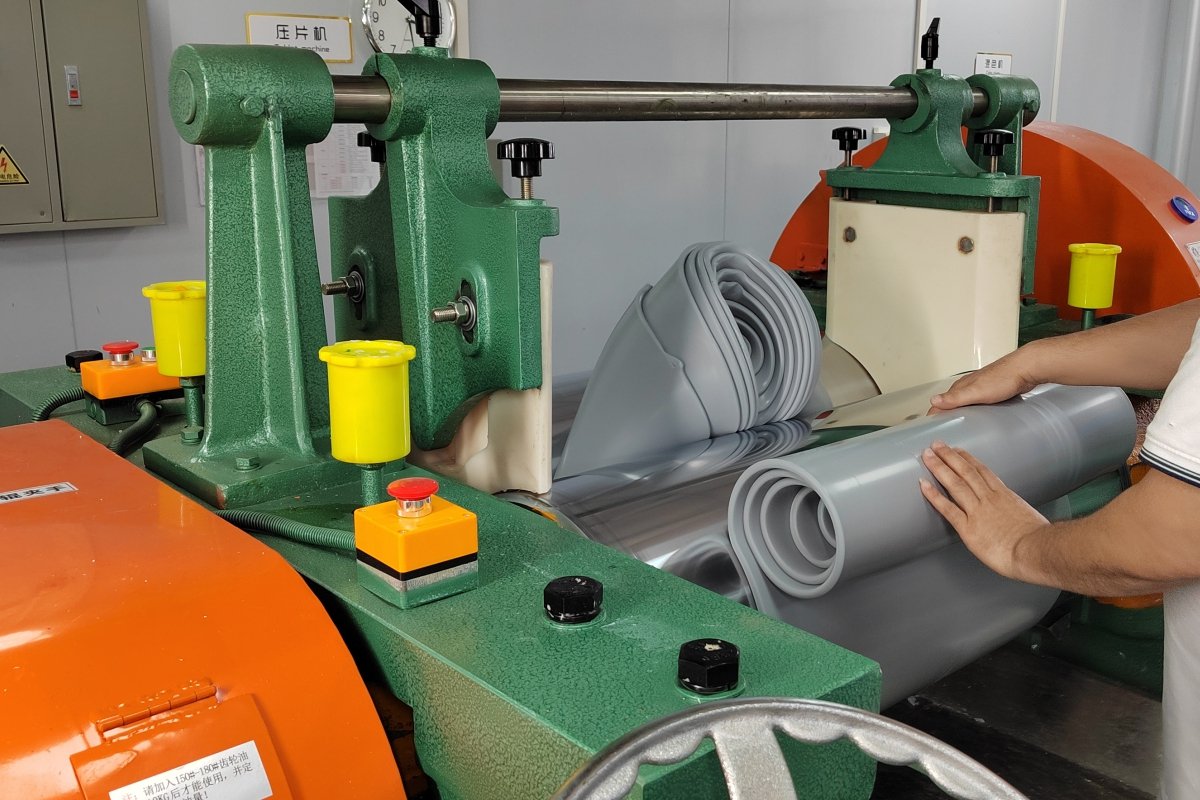
We use liquid silicone rubber (LSR) or high-consistency rubber (HCR) depending on the application. For POS sleeves, HCR is more common because it's cost-effective and available in a wide range of hardness grades.
Material checklist before production:
- Grade: RoHS-compliant, BPA-free. FDA or LFGB if food-contact certified.
- Color: Pantone-matched. We mix pigment into the base silicone at 1–3% ratio.
- Hardness verification: Durometer test on a sample sheet before full run.
- Pre-forming: The silicone is cut into pre-measured "buttons" or strips that fit the mold cavity volume.
Step 4: Compression Molding (Curing)
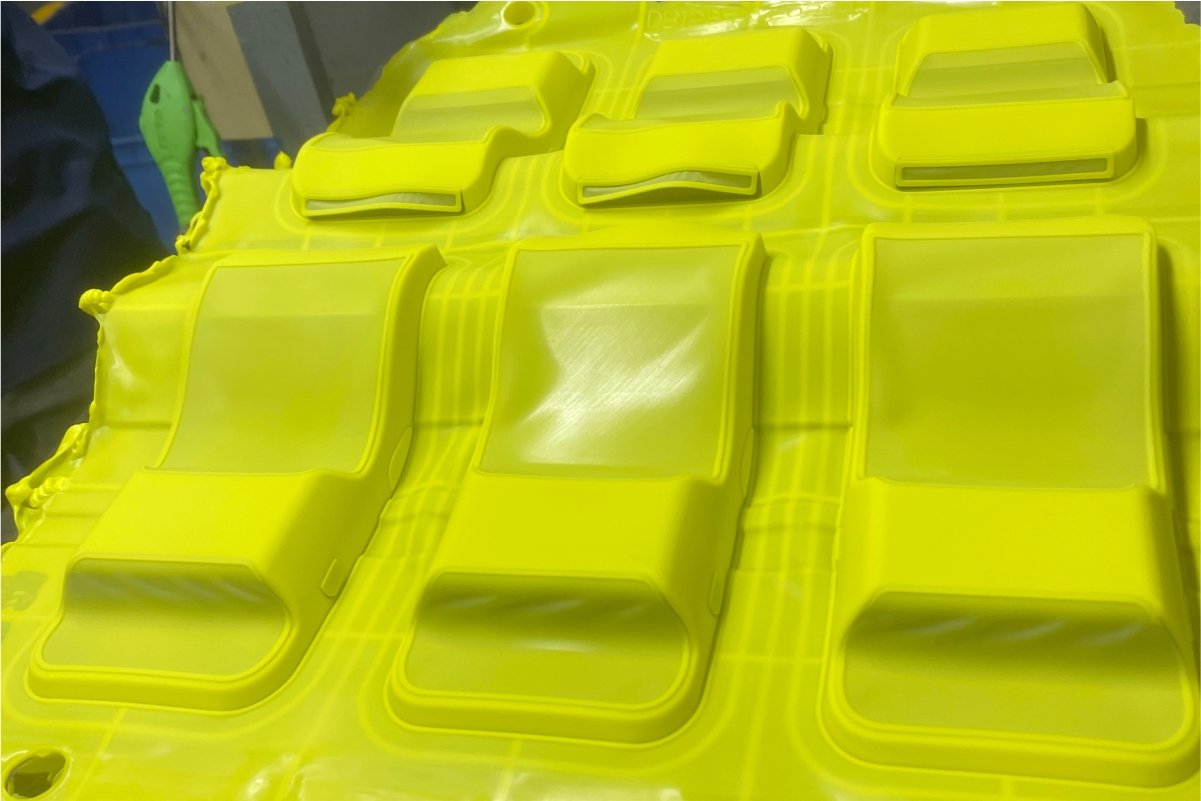
This is where the magic happens. The pre-formed silicone goes into the heated mold (typically 160–180°C), and the press closes under 100–200 tons of pressure.
The cycle:
- Place silicone pre-form into the lower mold cavity.
- Close the press. Heat and pressure cause the silicone to flow and fill every detail of the cavity.
- Curing time: 60–180 seconds depending on wall thickness.
- Open mold, eject the part.
For POS sleeves, we use compression molding rather than injection molding because:
- Lower tooling cost (critical for small-to-medium runs)
- Simpler mold maintenance
- Excellent for thicker-walled parts (2–3mm)
Cycle time: ~2–4 minutes per sleeve. With a 4-cavity mold, that's 60–120 units per hour per press.
Step 5: De-flashing (Trim & Clean)
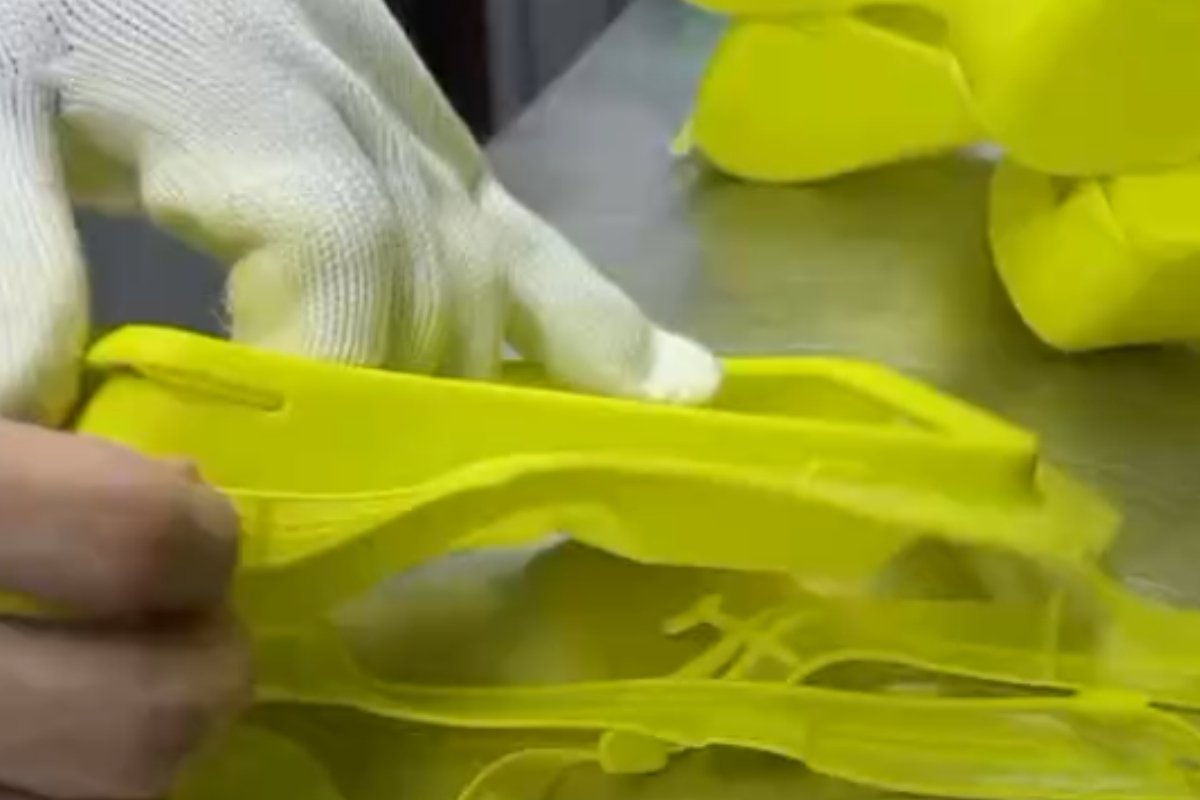
Fresh out of the mold, the sleeve has a thin flash line where silicone squeezed between the mold halves. This must be removed.
Methods:
- Manual trimming: Workers use precision knives to cut flash. Suitable for low volumes and complex shapes.
- Cryogenic de-flashing: The parts are tumbled in a freezing chamber with blasting media. The flash becomes brittle and breaks off. Best for high-volume, consistent quality.
- Tear-trim: For simple geometries, flash is designed to tear away cleanly by hand.
We typically use a combination: cryogenic for the main body, manual touch-up for port edges where precision matters.
Step 6: Surface Treatment (Optional)
Depending on the client's requirements:
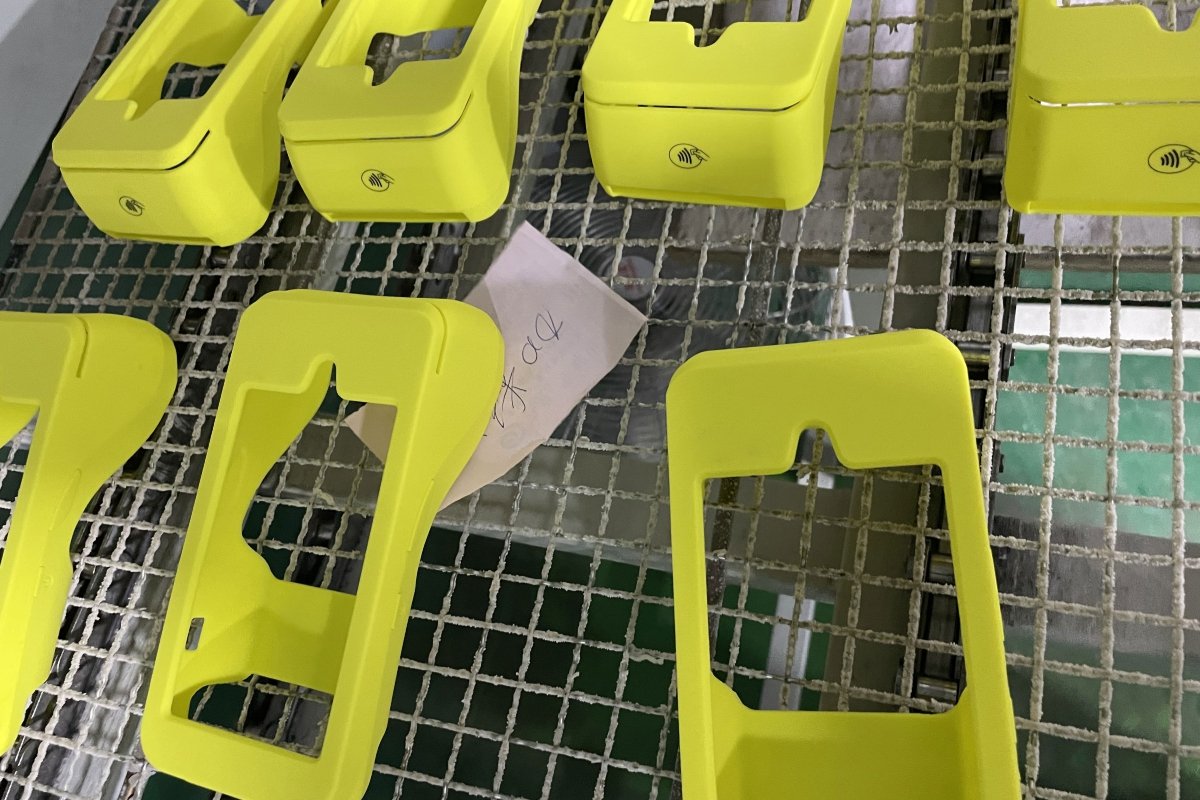
- Anti-dust coating: A thin matte spray that reduces lint attraction. Popular for retail environments.
- Silkscreen printing: Logo, QR code, or instructional text. Cured in a tunnel oven at 120°C for adhesion.
- UV printing: For multi-color, photo-quality graphics.
- Embossing/debossing: Done in-mold, no extra step needed.
Step 7: Quality Inspection
Every batch goes through:
- Dimensional check: Random sampling (AQL 2.5) with calipers against the 3D spec.
- Fit test: Sleeve is installed on an actual POS terminal to verify port alignment and retention.
- Pull test: Tensile strength check on a coupon from the same batch (target: ≥7 MPa).
- Elongation test: Ensures the material stretches without tearing (target: ≥300%).
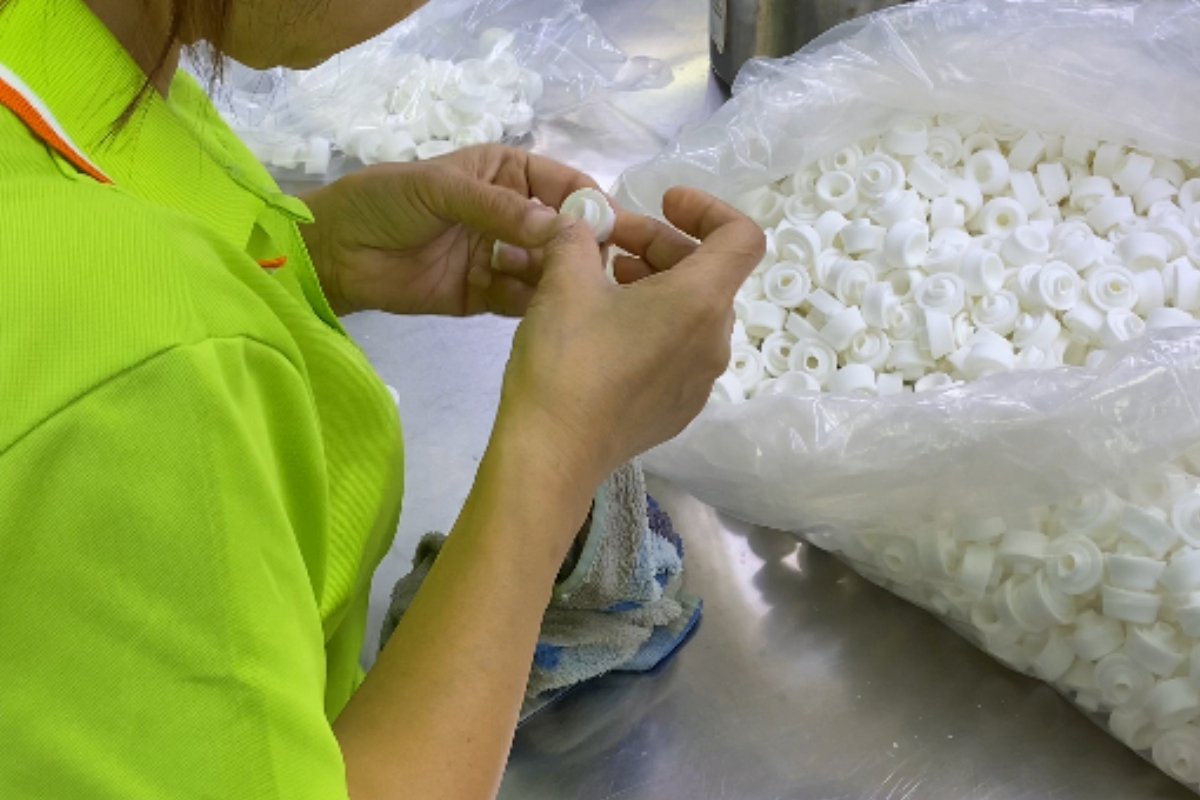
- Visual inspection: No bubbles, no contamination, no short shots.
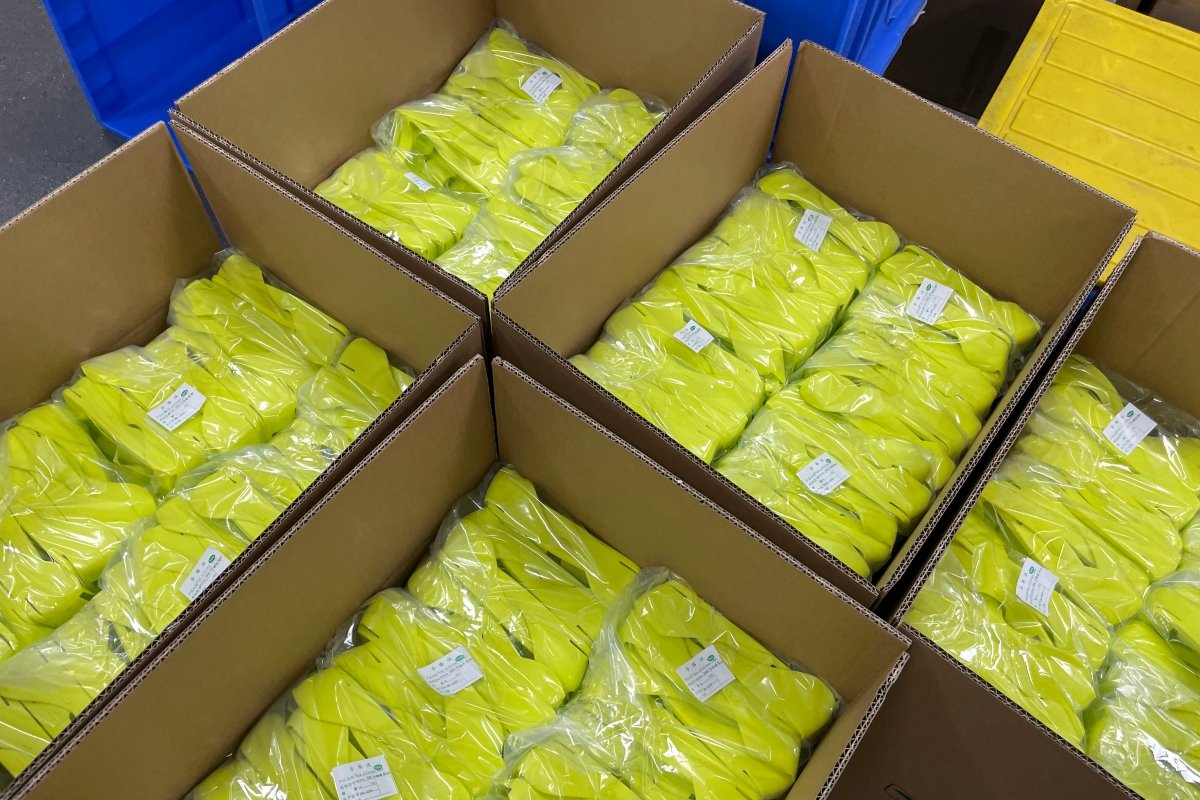
Step 8: Packaging & Shipping
Standard packaging:
- Poly bag: 1pc/opp bag, 100–200pcs per carton.
- Retail box: Custom printed box with window (MOQ 1,000pcs).
- Blister pack: For hanging displays.
Carton size is optimized to minimize shipping cost—typically 40×30×25cm, 8–12kg per carton depending on sleeve size.
Why This Matters for Buyers
Understanding how a silicone sleeve is made helps you ask the right questions when evaluating suppliers:
| Question | Why It Matters |
|---|---|
| "What mold material do you use?" | Steel = production-grade, long life. Aluminum = shorter life. Resin = prototype only. |
| "What's your de-flashing method?" | Cryogenic = consistent. Manual-only = variable quality. |
| "Can I see a fit-test photo?" | Proves they have the actual terminal, not just a drawing. |
| "What's your AQL level?" | 2.5 is standard. 1.0 = stricter (costs more). |
| "Do you pigment-match or spray-paint?" | Pigment-mixed = color won't peel. Paint = chips over time. |
Ready to Make Your Own?
Whether you need 500 pieces for a local chain or 50,000 for a global rollout, the process is the same: design → mold → mold trial → production → delivery. We handle every step in-house, which means one point of contact, one quality standard, and no middleman markup.
Send us your POS model number or 3D file, and we'll have a quote and mold proposal back to you within 24 hours. Free samples available for qualified buyers.
Must read before mold: Custom Silicone Case 및 Custom Silicone Case. For usage, see: How to Use Silicone Covers?.
External References & Citations
- EU RoHS Directive 2011/65/EU: European Commission Environmental Directives
- U.S. FDA 21 CFR 177.2600 Rubber Safety Standards: U.S. Food and Drug Administration Regulations
- ISO 9001 Quality Management & Sampling Standards: International Organization for Standardization
About Me and Dibo Tech
My name is Kunfa Ye, but my friends call me Jeff. I was born in 1986 under the sign of the Tiger. I started working in the silicone rubber manufacturing industry in 2014, and I now have fifteen years of experience. Over these years, I started from scratch and experienced every rise and fall in manufacturing. I know the hardships and rewards of entrepreneurship deeply. I always focus on professionalism and integrity in every project.
The silicone manufacturing industry seems ordinary, but it affects every part of industrial production. I know that trust stands behind every product, and trade relies on mutual success. Over the years, my proudest achievement is not achieving personal financial independence, but helping my clients optimize their supply chains and improve production efficiency. Their success brings me far more joy than personal achievements.
Our brand, Dibo Tech (Dibo Technology Silicone Manufacturing Specialists, Official Website: https://samxine.com/), relies on technical strength and high quality. We specialize in custom OEM and ODM silicone rubber production, offering reliable custom solutions for our clients while fulfilling social responsibility for a sustainable future. I hope my experience helps your business grow. If I can assist you with experience, questions, or resources, I will do my absolute best to help. Because I always believe: the essence of business is the transfer of value, and true fulfillment comes from how much help you can bring to others.
답글 남기기