
Silicone mold making: Mold Structure & Design Guide
How to Understand the Impact of Silicone Mold Structure on Product Quality?
Incorrect mold design causes air traps and tearing defects. Ignoring mold details leads to soaring scrap rates during mass production.
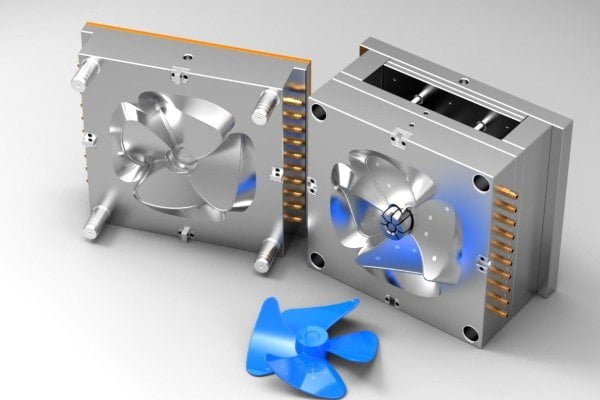
A silicone mold structure consists of top plates, bottom plates, cores, and ejector plates. Proper layout, precise parting lines, venting channels, and R angles determine demolding smoothness, flash thickness, and component lifespan.

Molds form the foundation of silicone manufacturing. High-precision tooling guarantees stable mass production. Read on to see how mold structural details directly govern component quality.
Why Must custom silicone molds Focus on Plate Layout and Venting Channels?
Trapped air in mold cavities causes un-vulcanized voids and blisters. Partial short shots force entire batch rejections. Failing to resolve venting ruins production efficiency.
custom silicone molds typically use 350x350 mm plates where parts occupy no more than 80% area. Venting and runner channels exhaust trapped air and excess rubber, preventing blisters and raw spots.
Plate Space Allocation and High-Pressure Venting Mechanisms
Standard molding plates measure 350×350 mm, while larger mold bases reach 500×500 mm or more. To maintain balanced clamping pressure, product geometries should occupy no more than 80% of the plate area. A mold assembly integrates top plates, bottom plates, core inserts, pin cores, and ejector structures.
Silicone rubber exhibits high fluidity under high temperature and clamping pressure. During compression, rubber seals tightly against steel. Without proper venting grooves, trapped air prevents full vulcanization and causes blisters or voids. Mold engineers must machine dedicated venting and overflow channels into the parting faces. Large molds require multiple venting channels to promote smooth rubber flow.
| Mold Component | Physical Function & Specification | Consequence of Poor Design |
|---|---|---|
| Mold Plate (80% Rule) | Ensures uniform pressure distribution | Edge flexing, uneven wall thickness |
| Venting & Overflow Grooves | Exhausts trapped air & excess rubber | Air traps, blisters, short shots |
| Cores & Core Pins | Defines internal part geometry | Out-of-tolerance sizes, thick flash |
Why Does Accurate silicone mold design Determine Parting Line Quality and Demolding?
Difficult flash trimming increases manual labor costs dramatically. Silicone is sensitive to sharp corners and tears under strain. Omitting rounded fillets compromises component durability.
Precise silicone mold design achieves flashless self-tearing edges through tight parting line alignment. Fillet radii (R angles) at openings must exceed 0.5 mm to eliminate stress concentration and prevent tearing.

Parting Line Integrity and Tear-Resistant Fillet Radii
Molded silicone components require smooth demolding after vulcanization. Standard demolding methods include vertical ejection, mold flipping, manual core pulling, and plate lifting, depending on part geometry.
The self-tearing parting line demands precise machining. Upper and lower parting line edges must match seamlessly. Tighter alignment yields thinner flash, allowing operators to tear off excess rubber easily by hand.
Furthermore, intact silicone components exhibit high tear strength, but surface cracks propagate rapidly under external tension. When conducting silicone mold making, sharp internal corners must be eliminated. Fillet radii at opening edges must measure no less than 0.5 mm. We adhere to ISO 3302-1 rubber molding tolerance standards. Explore our capabilities via Dibo Tech mold manufacturing services.
| Structural Element | Engineering Specification | Impact on Production Yield |
|---|---|---|
| Self-Tearing Parting Line | Seam mismatch < 0.01 mm | Clean hand tearing, lowers labor costs |
| Anti-Tearing Fillet (R Angle) | Radii ≥ 0.5 mm on edges | Eliminates stress points, boosts tear resistance |
| Core Pulling / Demolding | Manual pull or auto-ejection | Shortens cycle times, prevents part distortion |
How to Successfully Implement Insert Molding in silicone mold making?
Overmolded part debonding causes complete assembly failure. Insert displacement under molding pressure damages expensive tooling. Neglecting pre-treatment ruins insert molding projects.
Successful insert molding in silicone mold making demands surface activation or priming. Wall thickness surrounding full-encapsulation inserts must be at least 0.5 mm, or 0.4 mm for localized inserts.

Insert Positioning Rules and Secondary Molding Processes
Silicone components frequently encapsulate metal or rigid plastic inserts. First, insert surfaces require chemical priming or surface activation to ensure strong rubber bonding. Second, inserts demand secure physical positioning inside cavities. While vertical positioning can be single-sided, all lateral dimensions must be constrained to prevent insert shifting during mold closure.
Third, surrounding rubber thickness must be controlled. For fully encapsulated inserts without external locator pins, surrounding rubber thickness must be at least 0.5 mm. For positioned inserts, surrounding rubber thickness should exceed 0.4 mm.
Secondary molding techniques include overmolding (using multi-plate molds to prevent unwanted rubber flow), roll molding (pre-forming rubber blocks into full encapsulation molds), dip molding (repeatedly dipping parts into liquid rubber), liquid drop molding (dispensing room-temperature curing rubber), and multi-color molding (using sequential vulcanization or color-split walls). We reference ASTM D2000 standards to evaluate bonding strength. Check out our Dibo Tech silicone manufacturing line for technical options.
| Secondary Molding Technique | Process Requirement | Typical Application |
|---|---|---|
| Overmolding | Insert priming, dual-stage mold shutoff | Tool handles, encapsulated buttons |
| Multi-Color Molding | Sequential molding or color-split walls | Multi-color keypads, dual-tone seals |
| Dip & Dispense Molding | Repeated liquid dipping or room-temp drop | Insulating boots, patterned grips |
In summary, mold structure governs silicone molding efficiency and product quality. Plate space planning, venting channel design, parting line precision, and fillet radii govern yield rates and durability. For complex overmolding and multi-color projects, precise insert positioning and wall thickness controls ensure manufacturing success.
Frequently Asked Questions (FAQ)
Q1: Why must the fillet radius (R angle) on silicone parts exceed 0.5 mm? Answer: Silicone rubber is sensitive to sharp notches. If a mold cavity contains sharp corners, tension forces cause stress concentration, causing tears to propagate rapidly. Maintaining radii above 0.5 mm preserves tear resistance.
Q2: How can insert displacement or debonding be prevented during vulcanization? Answer: Prevent insert shifting by machining locating pins for multi-directional restraint. Prevent debonding by applying surface chemical primers or surface activation to inserts while maintaining surrounding rubber thickness above 0.4 mm.
Q3: What is the recommended depth for silicone mold venting channels? Answer: Silicone mold venting grooves typically range from 0.01 mm to 0.03 mm in depth. This depth allows air to escape freely without permitting liquid silicone to flow through and form thick flash.
About the Author & Dibo Tech
My name is Kunfa Ye, but friends call me Jeff. I was born in 1986, the year of the Tiger. In 2011, my brother Autumn Ye and I co-founded Dibo Tech, rooting ourselves in the silicone rubber industry for fifteen years. Building from scratch, we navigated industry cycles and learned the true rewards of hard work. We have always built our business on technical expertise and integrity.
The silicone industry touches every corner of modern manufacturing. I deeply believe that behind every product lies trust, and the essence of business is mutual gain. Over these years, my proudest achievement is not personal financial independence, but helping our clients optimize supply chains and boost production efficiency. Their success is far more rewarding than personal milestones. Today, I aim to give back by sharing insights, answering engineering questions, and connecting resources.
Brand Name: Dibo Tech Slogan: Dibo Technology Silicone Manufacturing Specialists Website: https://samxine.com/ Our Mission: Based on strong technical capabilities and quality first, we are committed to innovative and eco-friendly silicone rubber production, providing reliable silicone solutions while fulfilling social responsibilities for a sustainable future.
답글 남기기