
Custom Silicone Molds: 1 Reason for Weight Variations
Why Silicone Parts Vary in Weight?
Do your custom silicone parts have uneven weights? This leads to severe assembly failures and material waste. This is a common consequence of choosing inferior custom silicone molds.
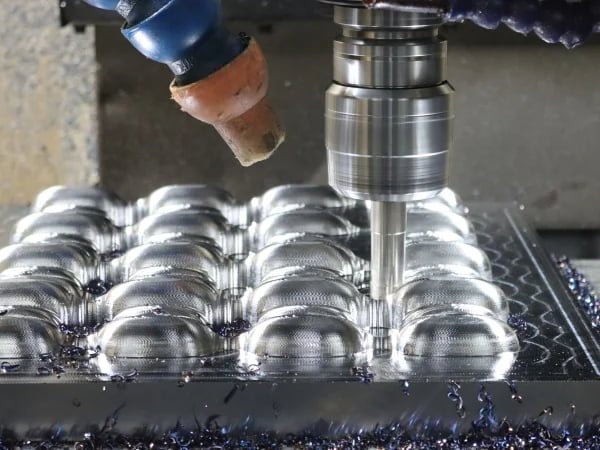
Weight variations in silicone parts usually stem from uncontrolled mold cavity dimensional tolerances. Uncompensated tool wear during CNC machining causes slight volume deviations in each core, ultimately leading to significant weight disparities in mass production.
How Do Tools and Tool Compensation Determine custom silicone molds Precision?
Mold dimensional deviations directly lead to scrapped parts. If CNC milling tool wear is not adjusted promptly, your custom mold manufacturer faces massive yield risks.
Tool quality and precise tool compensation determine whether the mold core dimensions land in the center of the tolerance band. Even a 0.001-millimeter deviation accumulating on the core causes significant weight discrepancies in finished продукция.

Dive Deeper: The Impact of CNC Machining on custom molded silicone parts
The dimensional tolerance of the mold core directly dictates the rubber volume of the product. During the manufacturing of custom silicone molds, the milling cutters in CNC centers experience inevitable physical wear while cutting steel. A professional custom mold manufacturer strictly monitors this wear. If engineers fail to adjust the tool compensation parameters in the system promptly, the cutting path deviates from the theoretical value. This deviation might only be a few thousandths of a millimeter on a single core. However, when a mold features dozens or hundreds of cavities, this error magnifies exponentially. As a result, the custom molded silicone parts produced from the same mold range from too heavy to too light. If the tolerance remains within limits but the allowance is large, it also leads to thicker flash and bulky parting lines. These defects might seem acceptable during the sampling phase, but they turn into a yield nightmare during mass production, drastically increasing sorting and rework costs. Referencing ASTM International standards for strict mold tolerance definitions, precise machining control is the only way to guarantee quality.
| Tool Compensation | Core Dimension Status | Product Weight Variation | Mass Production Yield |
|---|---|---|---|
| Adjusted Promptly | Centered in tolerance band | Minimal, highly consistent | Above 98% |
| Ignored Tool Wear | Drifting at limits | Obvious heavy/light parts | Below 85% |
Why Are Edge Finding and Tool Setting Crucial for custom silicone molds?
Mold center point shifting causes severe local short shots. For precision components, edge finding errors directly destroy entire batches of custom molded silicone parts.
Edge finding precision directly establishes the mold's center point. Once the center shifts, cavity depths become inconsistent, causing uneven product thickness. Tool setting dictates the programming path, ensuring stable mold cores.
Dive Deeper: Center Point Precision and Material Distribution
In the CNC machining phase for custom silicone molds, edge finding and tool setting form the foundation of the coordinate system. Edge finding determines the physical boundaries of the workpiece to locate the absolute center point. If the center point is misaligned, the cutting tool executes asymmetrical depths across different cavities. This causes the finalized custom molded silicone parts to be thick on one side and thin on the other. Uneven thickness causes weight variations and triggers severe physical defects during molding. Minor cases result in poor cosmetic appearance, while severe cases cause local material shortages (short shots) upon mold closure or trapped air bubbles due to poor venting. Tool setting operates on a similar principle. It ensures perfect alignment between the programmed tool path and the actual physical location. A stable mold core requires exact tool pathways. Many inexperienced custom mold manufacturers make mistakes here, leading to repeated mold trial failures. According to ThomasNet's guide on CNC machining, precise coordinate system setup is the core step in reducing scrap rates.
| Core Process | Purpose | Consequence of Error | Решение |
|---|---|---|---|
| Edge Finding | Locate mold center point | Uneven thickness, short shots | Use high-precision optical edge finders |
| Tool Setting | Calibrate tool start height | Inconsistent cavity depth, air traps | Calibrate tool setters regularly |
How Does Polishing Improve custom silicone molds Demolding Efficiency?
Rough parting surfaces cause massive trimming workloads. Inferior polishing ruins product appearance and severely delays the delivery schedule of your custom mold manufacturer.
Mold surface finish directly determines product aesthetics. Good polishing creates translucent products with fine parting lines. Sloppy polishing leaves rough parting surfaces and massive flash, doubling trimming costs.
Dive Deeper: Surface Finish Impact on Mass Production Costs
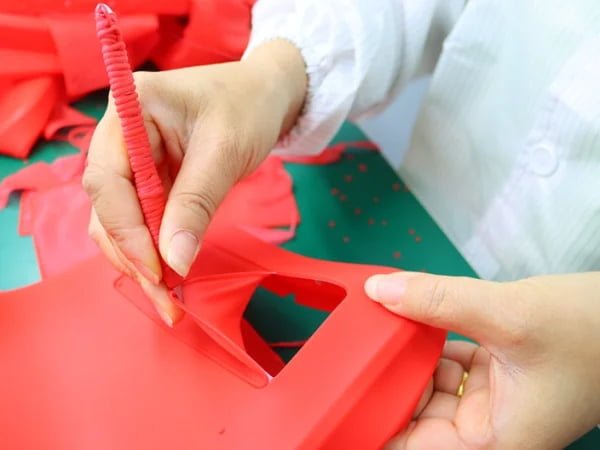
The final quality of custom silicone molds depends heavily on the refinement of polishing and grinding. The surface finish of the mold cavity directly impacts the flow of silicone during vulcanization and the final demolding efficiency. An experienced custom mold manufacturer knows that polishing allows no shortcuts. Excellent polishing reduces demolding resistance, yields highly translucent surfaces, and keeps parting lines extremely thin. Conversely, sloppy polishing leaves machining marks, resulting in rough parting surfaces. This creates dull finished products and heavy, thick flash. During the sample confirmation stage, clients sometimes accept minor flash. However, during mass production, thick flash means doubling the cost of manual trimming or cryogenic deflashing. As described in the Wikipedia entry on Silicone Rubber, surface treatment technology directly correlates with material efficiency and post-processing labor. Controlling sample quality starts with the mold. Spending one extra day perfecting details on the mold saves a week of wasted time in mass production.
| Polishing Quality | Surface Finish (Ra) | Parting Line Status | Post-Trimming Cost |
|---|---|---|---|
| Premium Polishing | Ra 0.2-0.4 | Extremely fine, barely visible | Very low, enables auto-tearing |
| Inferior Polishing | Ra > 1.6 | Rough, obvious steps | Very high, requires manual trimming |
The sample confirmation phase truly tests the engineering capability of a custom mold manufacturer. Weight variations are never accidental; they expose flaws in tool compensation, tool setting, or polishing. At Dibo Tech, we know that products are built on trust, and business is about mutual success. We base our work on solid technical strength, dedicating ourselves to providing the most reliable custom molded silicone parts solutions. Optimizing supply chains and improving production efficiency is our commitment to every client.
Frequently Asked Questions (FAQ)
Q1: What is the acceptable weight tolerance standard for custom silicone parts? Answer: According to ISO 3302-1 guidelines, standard precision molded silicone parts maintain a weight tolerance of ±1% to ±2%. High-precision medical or electronic parts require tolerances within ±0.5%.
Q2: Why was part weight correct during sampling but heavier after 50,000 production cycles? Answer: Long-term clamping force causes minor mechanical mold wear. Accumulated silicone residue along parting lines can also prevent full closure. Additionally, initial CNC machining without proper wear margins leads to cavity expansion over time.
Q3: How can I tell if weight variation is caused by the mold or raw materials during sampling? Answer: Weigh parts from different cavities within the same press stroke. If Cavity 1 is consistently heavier than Cavity 2 by the exact same amount, the issue is mold cavity dimension or center alignment, not raw material mixing.
About Me and Dibo Tech
Brand Name: Dibo Tech
Slogan: Dibo Technology Silicone Manufacturing Specialists
Website: https://samxine.com/
Our Mission:
Grounded in strong technical capability and quality, we specialize in custom OEM and ODM silicone rubber production, offering reliable custom solutions for our clients while fulfilling social responsibility for a sustainable future.
About Me:
My name is Kunfa Ye, but my friends call me Jeff. I was born in 1986 under the sign of the Tiger. I started working in the silicone rubber manufacturing industry in 2014, and I now have fifteen years of experience. Over these years, I started from scratch and experienced every rise and fall in manufacturing. I know the hardships and rewards of entrepreneurship deeply. I always focus on professionalism and integrity in every project.
The silicone manufacturing industry seems ordinary, but it affects every part of industrial production. I know that trust stands behind every product, and trade relies on mutual success. Over the years, my proudest achievement is not achieving personal financial independence, but helping my clients optimize their supply chains and improve production efficiency. Their success brings me far more joy than personal achievements.
Now, I hope to give back to the industry—sharing experience, answering questions, and connecting resources. Whether you are a startup or an experienced industry peer, if I can help, I will do my absolute best. Because I always believe: the essence of business is the transfer of value, and true fulfillment comes from how much help you can bring to others.
Добавить комментарий