

How Does Antimicrobial Technology Prevent Bacteria in Silicone Dog Treat Pouches?
How Does Antimicrobial Technology Prevent Bacteria in Silicone Dog Treat Pouches?
Dog owners face a persistent hygiene challenge: treat pouches that develop odors and bacterial growth between washings. Traditional silicone pouches rely entirely on manual cleaning, but busy pet parents often forget. This creates health risks for both dogs and their families.
Antimicrobial silicone dog treat pouches integrate nano-silver or silver ion technology directly into the material during manufacturing. This infusion process embeds antibacterial agents throughout the entire pouch structure, preventing bacterial growth and mold formation even when the pouch isn't cleaned regularly. The technology offers continuous protection that surface coatings cannot match.

The difference between surface treatments and integrated antimicrobial protection fundamentally changes product performance. While this article examines the technical advantages from a manufacturer's perspective, understanding the science helps wholesale buyers and brand owners evaluate which antimicrobial solutions deliver genuine long-term value versus marketing claims.
What Makes Nano-Silver Technology Effective in Silicone Manufacturing?
Surface antimicrobial coatings wear off. Material integrity suffers when antibacterial agents sit only on the exterior. Pet product buyers increasingly recognize these limitations.
Integrated nano-silver technology permanently embeds antimicrobial protection throughout the silicone matrix. The silver ions remain active for the product's entire lifespan because they're part of the material itself, not a coating applied afterward.

The Material Science Behind Silver Ion Integration
During silicone compounding, we introduce nano-silver or silver ion elements into the raw material before molding. This differs fundamentally from post-production surface treatments. The mixing process distributes antimicrobial agents uniformly through every cubic millimeter of silicone.
The manufacturing sequence follows precise protocols:
- Raw material preparation — medical-grade silicone base selection for compatibility with silver compounds
- Nano-silver integration — controlled mixing at specific temperatures to prevent silver particle agglomeration
- Homogenization — multi-stage blending ensures uniform distribution without compromising silicone flexibility
- Molding and curing — the integrated compound maintains antimicrobial properties through high-temperature vulcanization
Silver ions exhibit documented antimicrobial properties by disrupting bacterial cell membranes and interfering with DNA replication. When embedded throughout silicone rather than sprayed on surfaces, these ions remain accessible at the material boundary where bacteria attempt colonization.
Comparing Antimicrobial Methods for Pet Accessories
| Method | Durability | Coverage | Manufacturing Complexity | Long-term Effectiveness |
|---|---|---|---|---|
| Surface coating | Low — wears off with use | External only | Simple application | Degrades within months |
| Chemical additives | Moderate | Throughout material | Moderate complexity | Can leach out over time |
| Nano-silver integration | High — permanent | Complete interior-exterior | Requires specialized mixing | Maintains effectiveness for product lifetime |
| Silver ion infusion | High — permanent | Complete interior-exterior | Requires precise temperature control | Maintains effectiveness for product lifetime |
I've tested numerous antimicrobial approaches over fifteen years in silicone manufacturing. The difference in performance data becomes obvious after six months of real-world use. Surface treatments consistently fail accelerated aging tests, while integrated solutions maintain antimicrobial activity even after thousands of washing cycles.
Why Pet Product Applications Demand Integrated Solutions
Silicone dog treat pouches face unique contamination challenges. They contact food residue, saliva, outdoor dirt, and moisture — ideal conditions for bacterial growth. Pet owners may carry pouches for days between washings, especially during travel or outdoor activities.
Key contamination factors:
- Organic residue — treat crumbs and oils provide bacterial nutrients
- Moisture retention — condensation from temperature changes creates growth environments
- Handling frequency — constant touching transfers bacteria from hands
- Storage conditions — warm pockets or bags accelerate bacterial reproduction
Surface-treated pouches lose antimicrobial effectiveness precisely when protection matters most — after weeks of accumulated exposure. Integrated nano-silver maintains defensive capability regardless of wear patterns or cleaning frequency.
How Do Silver Ions Prevent Mold Growth in Silicone?
Mold presents a distinct challenge from bacteria. Fungal spores colonize differently and resist many antimicrobial treatments that target bacterial cells. Dog treat pouches stored in humid conditions become mold incubators.
Silver ions combat mold through multiple mechanisms. They penetrate fungal cell walls, disrupt metabolic processes, and prevent spore germination. Unlike bacteria-specific agents, silver's broad-spectrum activity addresses both bacterial and fungal contamination.

The Forgotten Pouch Scenario
Pet owners lead busy lives. A treat pouch left in a car trunk for two weeks, or forgotten in a gym bag after a hiking trip, becomes a microbiological experiment. Traditional silicone without antimicrobial protection develops visible mold colonies and persistent odors.
I've examined returned pouches from field testing — the control samples without nano-silver integration showed mold growth after 10-14 days of non-use with residual moisture. Integrated antimicrobial pouches remained clean and odor-free under identical conditions.
Technical Performance Data
Laboratory testing provides quantifiable antimicrobial effectiveness:
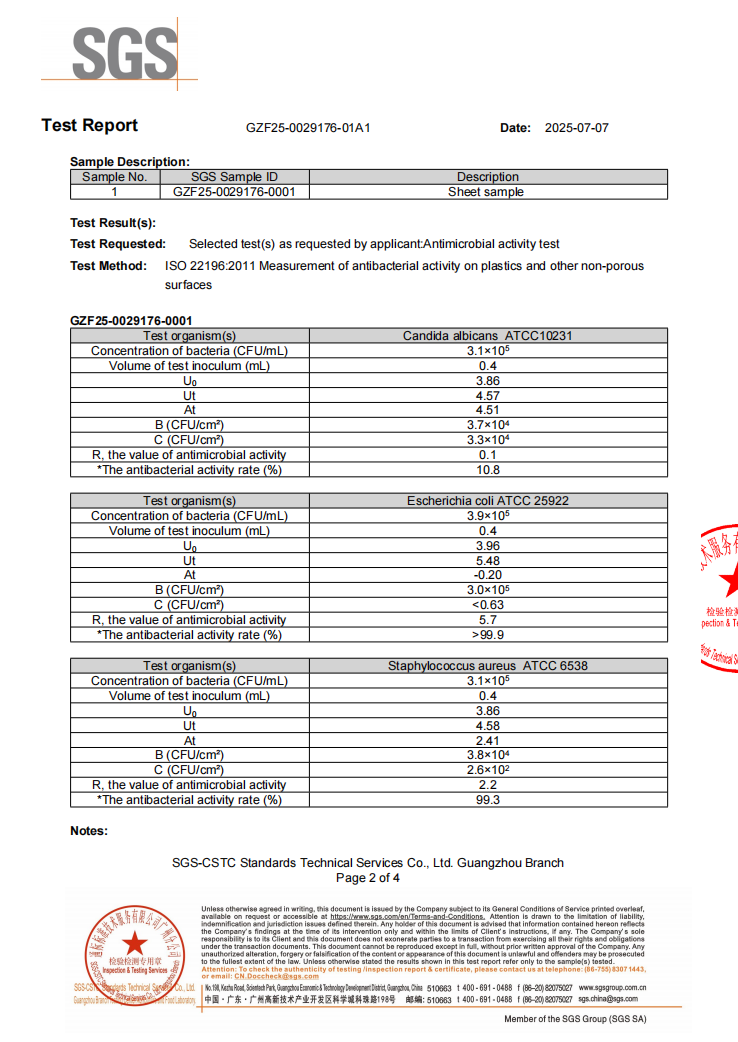
JIS Z 2801 (ISO 22196) Antibacterial Test Results:
- Staphylococcus aureus reduction: >99.9% after 24 hours
- Escherichia coli reduction: >99.9% after 24 hours
- Klebsiella pneumoniae reduction: >99.8% after 24 hours
ASTM G21 Fungal Resistance:
- Aspergillus niger: No visible growth after 28 days
- Penicillium: No visible growth after 28 days
- Rating: 0 (no fungal growth — highest resistance)
Third-party testing laboratories conduct these evaluations using standardized protocols. Buyers sourcing antimicrobial pet products should request specific test reports rather than accepting general antimicrobial claims.
Why Integration Outperforms Coating for Mold Prevention
Mold doesn't just sit on surfaces — fungal hyphae penetrate materials. Surface coatings create a thin defensive barrier, but once breached, the underlying silicone offers no resistance. Mold colonizes the substrate beneath the coating.
Integrated silver ions defend at every depth. If physical abrasion removes surface material, the newly exposed silicone contains the same antimicrobial protection. This continuous defense prevents subsurface colonization that surface treatments cannot address.
What Are the Manufacturing Advantages of OEM Antimicrobial Production?
Source factory manufacturing with integrated antimicrobial technology offers distinct advantages beyond standard OEM/ODM models. The capability to modify base materials before molding enables customization impossible with finished-product sourcing.
Brand owners partnering with manufacturers who control the antimicrobial integration process gain access to proprietary formulations and application-specific optimization.

Beyond Standard OEM Services
Traditional OEM relationships focus on producing existing designs with standard materials. Manufacturers offering antimicrobial material development become technical partners rather than simple producers.
Advanced OEM capabilities include:
- Custom antimicrobial concentration — adjusting silver content for specific use cases and regulatory requirements
- Material property balancing — optimizing flexibility, durability, and antimicrobial effectiveness simultaneously
- Application-specific formulations — tailoring silver release rates for different product lifecycles
- Certification support — documentation for FDA, LFGB, or other regulatory compliance
I've worked with brand partners who initially requested standard silicone pouches, then realized antimicrobial integration could differentiate their product line. The ability to incorporate this technology during material compounding — rather than as an aftermarket treatment — reduced their total production costs while improving product performance.
Technical Collaboration in Material Development
Source factory partnerships enable iterative development impossible when sourcing finished goods. Antimicrobial technology requires balancing multiple variables:
- Silver concentration — too little provides insufficient protection; too much affects material properties or increases costs
- Particle size — nano-scale distribution improves effectiveness but complicates mixing
- Silicone grade compatibility — medical-grade silicone requires different approaches than industrial grades
- Color stability — silver compounds can affect pigmentation in colored silicone
- Curing parameters — high-temperature vulcanization must not degrade antimicrobial agents
Testing cycles during development validate that antimicrobial effectiveness doesn't compromise silicone's mechanical properties — tensile strength, tear resistance, temperature tolerance, and flexibility must meet pet product standards.
Supply Chain Transparency and Quality Control
Manufacturers integrating antimicrobial technology at the material level control critical quality points that trading companies and distributors cannot verify. When sourcing through intermediaries, buyers cannot easily confirm:
- Actual silver content versus claimed specifications
- Uniform distribution throughout the product
- Raw material quality and antimicrobial agent sourcing
- Consistency between production batches
Direct OEM relationships with source factories provide transparency into these technical factors. Quality audits can verify material mixing procedures, examine raw material certifications, and validate testing protocols.
Does Antimicrobial Silicone Remain Safe for Pet Contact?
Safety concerns naturally arise when discussing antimicrobial agents in pet products. Silver's effectiveness against microorganisms raises questions about potential harm to animals or humans handling these products.
The concentration and binding method determine safety profiles. Nano-silver integrated into silicone matrices exhibits fundamentally different behavior than free silver particles or ionic silver solutions.

Regulatory Standards for Antimicrobial Pet Products
Food-contact silicone requires strict safety certifications regardless of antimicrobial additives. Products meeting FDA CFR 177.2600 or European LFGB standards undergo rigorous migration testing to ensure no harmful substances transfer to food or biological tissues.
Relevant safety certifications:
- FDA Food Contact — silicone composition approved for direct food contact
- LFGB Certification — German food law compliance for material safety
- REACH Compliance — European chemical safety regulations
- RoHS — restriction of hazardous substances
- Biocompatibility ISO 10993 — biological evaluation for skin contact materials
Integrated nano-silver in silicone matrices demonstrates minimal migration in standard testing. The silver remains bound within the silicone network rather than leaching into contents or onto skin. This differs significantly from silver solutions or loosely bonded surface treatments.
Long-term Safety in Real-world Use
Pet owners use treat pouches daily for years. The cumulative exposure exceeds short-term testing scenarios. Long-term safety data becomes essential for responsible product development.
Accelerated aging studies simulate years of use by exposing materials to elevated temperatures, UV radiation, and repeated mechanical stress. Antimicrobial silicone maintains material integrity without degrading into potentially harmful compounds.
I've maintained contact with brand partners whose antimicrobial pouches have been in the market for five years. Customer feedback reports no adverse reactions in pets, and material analysis of returned warranty items shows no degradation of the silicone structure or concerning chemical changes.
Environmental Considerations
Silver's antimicrobial properties raise environmental questions about disposal and ecological impact. Responsible manufacturers consider product end-of-life scenarios.
Silicone itself is more environmentally stable than plastics — it doesn't break down into microplastics. The low silver concentrations in antimicrobial silicone (typically 0.1-2% by weight) pose minimal environmental risk when products reach landfills. The silver remains bound in the silicone matrix rather than dissolving into groundwater.
Some manufacturers offer silicone recycling programs, though these remain limited globally. The durability of antimicrobial silicone dog treat pouches extends product lifespan, reducing replacement frequency and overall consumption.
How Should Buyers Evaluate Antimicrobial Claims in Pet Products?
The market contains numerous "antibacterial" product claims with varying degrees of substantiation. Wholesale buyers, brand owners, and retail chains need evaluation frameworks to distinguish genuine antimicrobial technology from marketing language.
Testing documentation, specific efficacy claims, and manufacturing transparency separate credible products from unsupported assertions.
Critical Evaluation Questions
1. What specific antimicrobial agent is used? Generic "antibacterial" claims without identifying the active technology lack credibility. Reputable manufacturers specify nano-silver, silver ions, or alternative antimicrobial agents with documented mechanisms.
2. Is the antimicrobial protection integrated or surface-applied? Integration methodology affects durability and performance. Request manufacturing process descriptions to understand whether the protection is temporary coating or permanent integration.
3. What third-party testing validates effectiveness? Independent laboratory reports using standardized methods (JIS Z 2801, ISO 22196, ASTM G21) provide objective verification. Internal testing alone presents potential conflicts of interest.
4. Which microorganisms does testing address? Broad claims about "kills 99.9% of germs" without specifying tested organisms lack technical rigor. Comprehensive testing covers both gram-positive and gram-negative bacteria plus fungal species relevant to the product's use environment.
5. How long does antimicrobial effectiveness last? Accelerated aging data and real-world longevity studies demonstrate whether protection persists throughout the product's expected lifespan or degrades quickly.
Red Flags in Antimicrobial Product Claims
Certain marketing approaches suggest incomplete development or questionable effectiveness:
- Vague terminology — "antimicrobial technology" without specifying the mechanism
- Missing test reports — inability to provide third-party laboratory documentation
- Only antibacterial claims — no mention of antifungal properties when mold is a primary concern
- Surface-only protection — coating-based approaches marketed as equivalent to integration
- Lack of safety certifications — antimicrobial products should meet food-contact safety standards
- Price inconsistency — genuine antimicrobial integration costs more than standard silicone; suspiciously low pricing suggests absent or minimal technology
Building Supplier Relationships for Technical Products
Antimicrobial silicone dog treat pouches represent technical differentiation, not commodity products. The supplier relationship should reflect this complexity.
Effective supplier partnerships include:
- Factory visits examining material mixing equipment and quality control procedures
- Access to raw material certifications and antimicrobial agent sourcing documentation
- Collaborative testing programs validating performance in specific use scenarios
- Transparent communication about capabilities and limitations
- Technical support for regulatory compliance in target markets
I've learned that manufacturers confident in their antimicrobial technology welcome detailed technical questions and factory inspections. Evasive responses to specification requests or reluctance to provide testing documentation signal potential quality concerns.
Frequently Asked Questions
How often do antimicrobial silicone dog treat pouches need washing?
Antimicrobial protection prevents bacterial growth and mold formation, but regular washing still removes visible dirt, treat residue, and oils. Most pet owners wash pouches weekly or bi-weekly depending on use frequency. The antimicrobial technology provides protection between washings rather than eliminating cleaning needs entirely.
Will nano-silver make the silicone dog treat pouch smell like metal?
Properly integrated nano-silver produces no metallic odor. The silver concentration remains low (typically under 2%), and the particles are bound within the silicone matrix. High-quality antimicrobial silicone maintains the odorless characteristics of standard food-grade silicone.
Does antimicrobial silicone cost more than standard silicone pouches?
Yes, antimicrobial integration increases manufacturing costs by approximately 15-30% depending on silver concentration and production volume. However, the technology extends product lifespan and reduces warranty claims from odor or mold issues, potentially improving total cost of ownership for brands.
Can antimicrobial silicone lose effectiveness over time?
Integrated nano-silver maintains effectiveness throughout the product's lifespan because the antimicrobial agents are permanently embedded in the silicone matrix. Unlike surface coatings that wear away, integrated protection doesn't degrade with washing or normal use. Third-party testing validates antimicrobial activity retention after years of simulated use.
Is antimicrobial silicone safe for puppies and small dogs?
Antimicrobial silicone meeting FDA food-contact standards and biocompatibility certifications is safe for all dogs regardless of age or size. The nano-silver remains bound in the silicone and doesn't migrate to food or contact surfaces in quantities that pose health risks. Many pet product manufacturers use the same antimicrobial silicone for puppy products, adult dog accessories, and even cat items.
Заключение
Antimicrobial technology in silicone dog treat pouches represents genuine functional innovation rather than incremental improvement. Integrating nano-silver or silver ions throughout the material during manufacturing creates permanent bacterial and mold resistance that surface treatments cannot match. This
Добавить комментарий