
Why Do Custom Made Rubber Parts Fail? 1 Real Factory Report Analysis
Why Do Custom Made Rubber Parts Fail? 1 Real Improvement Case
Have you ever encountered surface defects in customized products? Such errors seriously affect product delivery and customer trust. I will record a real case solving this pain point today.
Defects in custom made rubber parts usually occur due to poor confirmation of the first production piece. This factory report details the process of correcting surface finish mismatches and missing Pantone numbers, which will definitely help you.
This low-level mistake almost made the factory lose a key customer. The factory's rapid response determined the final success. What fatal loophole did they find in the process?
Dive Deeper: Temporary Containment Measures And Inventory Check
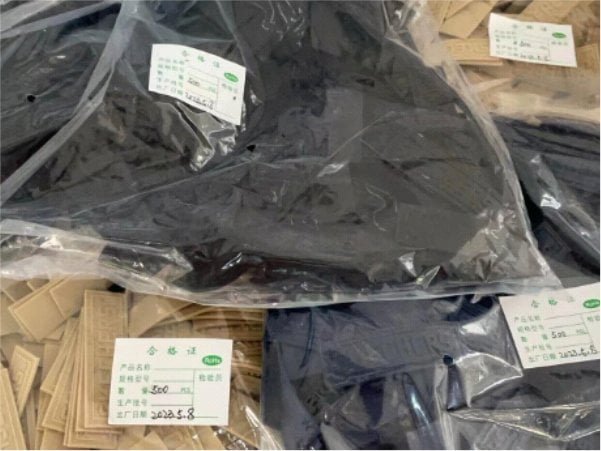
When dealing with quality abnormalities of custom made rubber parts, the factory immediately took emergency containment measures. The customer returned all defective parts. The quality team immediately checked all inventory status. They recorded the following data in the report: Work in Process (WIP) and in-transit goods were 0 PCS. Inventory was also 0 PCS. I breathed a sigh of relief when I saw this data. This meant the problem batch had not expanded. The factory's isolation action was very rapid. In manufacturing, many custom rubber parts manufacturers often cause greater losses due to delayed isolation. The factory must ensure all potential defective products are locked. This is the most basic and important step in the factory report. By establishing a perfect inventory tracking mechanism, the factory can accurately lock the affected batches immediately after a complaint occurs.
| Isolation Item | Quantity (PCS) | Status |
|---|---|---|
| Customer Returns | All | Isolated pending analysis |
| WIP | 0 | Normal |
| In-Transit | 0 | Normal |
| Inventory | 0 | Normal |
The factory then began to look for the real cause.
Why Would Custom rubber parts manufacturers Make This Mistake?
Everyone wondered why the samples were correct but mass production had problems. This issue troubled the team for days.
The root cause was a serious communication gap during the first mass production. The technical department did not seal the sample in time, causing production without a standard reference.
Dive Deeper: Failure Of First Article Confirmation And Departmental Communication
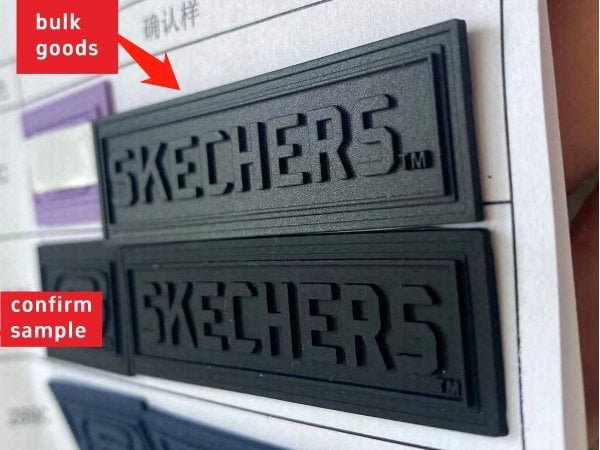
The factory report analyzed two root causes in detail. First, the label requirements were not implemented properly, and the Pantone number was missing. This exposed the operators' neglect of special customer requirements. Second, this was the first mass production, and the technical department did not seal the sample and transfer it to the production and quality departments for reference in time. More seriously, the mold surface was treated before production. This caused the surface finish of the mass-produced custom made rubber parts to be completely inconsistent with the previously submitted samples. As a professional company, the factory cannot tolerate such mistakes. This case shows that for custom rubber parts manufacturers, the transfer of standards is more important than technology itself. If the ISO 9001 Quality Management System is strictly executed, this information barrier can be broken. The factory must establish a mandatory sample handover system.
| Abnormality | Sample Status | First Mass Production Status | Cause Analysis |
|---|---|---|---|
| Label Color | Standard exists | Missing Pantone number | SOP not implemented |
| Surface Finish | Confirmed | Inconsistent effect | Unconfirmed mold treatment |
| Sealed Sample | Exists | Not transferred to workshop | Technical handover delay |
The factory immediately formulated strict corrective actions after finding the problem.
How Does The Factory Completely Solve The Quality Problem Of custom made rubber parts?
The factory modified the operational process immediately after finding the loopholes. Everyone understands that rules must prevent human errors.
The technical department promptly issued the sealed samples to the production and quality departments. The factory stipulated that all new projects must have a sealed sample reference before production.
Dive Deeper: Establishment Of Standardized Processes And Long-Term Prevention
To completely eliminate this problem, the factory listed specific corrective actions in the factory report. The first measure was immediate correction. The technical department immediately issued the latest sealed samples to the production and quality departments to ensure a unified standard. The second item was long-term preventive measures. The factory made hard requirements for subsequent processes: all new projects must have a formal sealed sample from the technical department during the first mass production. This sealed sample must be provided to the production and quality departments for reference. Production can only start normally after double confirmation. This corrective action directly cuts off the possibility of production without standards. Currently, the improvement results confirm no recurrence of defects. This proves the factory's corrective measures are effective. For custom rubber parts manufacturers, establishing a fool-proof mechanism is the only way to ensure stable quality. I record these to remind everyone to value the importance of processes.
| Improvement Stage | Specific Action | Responsible Dept | Expected Effect |
|---|---|---|---|
| Immediate Correction | Reissue sealed samples | Technical Dept | Unify production standards |
| Long-term Prevention | Require samples before production | All Departments | Eliminate blind production |
| Result Confirmation | Track subsequent batches | Quality Dept | No recurring defects |
What is custom made rubber parts?
Custom made rubber parts is a tailored component used to solve non-standard sealing and shock absorption pain points in industrial manufacturing. Its core function is to help users achieve high-precision assembly effects in a short time, meeting physical and chemical performance requirements in specific environments.
The 3 main advantages of applying custom made rubber parts in the industry include:
- Advantage 1: Automatically generate geometric shapes that perfectly fit the product structure to improve sealing performance.
- Advantage 2: Automatically generate material formulas matching specific temperature and pressure environments to extend service life.
- Advantage 3: Automatically generate standardized production molds to reduce long-term procurement costs.
How to operate the quality control of custom made rubber parts?
- Requirement Review and Design Validation: Before starting any custom project, customer drawings and tolerance requirements must be reviewed in detail.
- First Article Sampling and Sealing: This is the most critical step. As pointed out by the ASTM Rubber Standards, the physical properties of the material must be tested and confirmed before mass production. The factory must seal the qualified samples for future reference.
- Pre-production Handover: The technical department must provide detailed technical briefings to the production and quality departments to ensure all special requirements (such as Pantone colors and surface finishes) are clear.
- Combination of Full Inspection and Sampling: During mass production, we must rely not only on first article inspection but also conduct regular process inspections to ensure quality consistency.
This factory report record makes me deeply realize the importance of processes. Even the smallest details can trigger serious customer complaints. Through this complaint, the factory improved the first article sealing system, which is a very valuable experience. I hope this case can help more peers avoid the same traps.
About Me and Dibo Tech
Brand Name: Dibo Tech
Slogan: Dibo Technology Silicone Manufacturing Specialists
Website: https://samxine.com/
Our Mission:
Grounded in strong technical capability and quality, we specialize in custom OEM and ODM silicone rubber production, offering reliable custom solutions for our clients while fulfilling social responsibility for a sustainable future.
About Me:
My name is Kunfa Ye, but my friends call me Jeff. I was born in 1986 under the sign of the Tiger. I started working in the silicone rubber manufacturing industry in 2014, and I now have fifteen years of experience. Over these years, I started from scratch and experienced every rise and fall in manufacturing. I know the hardships and rewards of entrepreneurship deeply. I always focus on professionalism and integrity in every project.
The silicone manufacturing industry seems ordinary, but it affects every part of industrial production. I know that trust stands behind every product, and trade relies on mutual success. Over the years, my proudest achievement is not achieving personal financial independence, but helping my clients optimize their supply chains and improve production efficiency. Their success brings me far more joy than personal achievements.
Now, I hope to give back to the industry—sharing experience, answering questions, and connecting resources. Whether you are a startup or an experienced industry peer, if I can help, I will do my absolute best. Because I always believe: the essence of business is the transfer of value, and true fulfillment comes from how much help you can bring to others.
Leave a Reply