How Do Top custom rubber parts manufacturers Fix 2.4% Defects?
How Do Top custom rubber parts manufacturers Fix 2.4% Defects?
Looking for custom rubber parts manufacturers to fix silicone cap burrs? Customer complaints cause huge headaches. They delay delivery and damage trust. Do not worry, we have a solution.
Top custom rubber parts manufacturers solve defects through process optimization and strict quality control. Facing a 2.4% defect rate, the factory re-inspected inventory, improved inspection methods, and tightened AQL to 0.4, achieving zero defects.
This real customer complaint case shows the complete process of how a factory handles quality issues. If you want to know how the factory eliminates silicone burrs step by step, please keep reading. I will break down every improvement detail for you.
Why Do custom rubber parts manufacturers Experience Defects?
Do product edges always have leftover burrs? Missing details during secondary processing causes severe quality accidents. This makes clients very unhappy and leads to returns. The factory quickly identified the causes.
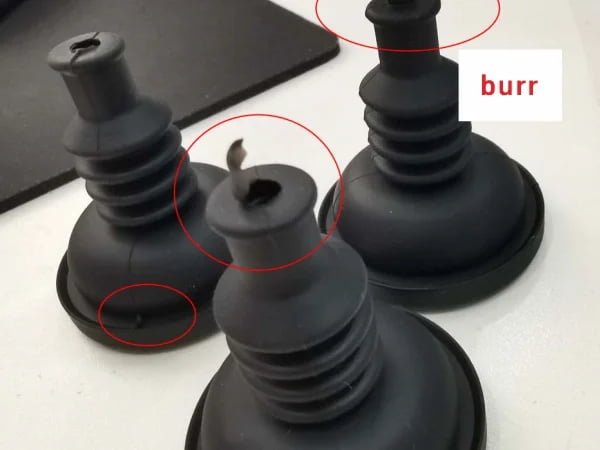
There are three main reasons for flash. First, molding naturally causes burrs on the hole edges. Second, secondary operators miss spots during processing. Finally, inspectors use wrong methods and cover the burrs completely.
Deep Analysis of Manufacturing and Inspection Loopholes
When inspecting this batch of 3000 pieces, the factory analyzed the situation very deeply. I observed that this represents a typical dual loophole in both manufacturing and quality inspection. First, the product process design itself has inherent limitations. After the molding process finishes, the edges of the holes will naturally develop flash and burrs. This is a very common physical phenomenon in the daily production of custom made rubber parts. However, the real reason the defective products reached the client was the subsequent manual processing.
The secondary processing operators missed some critical spots when they were trimming the flash. They did not completely clean the residue from the hole edges. What is even worse is the inspection method used by the full-inspection workers. When the inspectors picked up the products to check them, their fingers pinched the exact spots where the burrs were located. This wrong handling method directly covered the flash and blocked their view entirely. This human error ultimately led to the 2.4% defect rate flowing out to the customer. To prevent this from happening again, the factory must re-evaluate every operational detail. Below is the root cause analysis table I recorded from the factory floor.
| No. | Issue Area | Root Cause Analysis | Responsibility |
|---|---|---|---|
| 1 | Molding Process | Product design limitations cause natural burrs on hole edges after molding. | Engineering Dept. |
| 2 | Secondary Process | Operators missed spots while trimming flash, leaving heavy residue. | Production Dept. |
| 3 | Full Inspection | Inspectors used wrong handling methods, covering burrs with their fingers. | Quality Dept. |
How Do custom made rubber parts Implement Effective Improvements?
Found the cause but cannot fix it completely? Many factories lack systematic execution power. This causes the same complaints to repeat constantly. Look at how our factory strictly executes improvements.
The factory took four corrective steps. We trained workers to clear burrs completely; improved inspectors' 360-degree checking methods; hung defect history warning boards; and finally, OQC executed stricter sampling.
Detailed Breakdown of Quality Control and Training
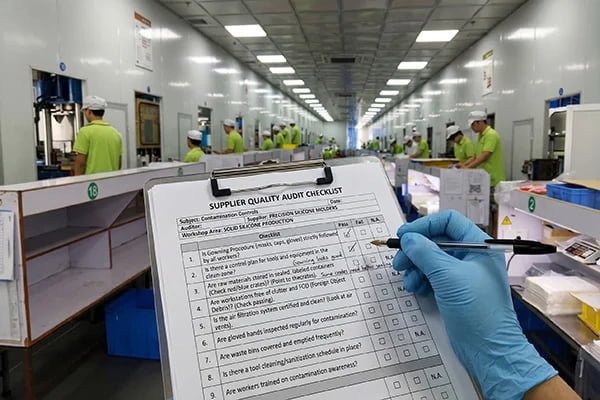
After identifying these root causes, the factory quickly implemented four major corrective actions. I personally saw these measures put into strict practice across the entire workshop. First, the management conducted strict training for all secondary processing operators. They are now required to clear the flash around the holes completely without any exceptions. They must also perform a thorough self-inspection immediately after processing. Second, the training for full-inspection personnel happened at the exact same time. The new inspection routine requires them to first do a comprehensive 360-degree visual check of the product from all sides. Then, they must gently stretch the product to check for any hidden tears or damages. This specific method is highly effective for custom rubber parts manufacturers to ensure absolute product integrity.
Furthermore, the quality control department created a detailed defect history board. This board hangs directly above the inspection tables to warn inspectors constantly about past mistakes. Finally, Outgoing Quality Control (OQC) tightened the sampling standards significantly. The AQL shifted strictly from MA:0.65, MI:1.0 to MA:0.4, MI:0.65. This is not just a quick fix but a major upgrade to the factory quality system. I recorded these specific improvement actions in the table below.
| No. | Improvement Action | Assignee | Status |
|---|---|---|---|
| 1 | Train secondary operators to clear burrs completely and perform self-inspections. | Production Manager | Completed |
| 2 | Train inspectors on 360-degree checks and product stretching routines. | Quality Manager | Completed |
| 3 | Create a defect history board and hang it at inspection stations as a warning. | Quality Engineer | Completed |
| 4 | Tighten OQC sampling standard from MA:0.65, MI:1.0 to MA:0.4, MI:0.65. | OQC Leader | Ongoing |
How to specifically operate custom rubber parts manufacturers quality control?
Step 1: Establish a standard incoming inspection specification. This step complies directly with international ISO 9001 Quality Management standards. Step 2: Execute a strict first-article confirmation during the production process. Step 3: Implement an upgraded AQL sampling plan before shipment. According to recent third-party manufacturing data, tightening the AQL can reduce customer complaints by up to 80%. If you want to learn more about our factory capabilities, you can visit our internal Silicone Manufacturing Specialists portal for details.
Conclusion
In conclusion, solving the 2.4% defect rate on silicone caps required immediate action and detailed analysis. Our factory successfully eliminated the flash issue through strict operator training and tighter OQC standards. I recorded these steps carefully because they show our commitment to constant improvement. We do not just fix temporary problems; we build long-term reliability. By upgrading our inspection methods and learning from past mistakes, we ensure that every client receives the best possible products. Quality is always our top priority.
About Me and Dibo Tech
Brand Name: Dibo Tech
Slogan: Dibo Technology Silicone Manufacturing Specialists
Website: https://samxine.com/
Our Mission:
Grounded in strong technical capability and quality, we specialize in custom OEM and ODM silicone rubber production, offering reliable custom solutions for our clients while fulfilling social responsibility for a sustainable future.
About Me:
My name is Kunfa Ye, but my friends call me Jeff. I was born in 1986 under the sign of the Tiger. I started working in the silicone rubber manufacturing industry in 2014, and I now have fifteen years of experience. Over these years, I started from scratch and experienced every rise and fall in manufacturing. I know the hardships and rewards of entrepreneurship deeply. I always focus on professionalism and integrity in every project.
The silicone manufacturing industry seems ordinary, but it affects every part of industrial production. I know that trust stands behind every product, and trade relies on mutual success. Over the years, my proudest achievement is not achieving personal financial independence, but helping my clients optimize their supply chains and improve production efficiency. Their success brings me far more joy than personal achievements.
Now, I hope to give back to the industry—sharing experience, answering questions, and connecting resources. Whether you are a startup or an experienced industry peer, if I can help, I will do my absolute best. Because I always believe: the essence of business is the transfer of value, and true fulfillment comes from how much help you can bring to others.
Laisser un commentaire