

Under-Cured Silicone? Fix Custom Silicone Rubber Defects
Why Do Visually Flawless Silicone Parts Develop Internal Voids and Under-Curing?
Custom silicone rubber parts can look perfect outside but hide uncured soft cores within. Overlooking internal voids results in catastrophic assembly failures. I share our root cause case review to protect your production line.
Silicone products develop internal voids and softness when molding temperatures stay too low and curing cycles remain too short. Inadequate heat interrupts polymer cross-linking, leaving the internal elastomer under-cured, spongy, and structurally weak.
Many engineers believe flawless surface aesthetics guarantee solid manufacturing quality. In reality, hidden internal defects represent the most dangerous operational hazards. Let us review the real inspection data from this customer complaint.
Why Did Flawless Custom Silicone Rubber Parts Suffer Weight Loss?
Components look smooth on the outside, but digital balances reveal consistent underweight deviations. Releasing these flawed parts invites assembly collapses and customer disputes. We performed destructive section testing to expose the internal defects.
Cross-section cuts revealed large interior cavities inside the silicone feet. Incomplete vulcanization left the core soft without elastic rebound. These internal cavities reduced overall density, making the entire production batch underweight.
Cross-Section Inspection and Defective Batch Containment
When our quality team received the underweight alert from our client, we immediately inspected the retained production lot. The silicone feet exhibited smooth surfaces, uniform coloration, clean parting lines, and zero external blisters. However, our precision balance confirmed consistent underweight data across random samples. Following our containment protocol, we sliced the suspect units across their center axis:
| Inspection Parameter | Drawing Specification | Qualified Batch Measurement | Defective Batch Measurement | Quality Verdict |
|---|---|---|---|---|
| External Appearance | Smooth surface without flash | Smooth and clean | Smooth without visible flaws | Passed |
| Unit Weight | 30.7 ± 0.05 g | 30.72 g | 29.8 g | Below lower limit (Failed) |
| Internal Structure | Solid and homogeneous matrix | Dense solid rubber core | Porous cavities and soft core | Severe under-curing (Failed) |
| Elastic Recovery | Instant rebound under load | Immediate rebound | Collapsed without rebound | Elastic failure |
The cross-section revealed an uncured, spongy core. I initiated our emergency containment procedure immediately. Quality inspectors sorted the entire inventory on digital scales.
We isolated all underweight custom silicone rubber parts and scrapped every single piece. We chose to absorb the immediate material loss rather than permit a single defective unit of custom molded silicone parts to enter our client's facility.
How Does Insufficient Heat Cause Under-Curing in Custom Silicone Rubber?
Subtle temperature drops inside compression presses escape visual detection, yet under-curing severely compromises mechanical integrity. Under-cured rubber collapses permanently under working loads. Our technical review traced the exact thermodynamic failure mechanisms on the shop floor.
Low cavity temperatures combined with short cycle times stall polymer vulcanization. Silicone molecular chains fail to form dense cross-linked networks, leaving the inner core porous, soft, and mechanically unstable.
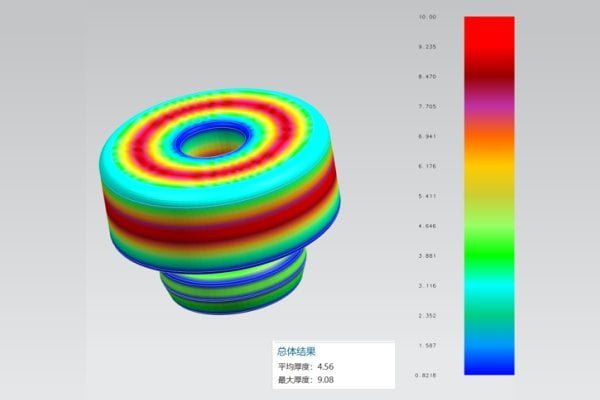
Thermodynamic Factors Disrupting Cross-Linking Kinetics
Our engineering department audited the production monitoring records from that shift. By comparing machine parameters against our validated process sheets, we identified two primary causes behind the failure.
Silicone vulcanization is an irreversible chemical cross-linking process. When mold steel temperatures drop even a few degrees below the reaction threshold, thermal activation energy halts. Under ASTM D2000 Classification System for Rubber Materials, rubber compounds require sustained thermal thresholds to attain complete chemical cures.
Operators set press timers at the absolute minimum limit without safety buffers. Running fifteen seconds too fast prevented heat from penetrating the thicker cross-sections of the component. Under-cured custom molded silicone parts lose compressive resistance. In line with ASTM D395 Test Methods for Rubber Compression Set, under-cured polymer networks deform permanently when compressed, destroying part functionality.
How Can Plants Eliminate Custom Silicone Rubber Curing Defects?
Verbal reminders to press operators fail to prevent recurrent parameter drift during high-volume runs. Uncontrolled process drift generates massive scrap rates and customer friction. We must enforce locked machine parameters and mandatory physical audits.
Plants must calibrate mold temperatures into optimal operating zones and extend cure cycles with thermal safety margins. Technicians must log mold temperatures every two hours, while quality inspectors must execute destructive cross-section checks prior to mass production.

Systematic Corrective Action and Shop-Floor Standardization
To permanently eliminate curing risks, our technical team at Dibo Tech executed four corrective measures aligned with the closed-loop principles of ISO 9001 Quality Management Standards:
| Control Item | Previous Practice | Upgraded Standard | Verification Protocol |
|---|---|---|---|
| Mold Temperature | Relied on instrument panel readings | Increased temperature setpoint into safe operating zone | Pyrometer audits logged every 2 hours by designated staff |
| Vulcanization Time | Set at lowest allowable threshold | Extended cycle times to provide thermal safety margins | Machine cycle timers password-locked against manual edits |
| First-Piece Sign-off | Visual checks and caliper measurements | Mandatory razor cross-section checks and digital weighing | Production releases require signed QA cross-section approval |
| In-Process Quality | Visual checks and critical dimensions | 100% weight monitoring and destructive shift sampling | Patrol inspection sheets archived for complete traceability |
Following this standardization, we produced five pilot shots for destructive validation. We confirmed completely solid rubber cores and target weight stability before releasing the line for mass production.
Over the next three production lots, all cross-section samples exhibited dense, fully cured material structures. Customer deliveries of our custom silicone rubber feet returned to zero-defect performance. This quality issue is now permanently closed.
Precision silicone manufacturing leaves zero margin for compromise. A temperature loss of a few degrees or a cycle shortened by several seconds creates destructive internal voids. True manufacturing quality requires disciplined parameter execution across every single shift. Dibo Tech remains dedicated to engineering excellence, transparent problem-solving, and dependable process controls to deliver reliable custom molded silicone parts to global industries.
Frequently Asked Questions (FAQ)
Q1: Why does under-curing make silicone molded parts weigh less than nominal specifications?
A1: When molding temperatures drop or cure times run short, silicone compounds fail to achieve complete cross-linking. The uncured core forms microscopic porous voids, which decreases overall material density and results in underweight finished parts.
Q2: What operational hazards occur if under-cured silicone parts enter end assemblies?
A2: Under-cured silicone lacks compressive strength and elastic recovery. When installed under mechanical loads, the parts collapse permanently, resulting in lost sealing force, vibration leaks, and premature structural failure.
Q3: How can manufacturers verify complete silicone vulcanization on the shop floor?
A3: Quality teams should establish precise part-weight baselines on digital scales. If sample weights drop toward lower tolerance limits, inspectors must perform destructive razor cross-section tests to verify core density and test finger elasticity immediately.
About the Author & Dibo Tech
My name is Kunfa Ye, but friends call me Jeff. I was born in 1986, the year of the Tiger. In 2011, my brother Autumn Ye and I co-founded Dibo Tech, rooting ourselves in the silicone rubber industry for fifteen years. Building from scratch, we navigated industry cycles and learned the true rewards of hard work. We have always built our business on technical expertise and integrity.
The silicone industry touches every corner of modern manufacturing. I deeply believe that behind every product lies trust, and the essence of business is mutual gain. Over these years, my proudest achievement is not personal financial independence, but helping our clients optimize supply chains and boost production efficiency. Their success is far more rewarding than personal milestones. Today, I aim to give back by sharing insights, answering engineering questions, and connecting resources.
Brand Name: Dibo Tech Slogan: Dibo Technology Silicone Manufacturing Specialists Website: https://samxine.com/ Our Mission: Based on strong technical capabilities and quality first, we are committed to innovative and eco-friendly silicone rubber production, providing reliable silicone solutions while fulfilling social responsibilities for a sustainable future.
Lascia un commento