
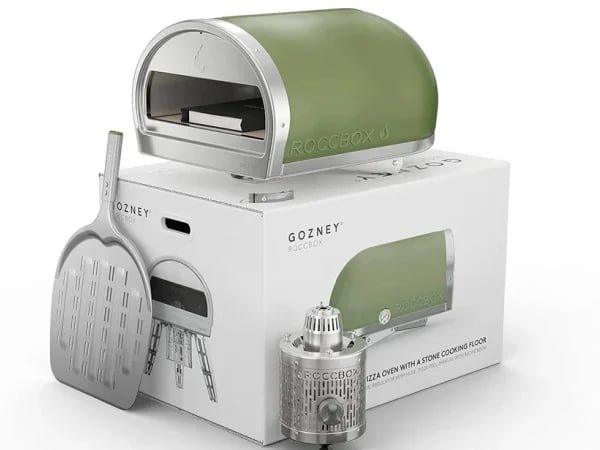
Custom Rubber Parts Manufacturers: Fix 1 Crack in 80,000
Custom Rubber Parts Manufacturers: Fix 1 Crack in 80,000
Delivered silicone stove covers showing cracking after use at the client end? This sporadic defect causes engineers to question heat resistance capabilities. Today, I am recording a real factory 8D report detailing how a manufacturer investigated silicone stove cover cracking.
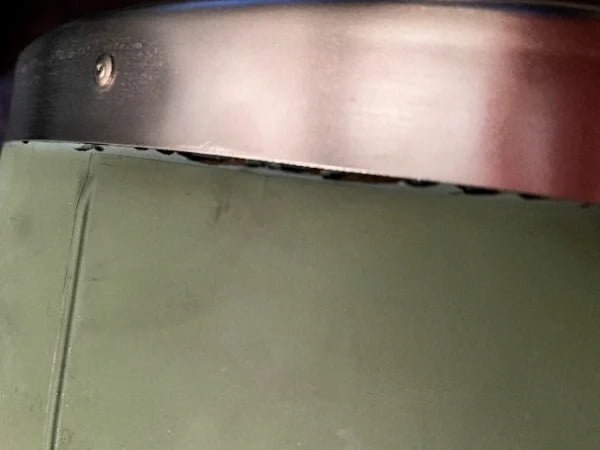
Silicone stove cover cracking results primarily from rapid heat conduction and slow dissipation in adjacent metal parts, combined with repeated opening friction that accelerates local aging. The factory verified material heat resistance via 300°C thermal shock cycles and friction tests, confirming a defect rate of only 0.00125%.
Many buyers struggle to determine root causes when facing sporadic cracking. As an industry recorder and practitioner, I will break down the investigation process of this 8D report from a factory engineering perspective.
Why Did 1 Out of 80,000 Silicone Stove Covers Crack at the Metal Contact Point?
High-temperature environments combined with mechanical friction accelerate localized silicone embrittlement. Isolating material limits from structural heat transfer is key to finding failure mechanisms.
Testing proved the factory's special high-temp silicone withstands 300°C baking for 36 hours without open flames. Cracking occurred exactly at the metal junction, resulting from combined heat accumulation and friction.

Silicone Material Heat Resistance Audit and Thermal Conduction Analysis
This Factory Report shows that 1 silicone stove cover cracked after long-term use at the client end.
Total delivery reached 80,000 PCS, yielding 1 defective unit for a defect rate of 0.00125%. The factory engineering team audited raw materials immediately. Special high-temp silicone was selected for prototyping and mass runs, with zero material changes.
Testing data showed the material withstands 300°C baking for 36 hours without open flames, only becoming brittle beyond this limit. Given the operating environment where flames never touch the silicone directly, the factory ruled out simple prolonged heat exposure.
The crack occurred right at the seam meeting the metal hardware. The factory analyzed that metal conducts heat rapidly and dissipates slow, while the silicone experiences repeated friction against the metal. Under long-term baking and repeated opening-closing thermal cycles, silicone at this spot embrittled faster, causing sporadic cracking. When manufacturing demanding custom made rubber parts, metal-silicone contact interface design is critical.
| Analysis Dimension | Factory Test Data & Environment | Physical Mechanism & Failure Finding | 8D Conclusion |
|---|---|---|---|
| Material Heat Limit | 300°C no-flame baking for 36 hours | Zero material changes; stable within limits | Ruled out raw material defects |
| Operating Environment | Flame overflows slightly; no direct contact | Withstands long heat in static conditions | Ruled out time-only failure |
| Metal Interface Stress | 300°C heat buildup + cycles + friction | Friction & heat buildup accelerated aging | Identified as sporadic mechanical fatigue |
How Did the Factory Handle 0.00125% Sporadic Cracks via Thermal Shock and Friction Tests?
Ultra-low probability sporadic anomalies should not trigger blind mass recalls. Risks must be evaluated through rigorous laboratory reproduction testing.
Professional custom rubber parts manufacturers establish three-dimensional reproduction test protocols. The factory conducted "300°C 12H - Room Temp 12H" 3-cycle thermal shock tests and friction tests internally, tracking client performance continuously.
Laboratory Simulation Testing and Client Tracking Results
To manage the 0.00125% sporadic quality issue, the factory's 8D team formulated a scientific risk control and testing plan.
First, because the defect could not be reproduced consistently at the factory or client end, the factory kept current stock, in-transit items, and client inventory active while tracking performance closely.
Second, inside the factory laboratory, quality engineers used visually rejected samples to run thermal shock tests: "300°C 12H - Room Temp 12H - 300°C 12H - Room Temp 12H - 300°C 12H - Room Temp 12H" for 3 complete cycles.
Third, engineers sampled identical raw materials and metal parts, assembling them for simulated opening friction tests under heat to verify mechanical wear impacts.
Fourth, the factory established a long-term tracking mechanism at the client end to monitor for recurring defects. The silicone raw materials used comply with FDA Food Contact Regulations 및 RoHS Environmental Directives. The factory enforces quality controls under ISO 9001 Quality Standards. Following extended cycle testing and market tracking, zero recurrences have appeared.
| Verification Test Item | Factory Test Protocol & Cycle Conditions | Actual Confirmation & Results |
|---|---|---|
| Thermal Shock Cycle Test | 300°C (12H) & Room Temp (12H) for 3 cycles | Zero cracking; material heat stability proven |
| Hardware Friction Test | Assembled hardware; repeated opening under heat | Zero cracking reproduced; strength qualified |
| Client Market Tracking | Continuous tracking across 80,000 PCS batch | Zero recurring defects; quality state stable |
How to Specifically Operate with custom rubber parts manufacturers?
When executing processes and quality systems with custom rubber parts manufacturers, factories must follow standardized procedures. Third-party testing data shows that using special high-temp silicone and high-temperature vulcanization processes, combined with thermal shock cycle testing, keeps dimensional tolerances within ±0.05 mm while achieving an extremely high pass rate.
- Sporadic Anomaly Isolation & Data Audit: Verify total delivery counts and defect rates upon complaint, auditing raw material logs and change histories.
- Laboratory Thermal Shock Reproduction: Conduct "300°C 12H - Room Temp 12H" multi-cycle tests using samples to verify thermal shock limits.
- Simulated Friction Test with Hardware: Assemble structural components for high-frequency opening friction tests under heat to evaluate contact stress.
- Long-Term Client Market Tracking: Establish mass shipment quality tracking mechanisms under ISO 9001 standards to monitor ongoing performance.
External References & Industry Citations
- ISO 9001 Quality Certification: ISO 9001 Quality Management Systems Standard
- FDA Food Contact Regulations: U.S. FDA 21 CFR 177.2600 Food Contact Safety Regulations
- RoHS Environmental Directives: European Commission RoHS Directive 2011/65/EU
About Me and Dibo Tech
Brand Name: Dibo Tech
Slogan: Dibo Technology Silicone Manufacturing Specialists
Website: https://samxine.com/
Our Mission:
Grounded in strong technical capability and quality, we specialize in custom OEM and ODM silicone rubber production, offering reliable custom solutions for our clients while fulfilling social responsibility for a sustainable future.
About Me:
My name is Kunfa Ye, but my friends call me Jeff. I was born in 1986 under the sign of the Tiger. I started working in the silicone rubber manufacturing industry in 2014, and I now have fifteen years of experience. Over these years, I started from scratch and experienced every rise and fall in manufacturing. I know the hardships and rewards of entrepreneurship deeply. I always focus on professionalism and integrity in every project.
The silicone manufacturing industry seems ordinary, but it affects every part of industrial production. I know that trust stands behind every product, and trade relies on mutual success. Over the years, my proudest achievement is not achieving personal financial independence, but helping my clients optimize their supply chains and improve production efficiency. Their success brings me far more joy than personal achievements.
Now, I hope to give back to the industry—sharing experience, answering questions, and connecting resources. Whether you are a startup or an experienced industry peer, if I can help, I will do my absolute best. Because I always believe: the essence of business is the transfer of value, and true fulfillment comes from how much help you can bring to others.
답글 남기기