

Why Silicone Products Become Sticky: 5 Causes & Fixes
When silicone products become sticky, the receiving team notices it before anyone opens a drawing: dust clings to the parts, poly bags weld to the surface, and in food-contact or medical programs the batch fails incoming inspection on sight.
Silicone products become sticky for five controllable reasons — oil bleeding, an over-softened compound, incomplete curing, mold surface interaction, and storage conditions. All five can be specified, tested and verified before a purchase order is placed.
This guide is built from how we diagnose tacky parts on our own LSR and compression molding lines: the tests we run on every batch, and the questions buyers should ask any supplier.
Why Silicone Products Become Sticky: Symptom Triage
Not every sticky surface shares a root cause, and the fix differs. The table below is the first thing our QC team fills in when a complaint arrives.
| Symptom | Most likely cause | Where to look |
|---|---|---|
| Uniform oily film that wipes off and returns within days | Oil bleeding | Compound oil ratio, base material grade |
| Patchy tackiness, often on one face | Release agent residue or local under-cure | Demolding process, mold temperature uniformity |
| Tacky surface with a white powder bloom | Plasticizer bloom or under-cure | Cure profile, post-cure cycle |
| Sticky only after washing, steam or autoclave | Post-cure incomplete, surface porosity | Post-cure time and temperature, plasma treatment |
| Fine until 3–6 months in storage, then tacky | Low-molecular siloxane migration | Storage temperature, packaging, shelf life |
Two rules decide most cases. If the oil film returns after you wipe the part, the material is still releasing oil and no surface treatment will fix it. If the tack disappears after washing and stays gone, the problem sat on the surface, not inside the polymer.
1. Silicone oil bleeding: the most common cause
Silicone compounds contain polydimethylsiloxane (PDMS) oil to improve flow, lower hardness and soften hand feel. The cross-linked network holds a fixed amount of that oil. Past that limit, free oil migrates to the surface and stays there. This single mechanism explains most of the cases where silicone products become sticky in production.
Three things push a compound past the limit:
- Oil ratio too high. In general-purpose compounds, oil sits around 5–10% of the formulation. Above that, the network acts like a sponge instead of a cage.
- Contaminated or recycled base. Inconsistent filler loading, or mineral oil used as a cheap diluent, breaks the oil-filler balance. Mineral oil is not silicone oil and does not stay in the matrix.
- Poor silica dispersion. Fumed silica is the reinforcing filler that gives the network its structure. Clumped silica leaves regions that cannot bind oil, and those regions bleed first.
Hardness is the early warning sign: the softer the compound, the more oil it carries. Parts below 30 Shore A deserve a formulation review before anything else is discussed.
2. Low hardness: the trade-off most buyers miss
Hardness in silicone is adjusted mainly with oil. An ultra-soft 8 Shore A part can carry several times the oil of a 50 Shore A part, which is why complaints cluster at the soft end of the range.
The trade-off is mechanical, not cosmetic. Excess oil lowers cross-link density, and tensile and tear strength fall with it. Industry-average 8 Shore A compounds often test near 2.8 MPa tensile.
With a long-chain branched gum, nano-scale silica dispersion and a platinum cure system, the same hardness reaches roughly 5.2 MPa tensile and 22 kN/m tear strength. That margin keeps the surface intact instead of micro-tearing into a tacky feel.
Low hardness is the second most frequent reason silicone products become sticky, and unlike bleeding it cannot be fixed downstream.
The practical rule is simple: specify the hardest compound that still meets the functional requirement. A keypad does not need 20 Shore A when 40 Shore A does the same job with less free oil.
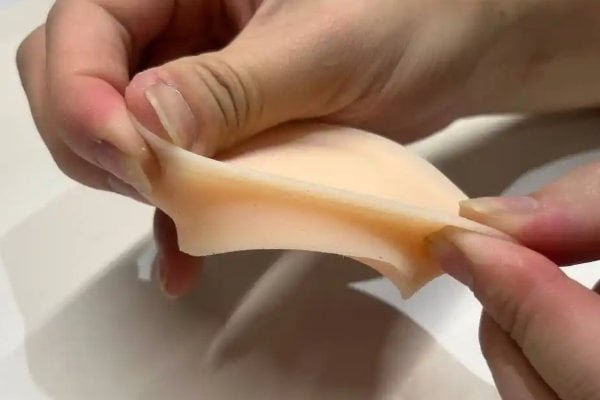
3. Incomplete curing: the defect that looks like oil
Under-cured silicone and oil bleeding feel similar at the surface. The difference is what comes out. Bleeding releases oil that was always in the compound. Under-curing leaves unreacted low-molecular siloxanes that should have been consumed during vulcanization.
It usually happens for ordinary commercial reasons. A 15-minute compression cycle gets cut to 10 to hit a ship date. The parts look formed, pass a visual check and go into bags. Three days later the carton opens to parts stuck together, a faint smell and sluggish rebound.
That timing is the fingerprint: when under-curing is the cause, silicone products become sticky within days of molding rather than weeks.
Post-curing is the second half of the cure, and it is where factories cut corners. A proper cycle for parts that will see heat, food contact or sterilization runs a staged ramp with vacuum devolatilization, holding at 200°C for about 6 hours. That step drives residual low-molecular material out of the part instead of letting it migrate to the surface later.
If a supplier cannot put the post-cure profile in writing, assume there is none. Flash and edge roughness usually travel with the same process discipline — see our guide to rough edges on silicone parts.

4. Mold surface and demolding
A well-formulated compound can still feel sticky when the tool and release process are wrong.
High-gloss cavities (SPI A-1 to A-2) produce attractive parts, but they maximize contact area between silicone and steel. The result is higher demolding force, a vacuum effect that stretches the surface on release, and a part that attracts dust from static.
Matte or fine-textured finishes (around SPI B-2) break that contact and are the default for functional parts that do not need a cosmetic surface. On a soft, high-gloss part, silicone products become sticky for a purely geometric reason before the material is ever at fault.
Release agent is the second variable. Excess solvent-based release agent leaves a film that feels exactly like bleeding but appears in patches and washes off. Water-based release agents applied thinly, or DLC and fluorosilane mold coatings that cut demolding force by up to 80%, remove the residue problem.
For parts where surface feel is critical, plasma treatment after post-cure seals surface micro-pores and closes the migration path.
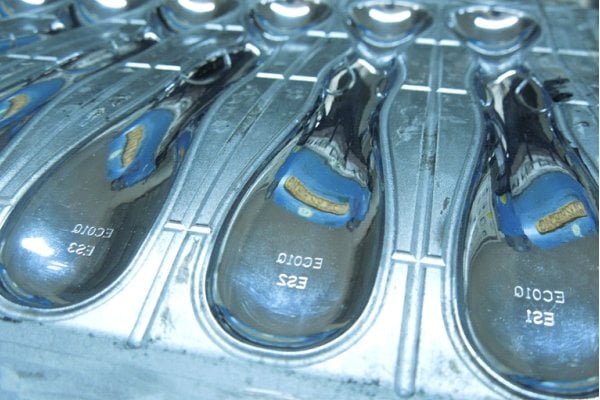
5. Storage and packaging
Silicone does not expire like food, but low-molecular siloxanes keep moving. Sealed polyethylene bags trap those volatiles against the part, and storage above 40°C, direct sunlight or stacking cartons beside a heat source accelerates migration.
This is why silicone products become sticky months after molding even when the batch passed inspection at the loading dock. Nothing changed at the factory — the material kept moving.
For parts that will sit in inventory, specify vented or desiccant-managed packaging and storage below 30°C. A 12-month shelf life is realistic for a well-cured compound. If a part turns tacky after months in a warehouse, the material and cure were marginal to begin with. Buyers running retail packaging programs can also review our custom silicone sleeve packaging options.
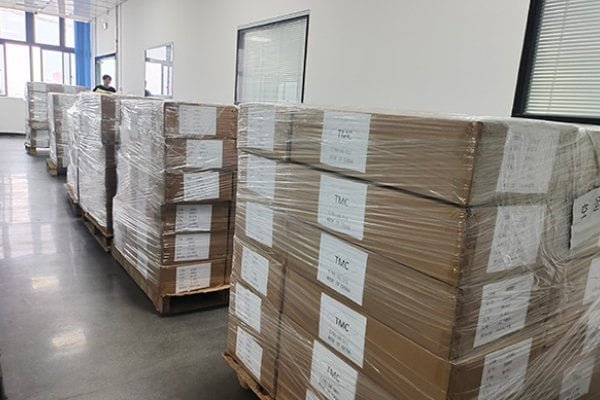
How we test for oil bleeding
Visual inspection does not catch bleeding, which is how silicone products become sticky in shipments that passed a visual check. The test we run on every production batch is simple enough for any buyer to replicate on incoming goods:
- Condition the sample at room temperature for 24 hours after demolding.
- Place the part on clean filter paper in a 70°C oven.
- Hold for 72 hours.
- Inspect the filter paper for an oil ring and weigh the part for mass loss.
Acceptance is no visible oil ring and weight loss under 0.3%. The 72-hour test at 70°C approximates years of ambient storage, which is why we can state that a properly cured part stays dry for three years under normal indoor conditions.
If you want to run the same check on incoming shipments, ask for the test report with the batch number. A factory that runs the test will have one.
Six production controls that prevent stickiness
Silicone products become sticky in predictable ways, so every control below maps to one of the causes above rather than to an inspection step at the end of the line.
| Control | What it prevents |
|---|---|
| Virgin, grade-certified base material (FDA 21 CFR 177.2600, USP Class VI, LFGB) | Contaminated or recycled base, inconsistent filler load |
| Oil ratio held at or below 10%, hardness ≥30 Shore A unless functionally required | Oil bleeding at the source |
| Platinum addition cure for food-contact, medical and long-life parts | Unreacted low-molecular residue |
| Post-cure: staged ramp, vacuum devolatilization, 200°C for 6 hours | Surface migration months later |
| Matte or DLC-coated tooling with water-based release agent | Patchy tack from release residue |
| 70°C / 72-hour bleed test plus plasma treatment for critical surfaces | Defective batches escaping to the customer |
Five questions to ask before you approve a batch
- What is your oil-to-base ratio, and can you share tensile and tear data at the specified hardness? A supplier who only quotes Shore A is guessing. Ask for MPa and kN/m.
- What is your post-cure profile? The answer should include temperatures, ramp, dwell time and whether vacuum devolatilization is used. "We let it cool naturally" is not a post-cure.
- How do you verify that a batch will not bleed? Look for a per-batch test method and acceptance criteria, not a visual check.
- Which mold finish and release agent do you use? Matte finish plus water-based release agent is the low-risk combination for functional parts.
- What is the shelf life, and how is the product packed? Vented packaging with a stated storage temperature tells you the factory has thought past the loading dock.
결론
Silicone products become sticky because of traceable material and process decisions. Oil ratio, hardness, cure profile, tooling and packaging each leave a fingerprint, and each can be specified, tested and verified before mass production.
At Dibo Technology, custom silicone parts run through 24 LSR injection lines with full material traceability, documented post-cure and per-batch bleed testing. If you are dealing with a sticky batch from another supplier, send us a sample and drawings for a free DFM review. For medical programs, our platinum-cured LSR line runs to USP Class VI with full lot documentation.
Frequently Asked Questions
Why do new silicone products become sticky in the bag?
Two common reasons. Residual release agent washes off and does not return. Marginal curing comes back within days. Wipe the part, wait 48 hours and check again — if the film returns, the problem is in the material, not the packaging.
Is sticky silicone dangerous or toxic?
Usually not acutely toxic. Surface tackiness from oil bleeding is first a quality and performance issue. For food-contact or medical parts, though, bleeding oil can harbor contaminants and may indicate the compound does not match the claimed grade. Request FDA 21 CFR 177.2600 or USP Class VI documentation and confirm the certificate matches the batch.
Can a sticky silicone part be fixed after production?
If the tack comes from release agent residue, washing with mild soap and water and drying fully removes it permanently. If it comes from oil bleeding, talc or cornstarch only masks it and it returns within days. Re-curing cannot remove oil that was formulated into the compound — in that case, reject the batch.
Does hardness really affect whether silicone products become sticky?
Yes. Hardness is adjusted with oil, so softer compounds carry more free oil. Risk rises sharply below 30 Shore A, and ultra-soft parts around 8–15 Shore A need a reinforced formulation and platinum cure to stay dry.
How long should a silicone part stay non-tacky?
A properly cured, correctly formulated part stays dry for at least three years under normal indoor conditions. The 70°C / 72-hour test is the accelerated proxy we use to verify that claim.
About the Author & Dibo Tech
My name is Kunfa Ye, but friends call me Jeff. I was born in 1986, the year of the Tiger. In 2011, my brother Autumn Ye and I co-founded Dibo Tech, rooting ourselves in the silicone rubber industry for fifteen years. Building from scratch, we navigated industry cycles and learned the true rewards of hard work. We have always built our business on technical expertise and integrity.
The silicone industry touches every corner of modern manufacturing. I deeply believe that behind every product lies trust, and the essence of business is mutual gain. Over these years, my proudest achievement is not personal financial independence, but helping our clients optimize supply chains and boost production efficiency. Their success is far more rewarding than personal milestones. Today, I aim to give back by sharing insights, answering engineering questions, and connecting resources.
Brand Name: Dibo Tech Slogan: Dibo Technology Silicone Manufacturing Specialists Website: https://samxine.com/ Our Mission: Based on strong technical capabilities and quality first, we are committed to innovative and eco-friendly silicone rubber production, providing reliable silicone solutions while fulfilling social responsibilities for a sustainable future.
답글 남기기